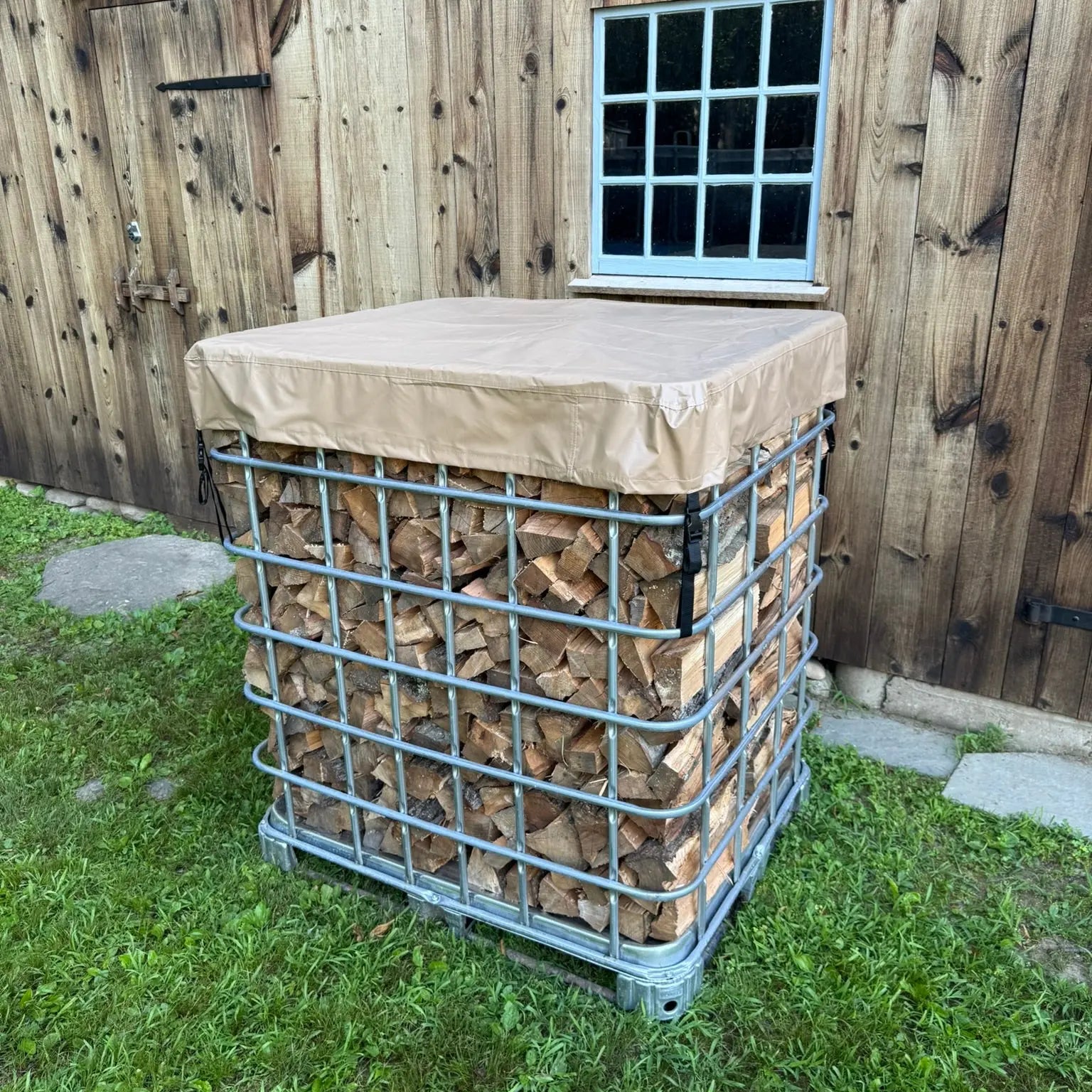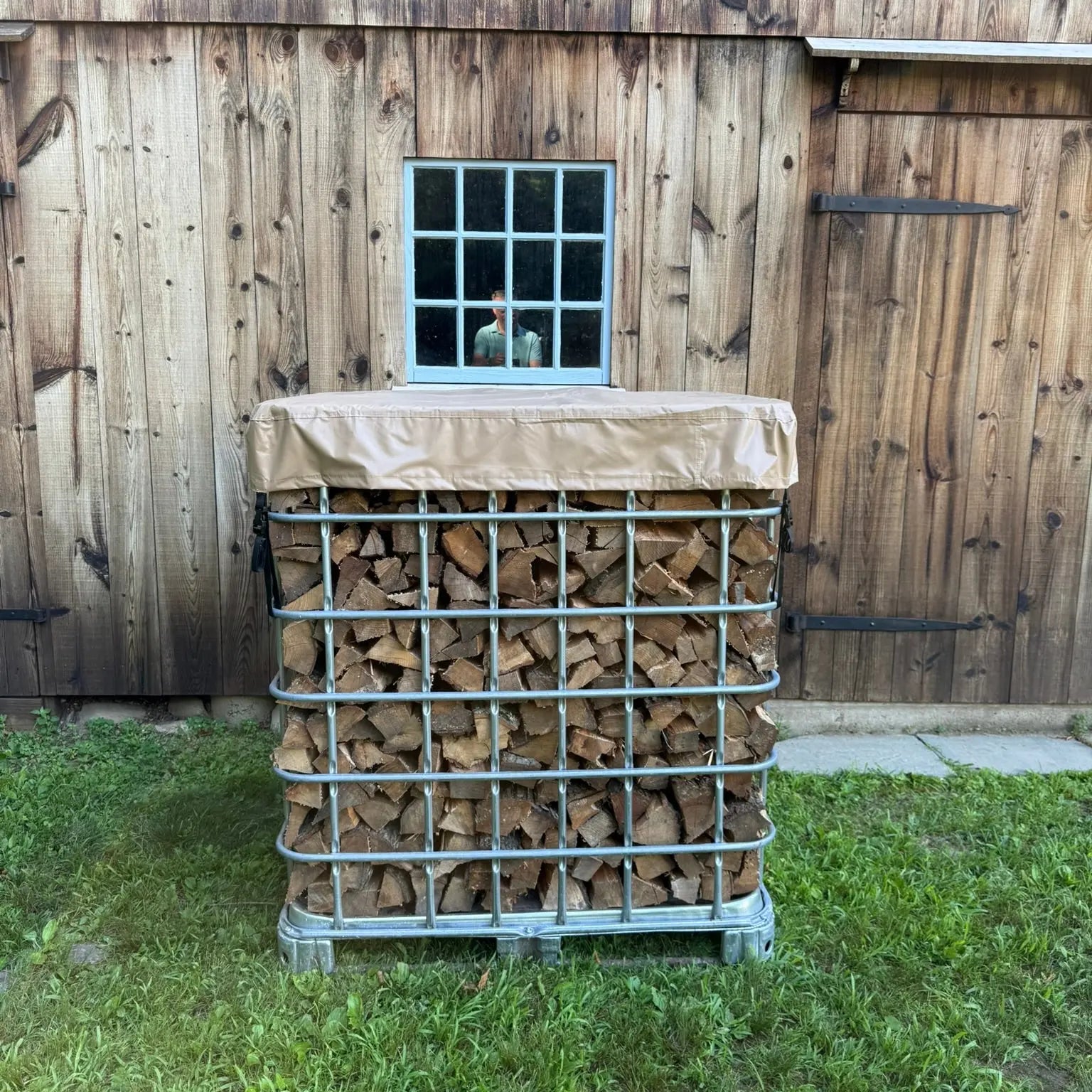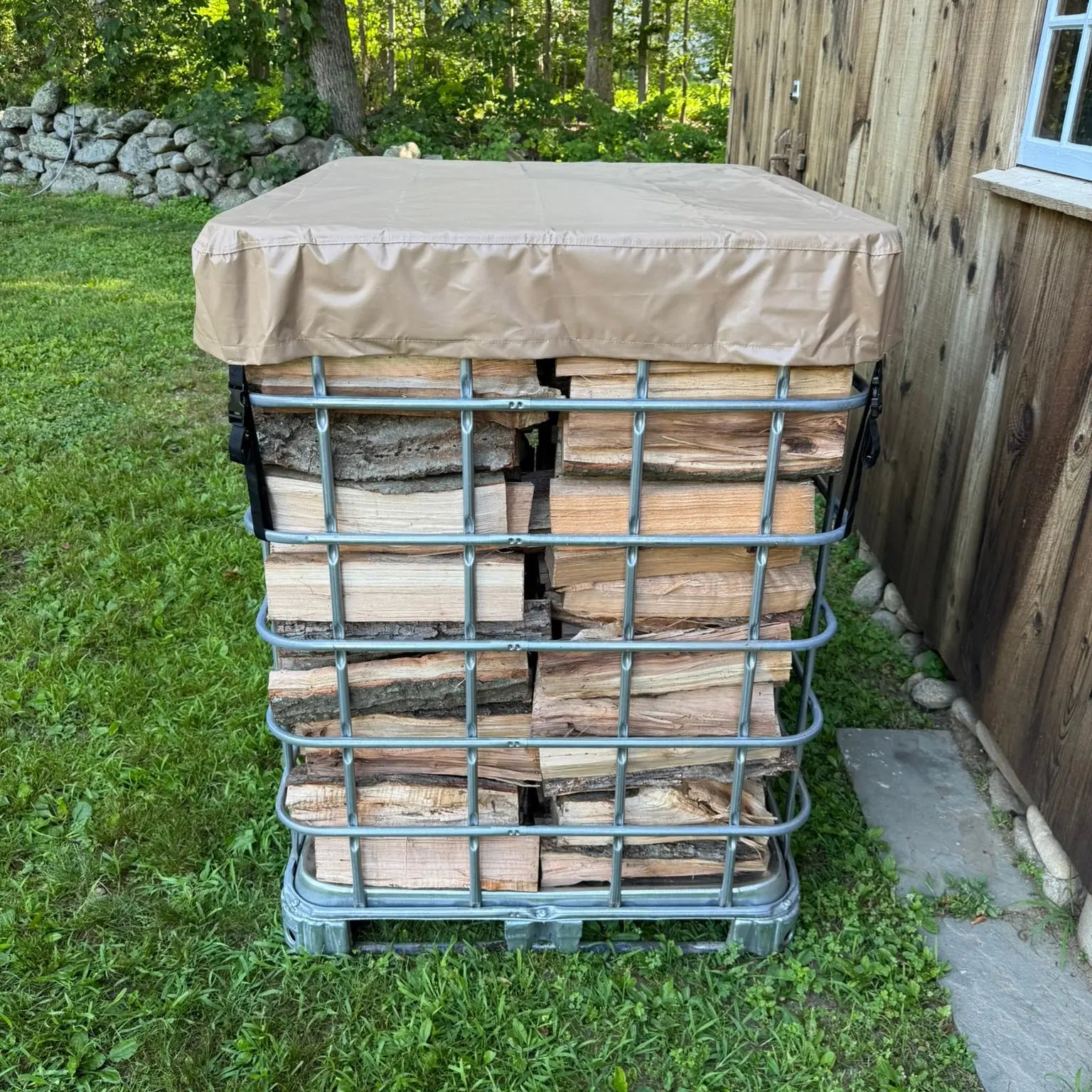


The Challenge of Traditional Holz Hausen Roofing
If you've researched Holz hausens online or watched DIY videos on construction, you've likely heard about adding wood shingles to the top to shed rain. While this approach can work well when done correctly, it comes with significant challenges that many builders underestimate.
Creating a proper shingled roof requires careful layering—the same technique used in traditional roofing. With uniform shingles, this is already difficult. With irregular wood pieces of varying sizes that don't sit flat, the task becomes exponentially harder. Additionally, many guides recommend placing wood bark-side up for better water shedding, but by the time you're finishing the roof, you may have already used most of your bark-covered splits elsewhere in the structure. While you can reserve bark-covered pieces specifically for roofing, it's challenging to estimate exactly how much you'll need. Fall short, and your roof becomes a patchwork of wood and exposed bark—not ideal aesthetically or functionally.
The Real Problem: Winter Wood Access
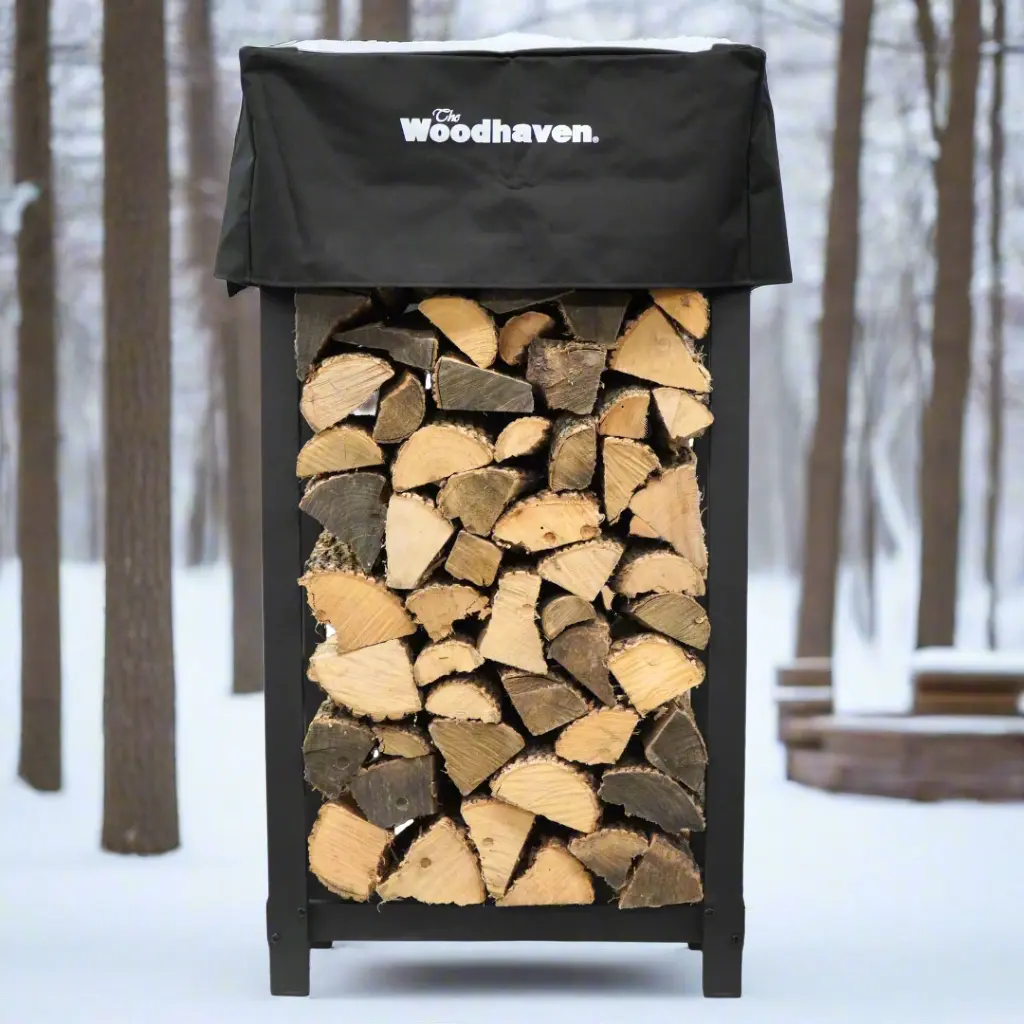
The biggest issue emerges once you start using your wood supply. When you remove those first logs for your fireplace or wood stove, you're literally dismantling your roof. Your carefully constructed shelter is suddenly exposed to winter snow, ice, and rain. Who wants to collect firewood coated in snow and ice? And if you're harvesting wood earlier in the season before snow arrives, leaves accumulate inside the pile, inviting pests and creating a messy, compromised storage space.
A Better Solution: The Cordwood Cover Advantage
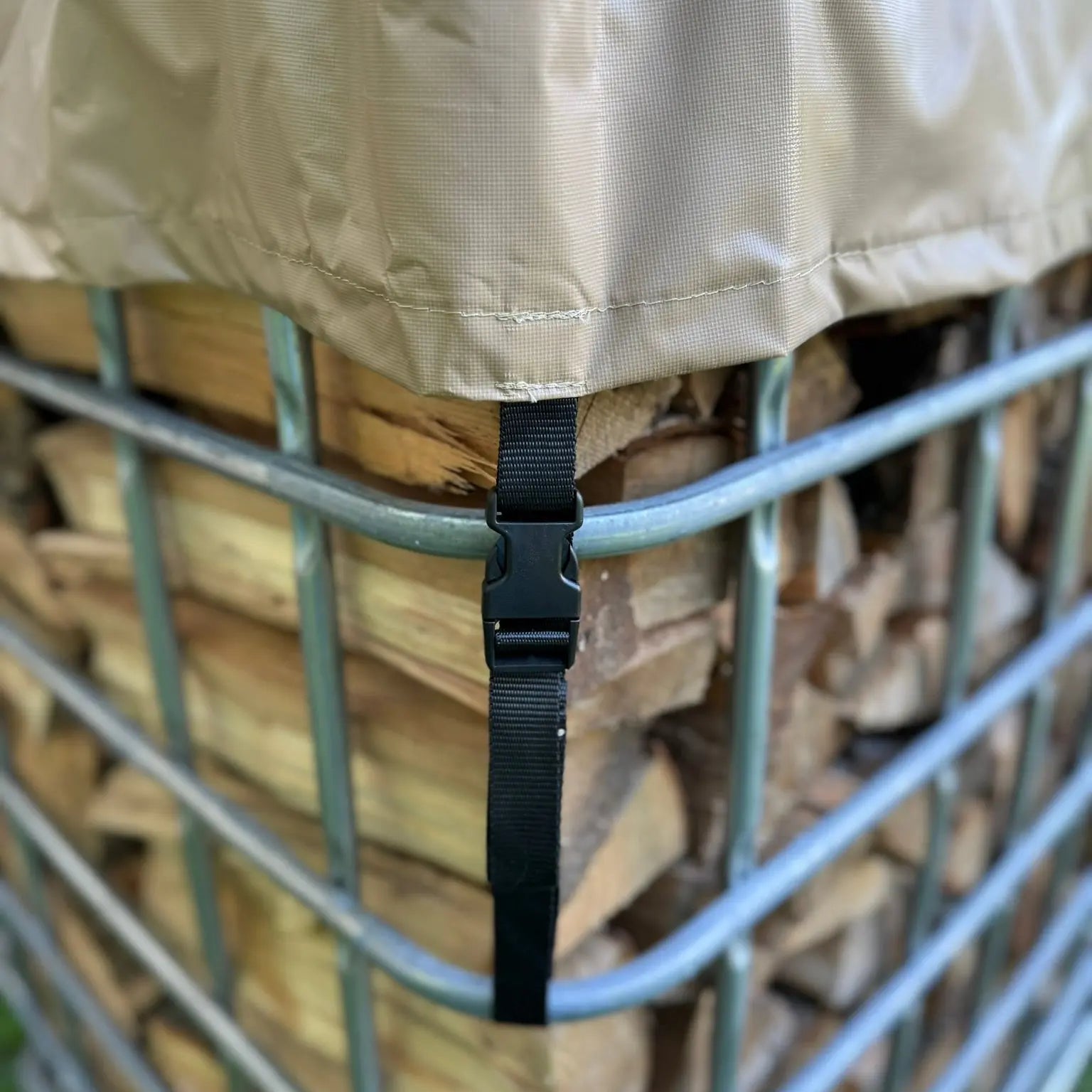
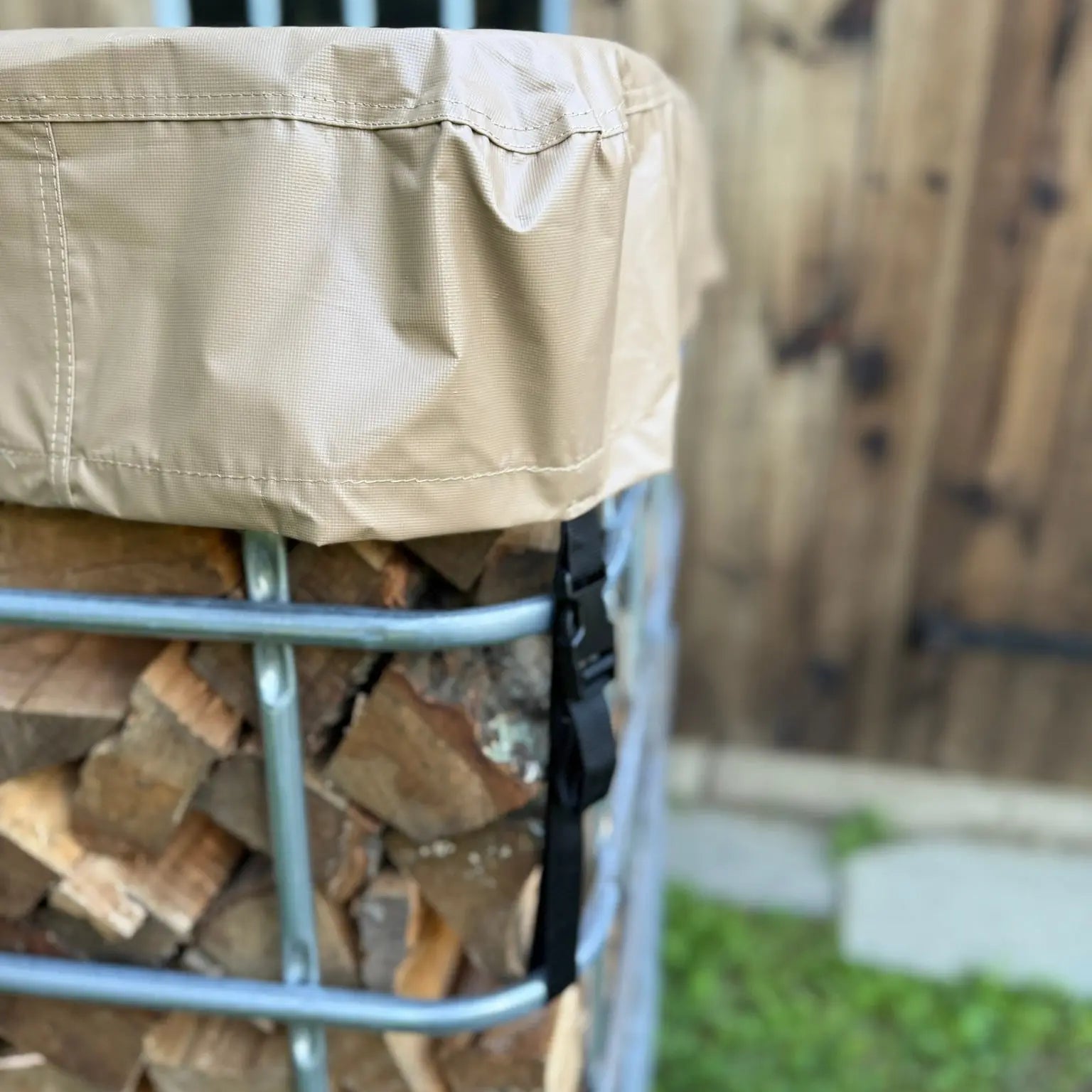
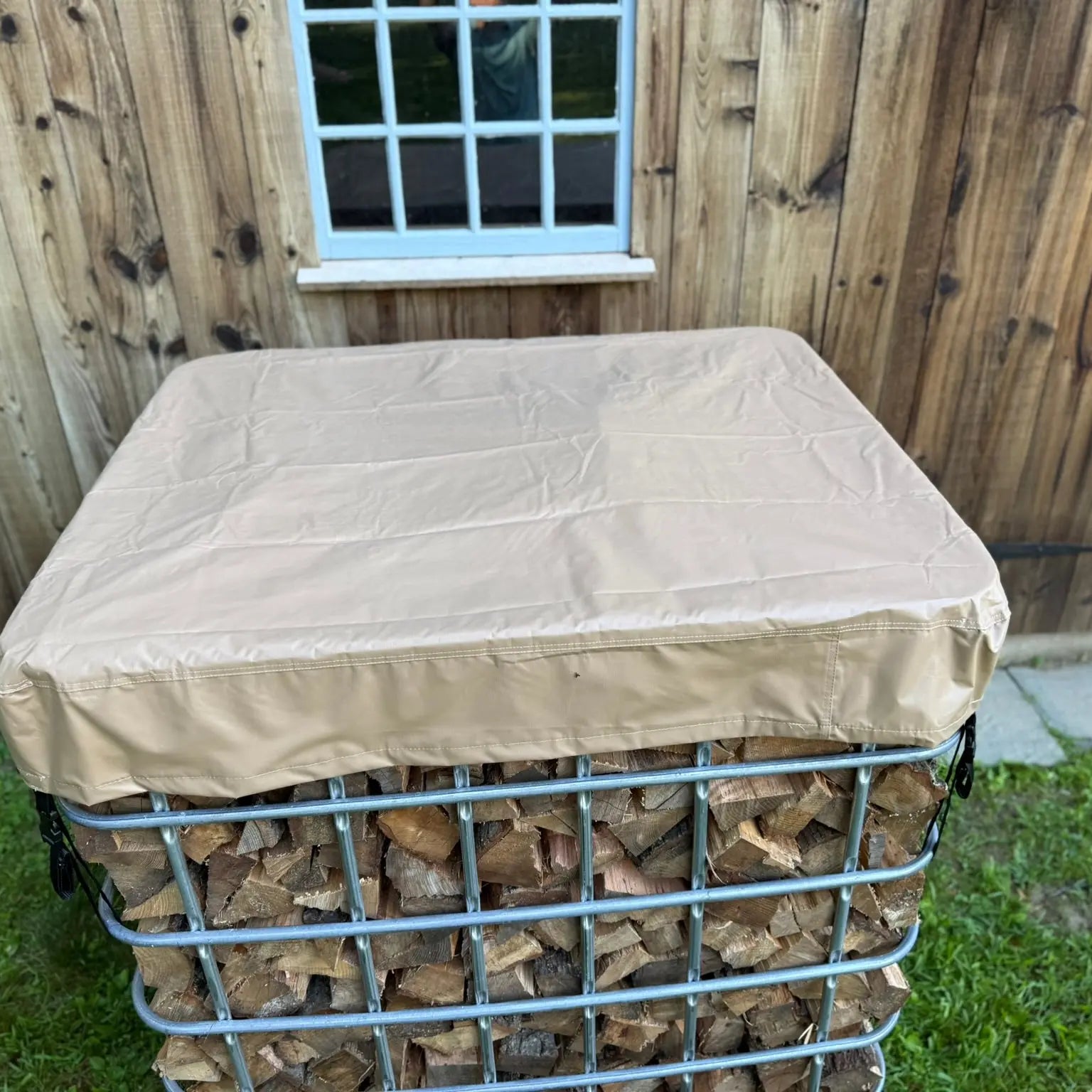
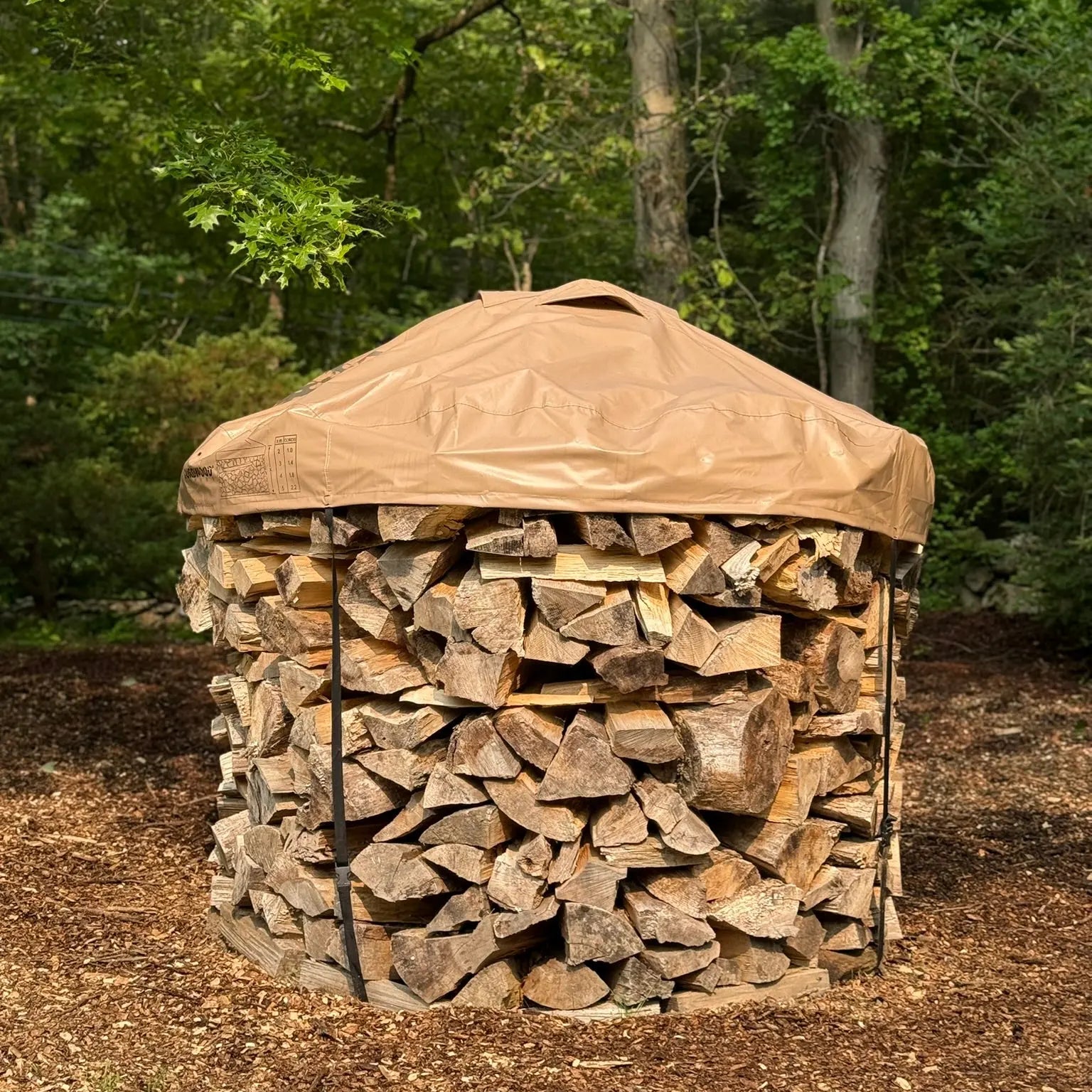
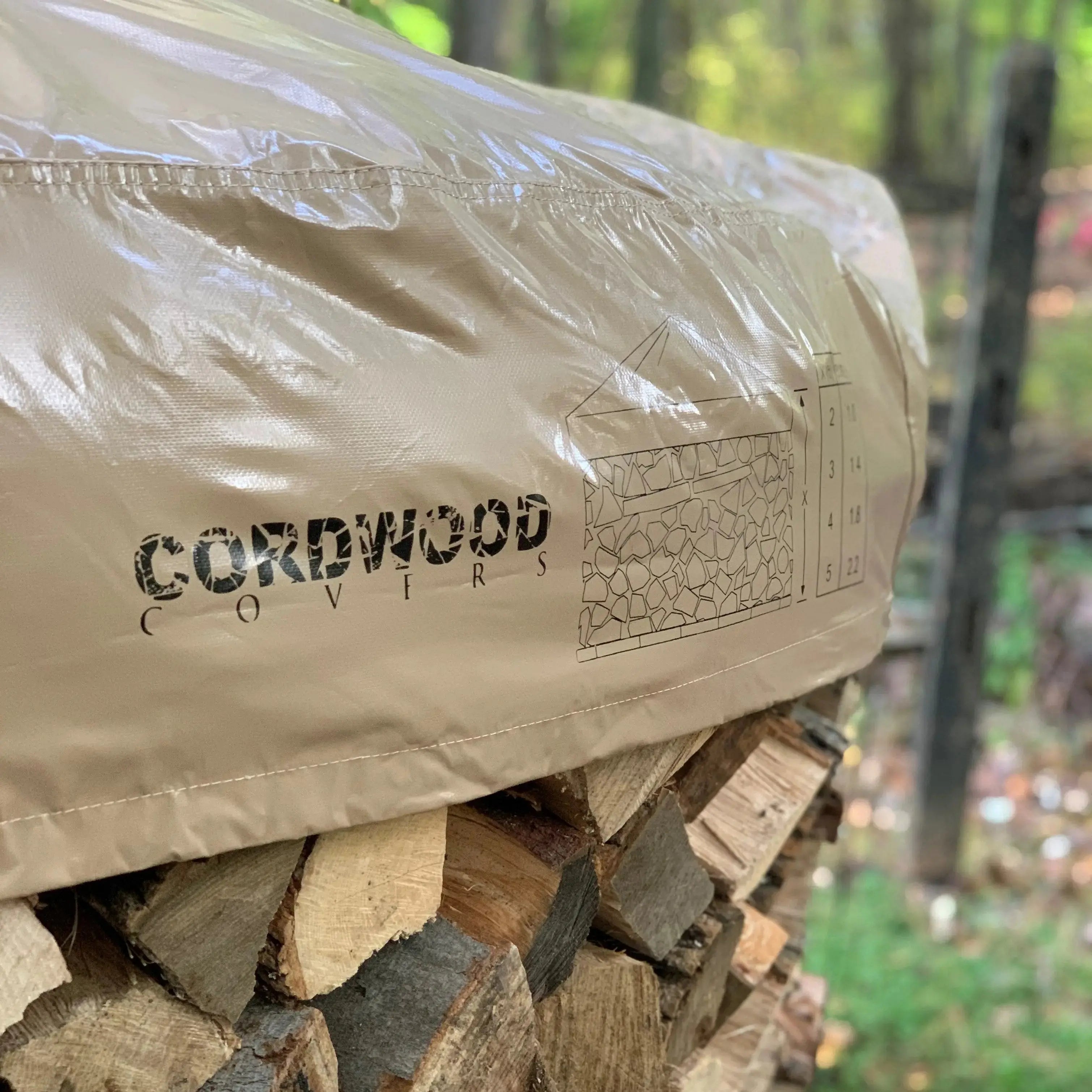
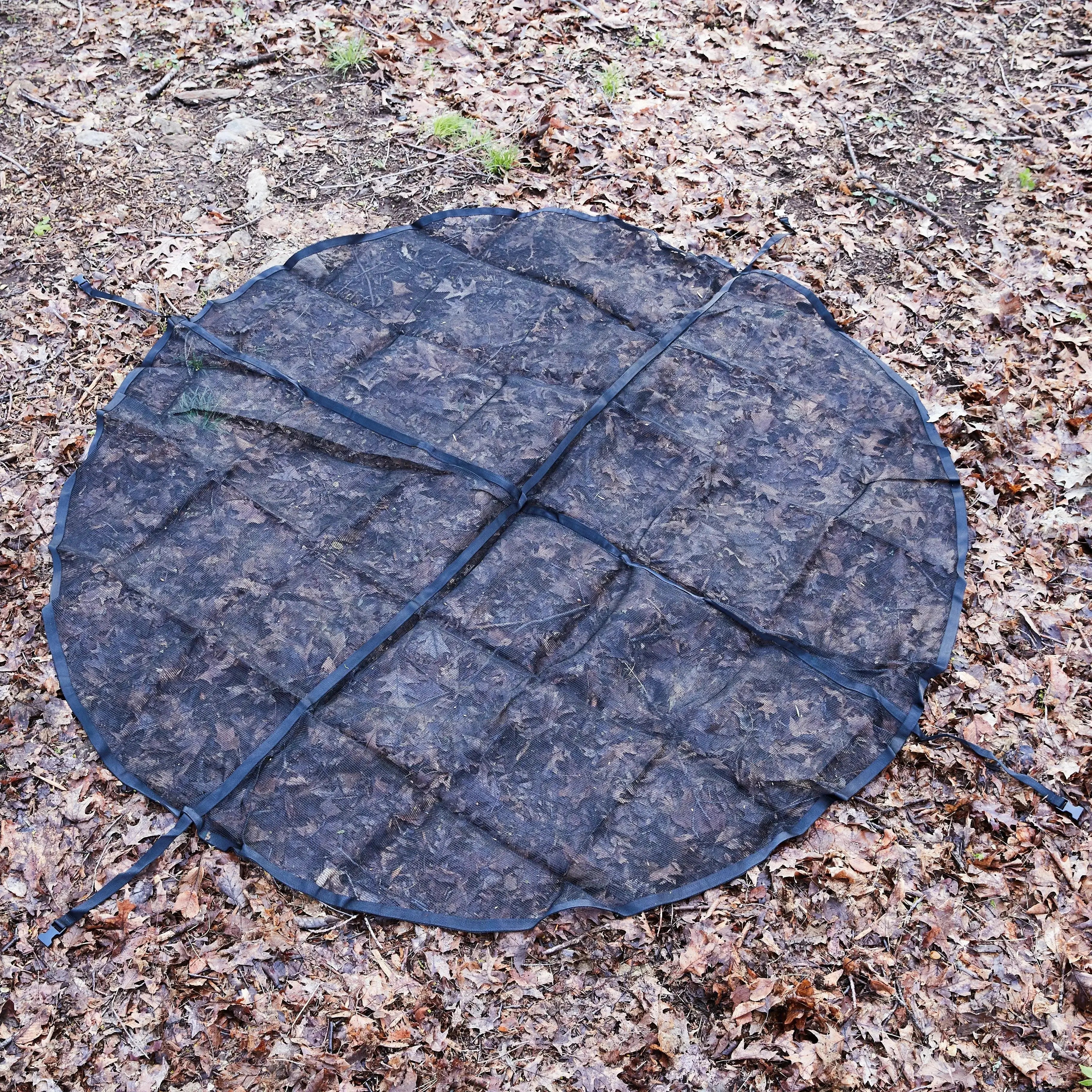
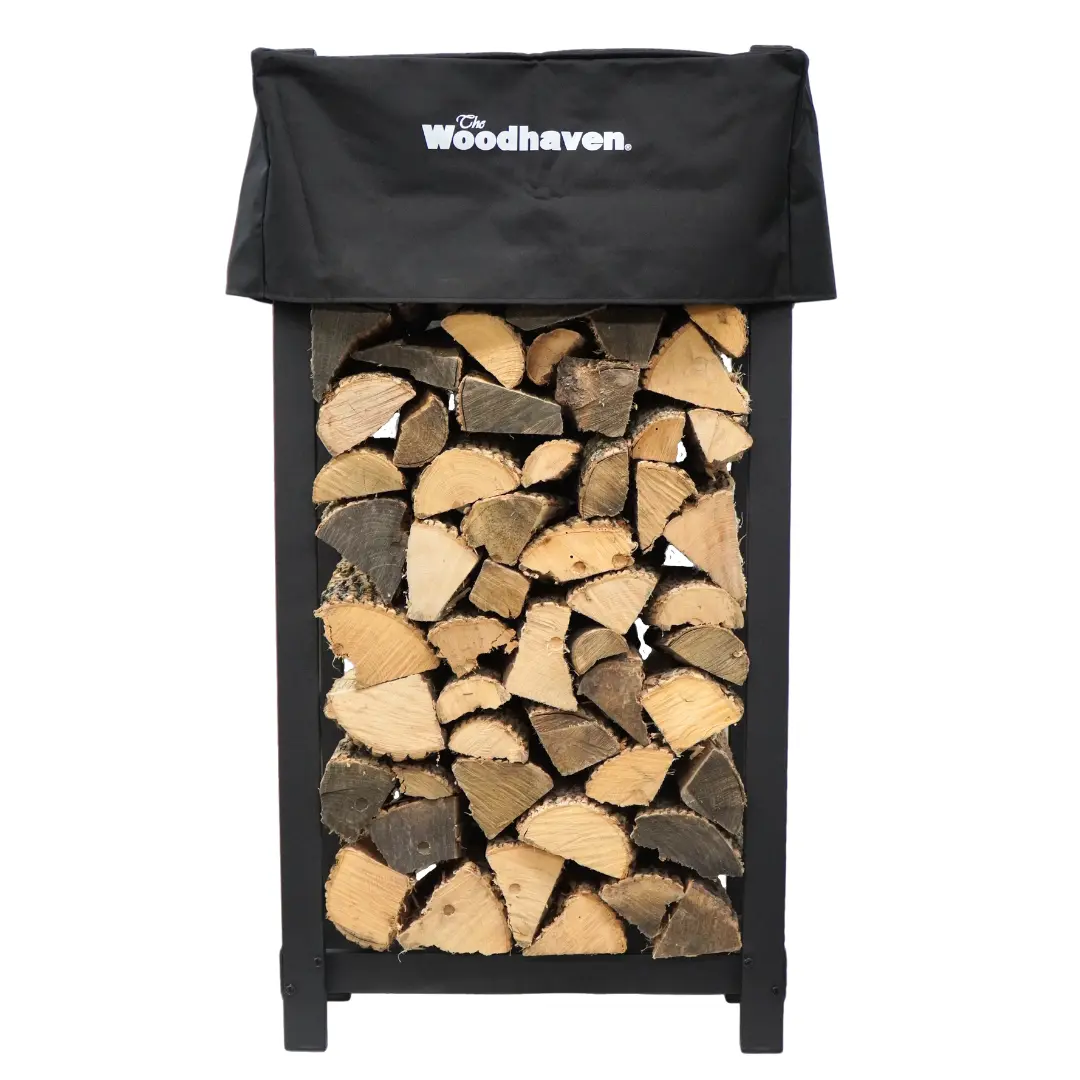
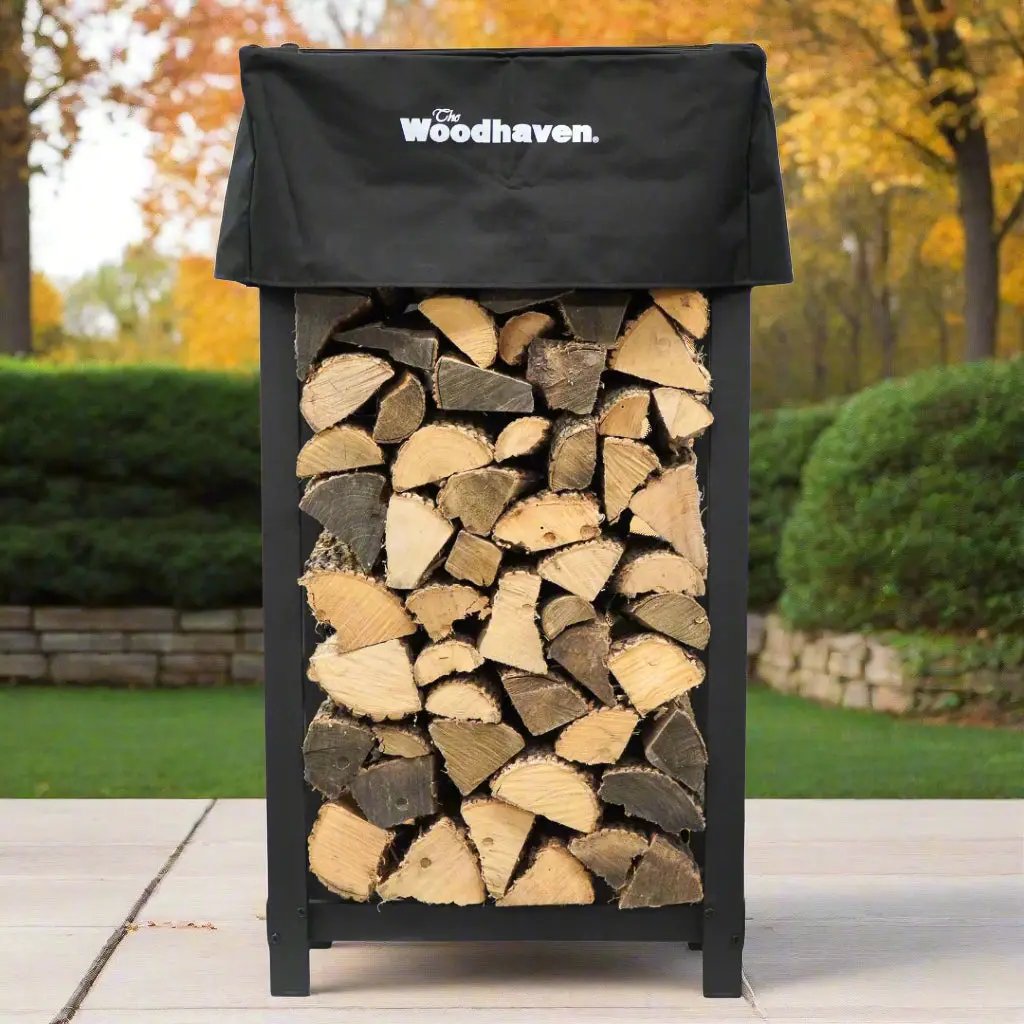
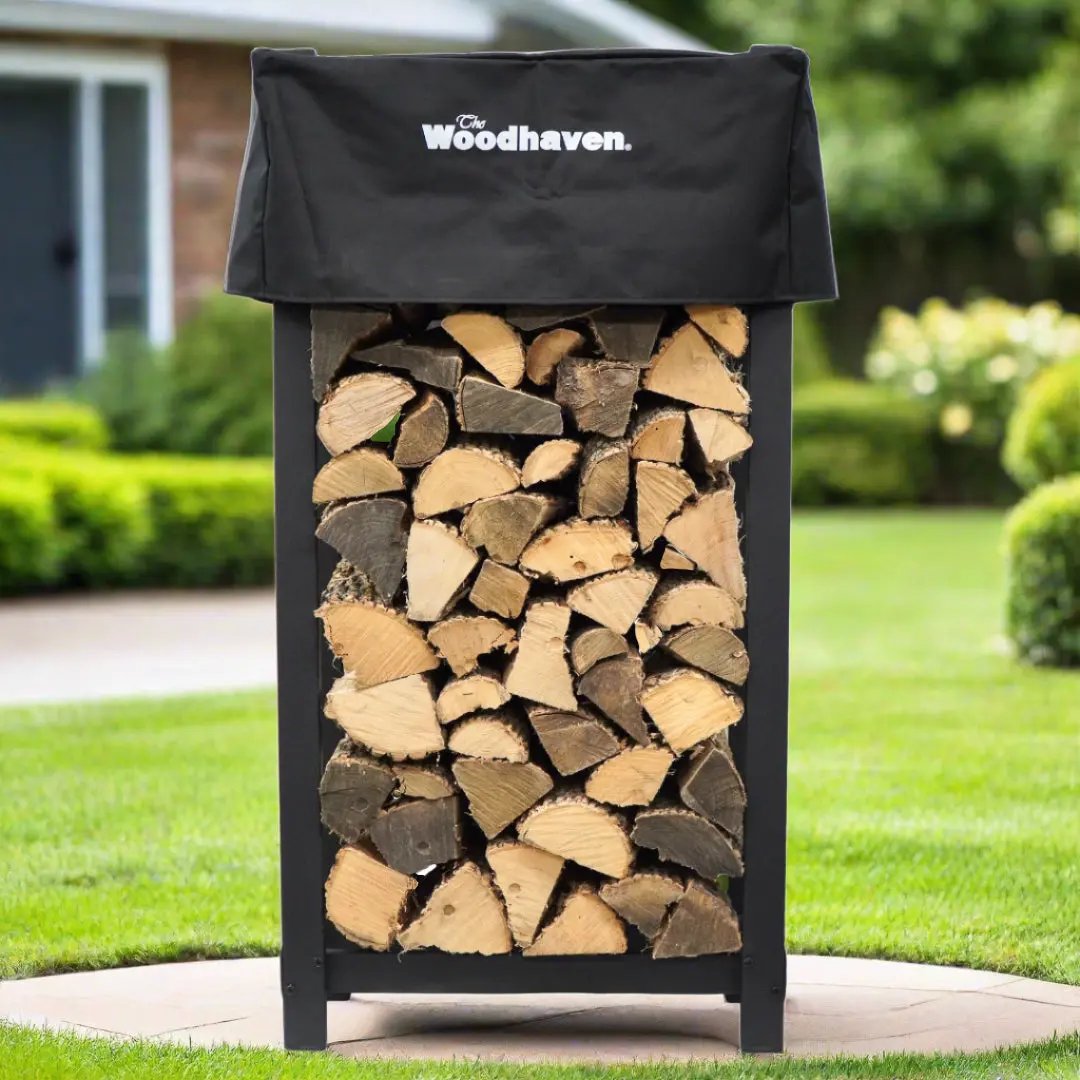
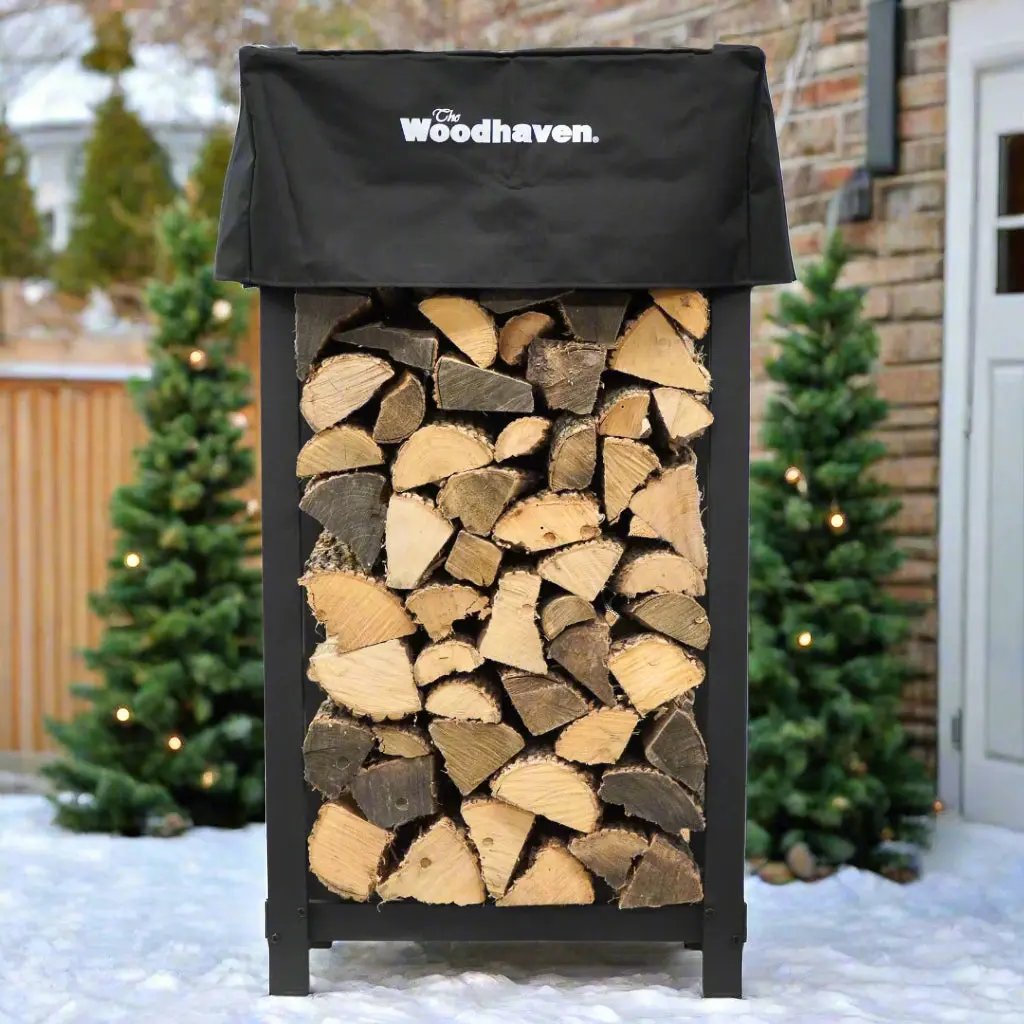
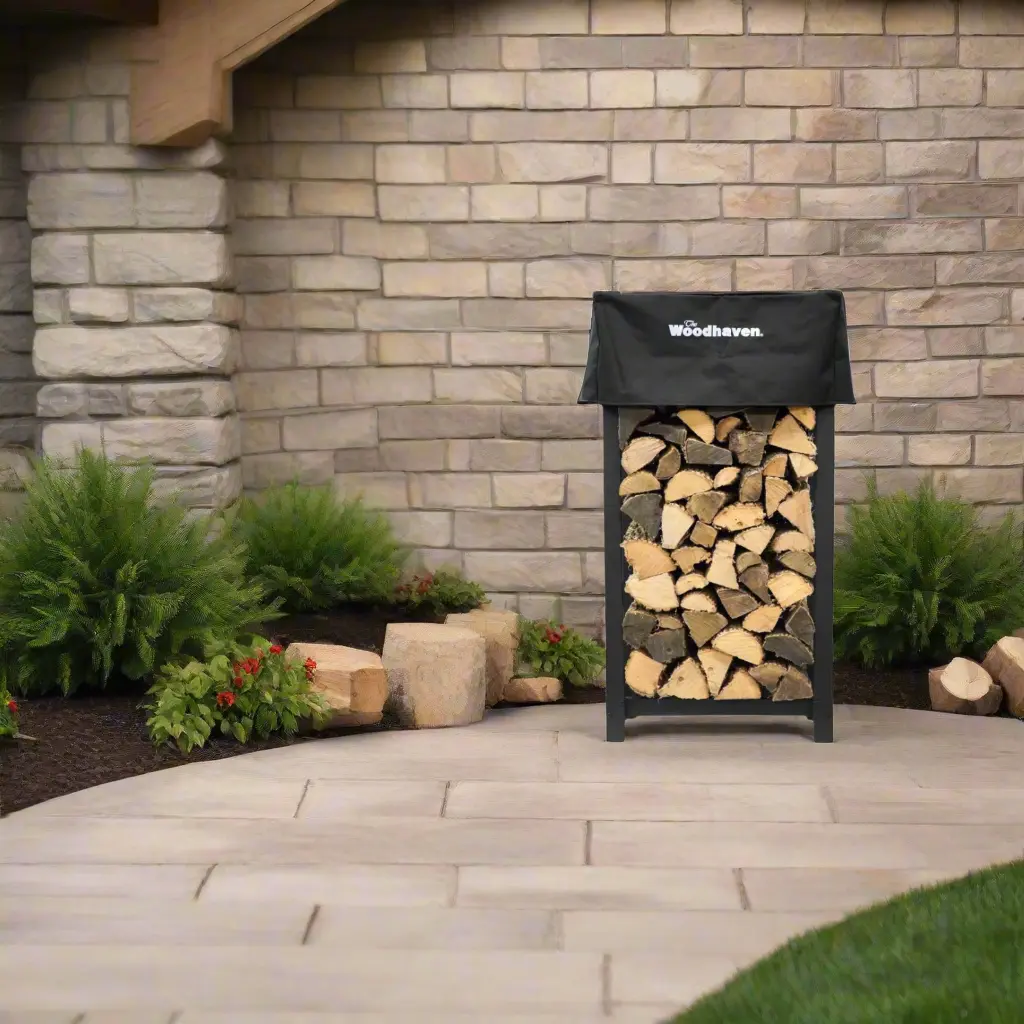
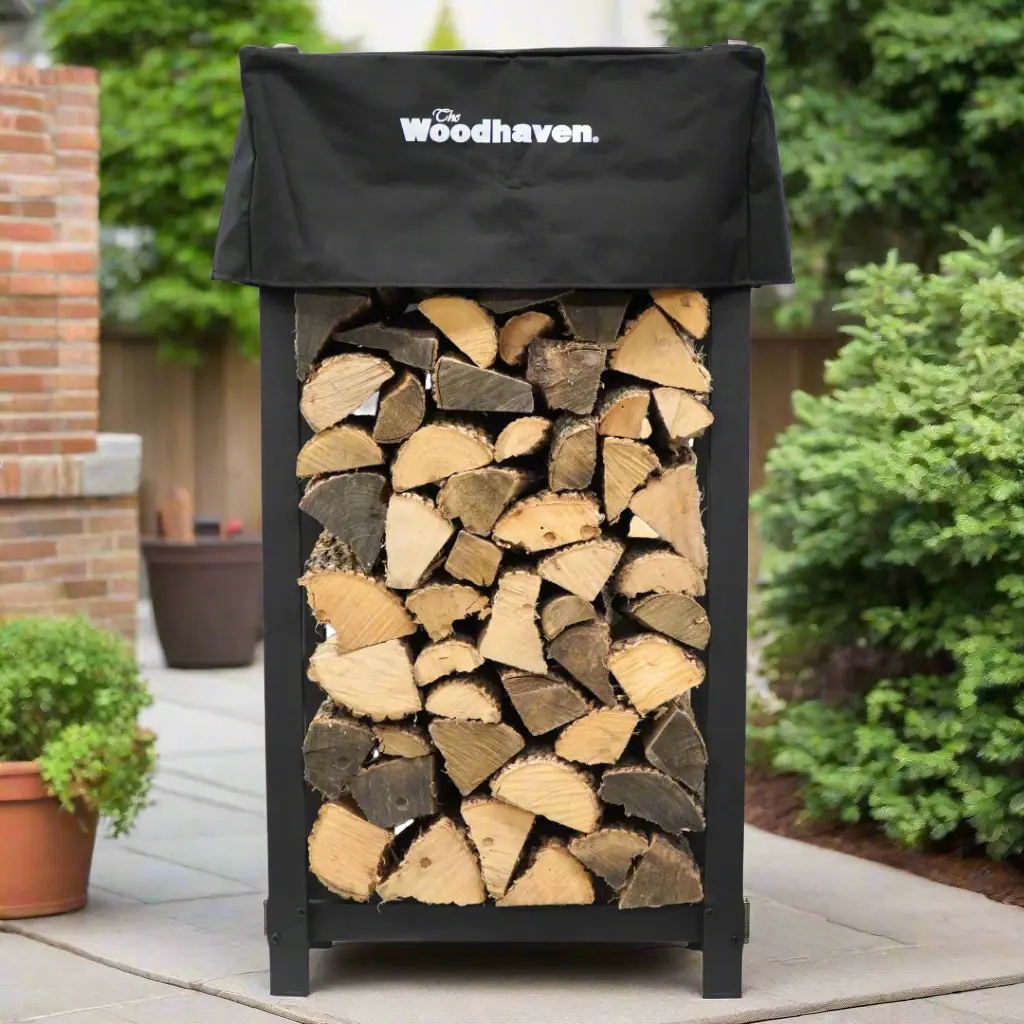
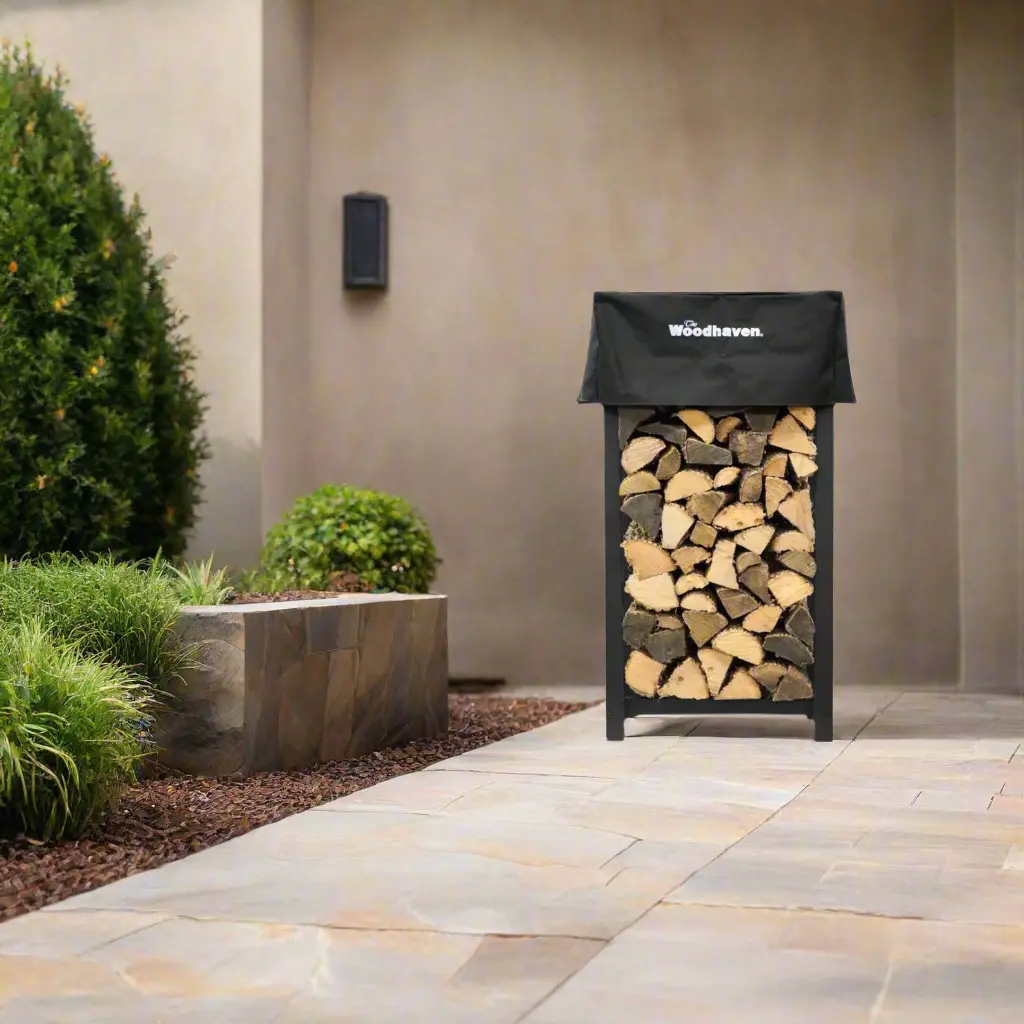
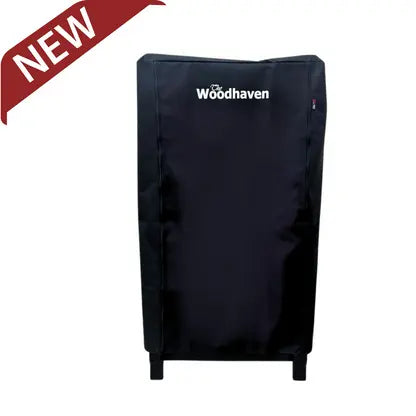
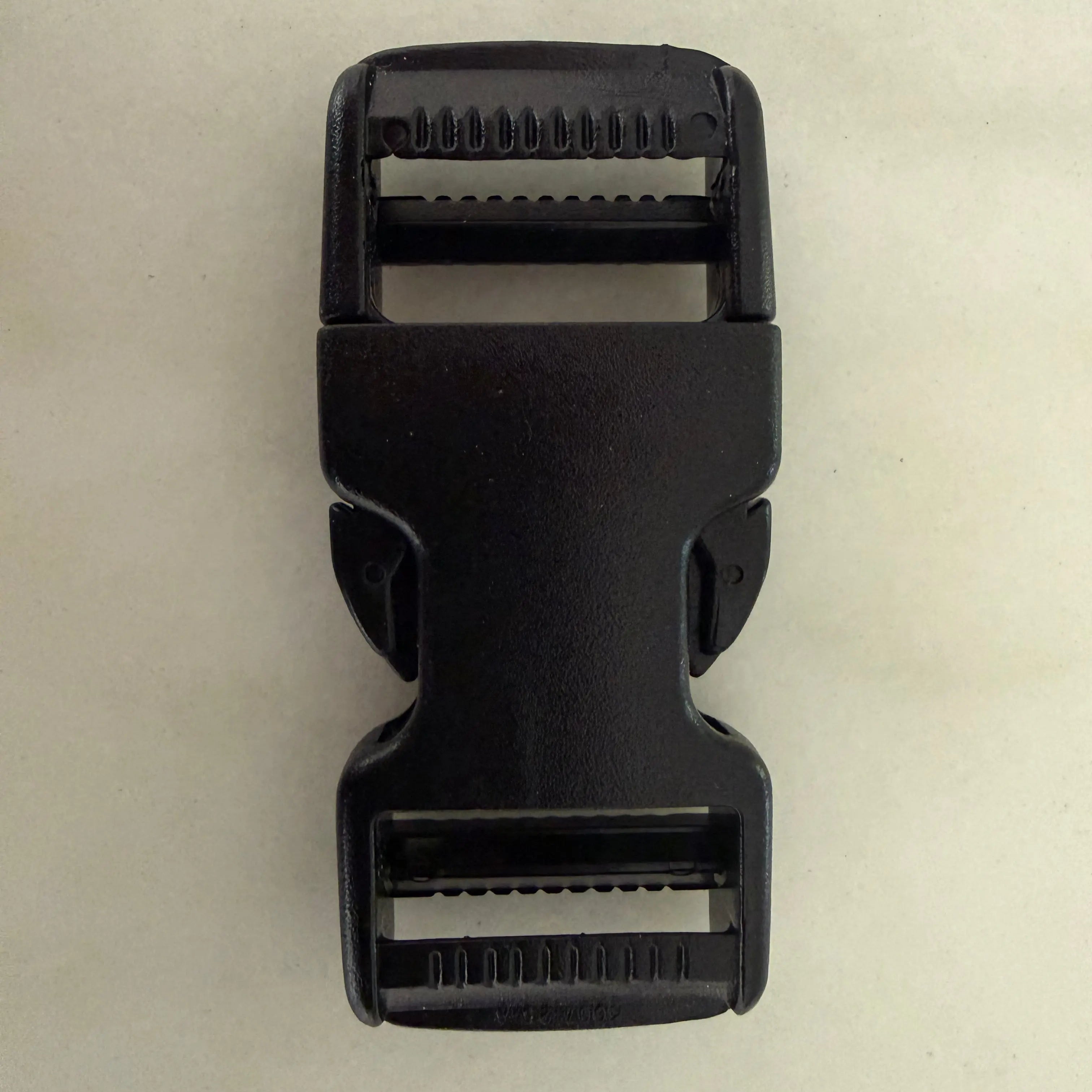
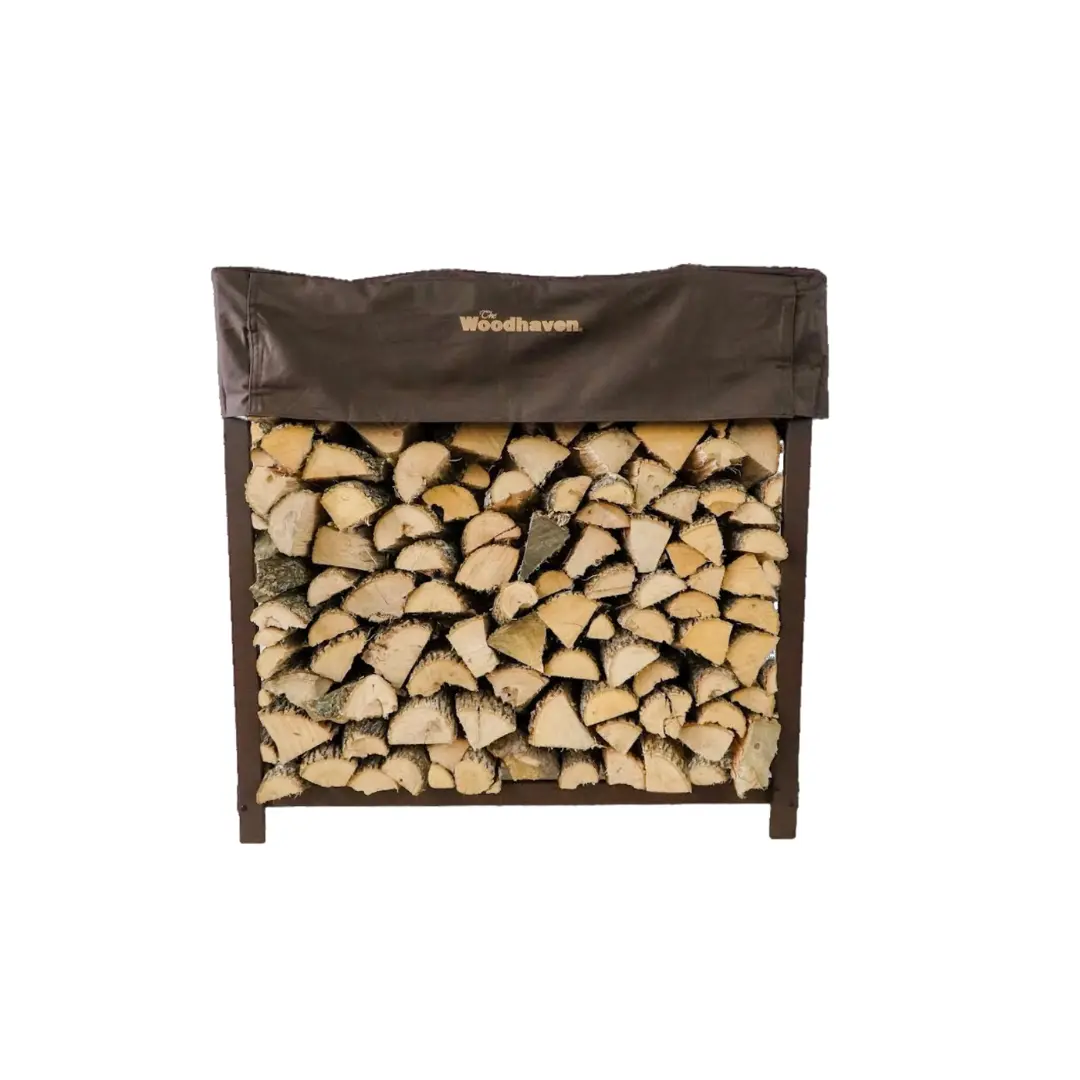
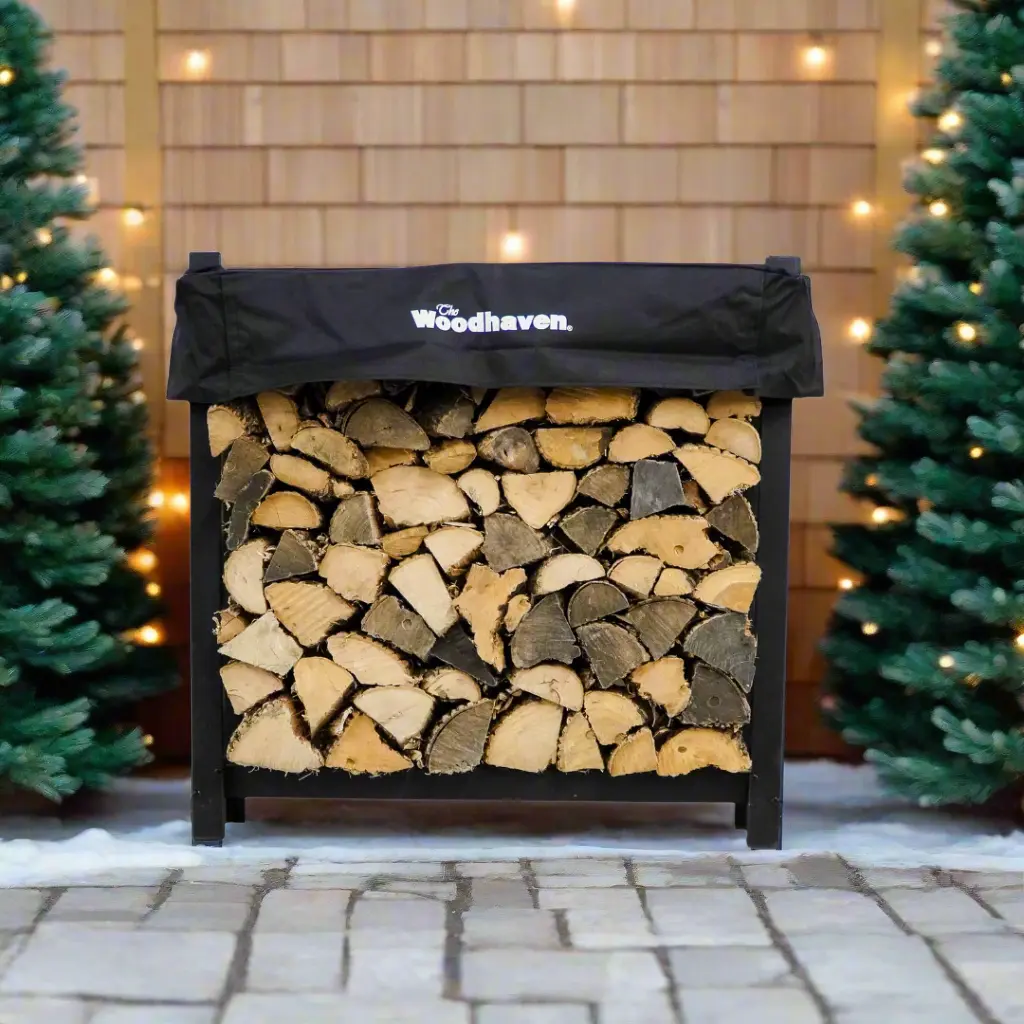
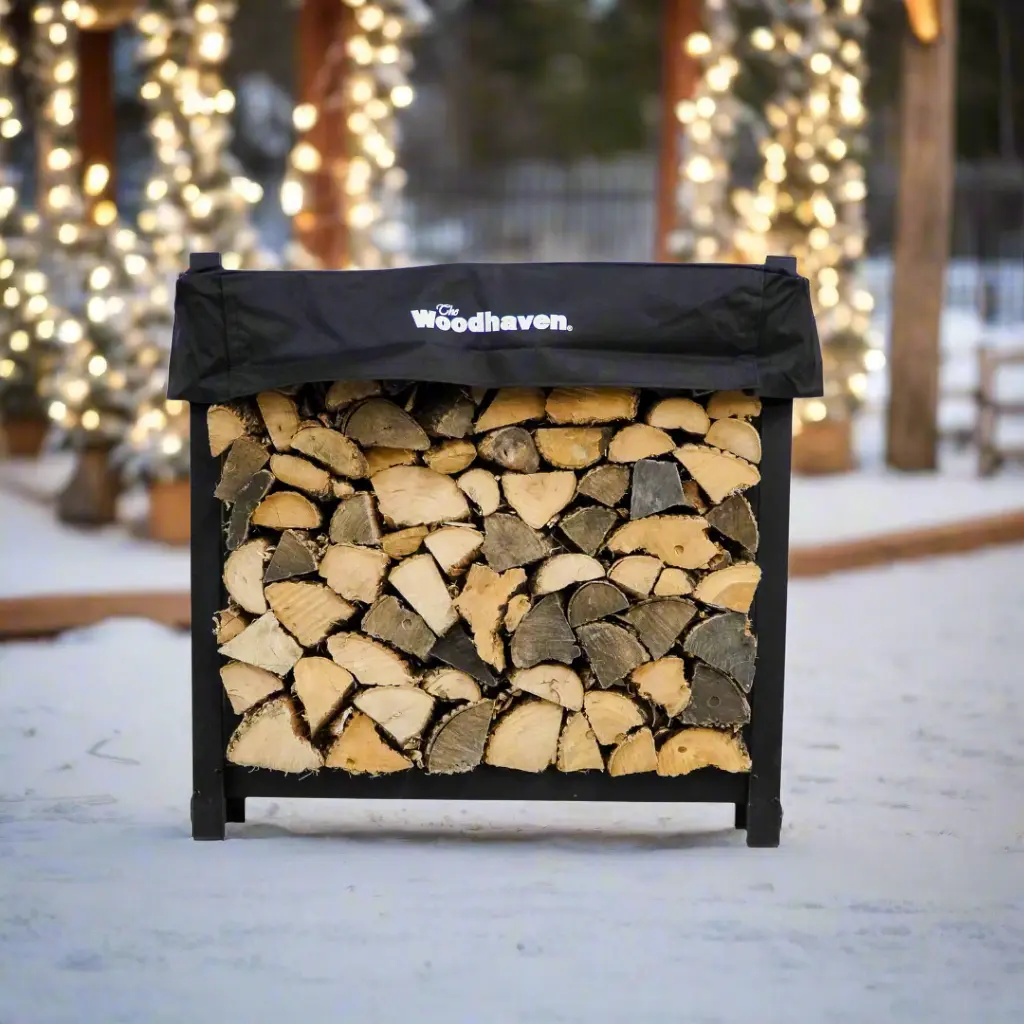
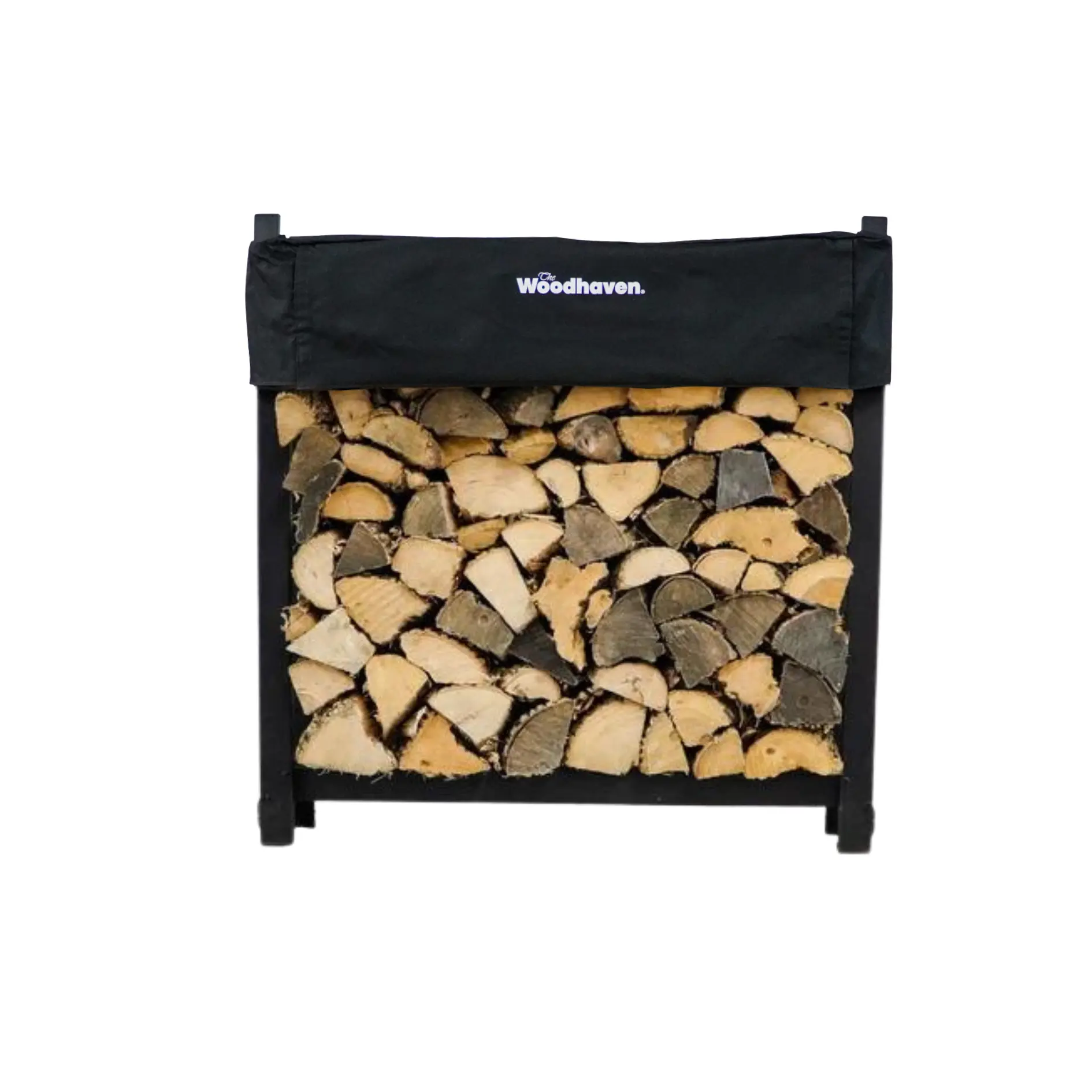
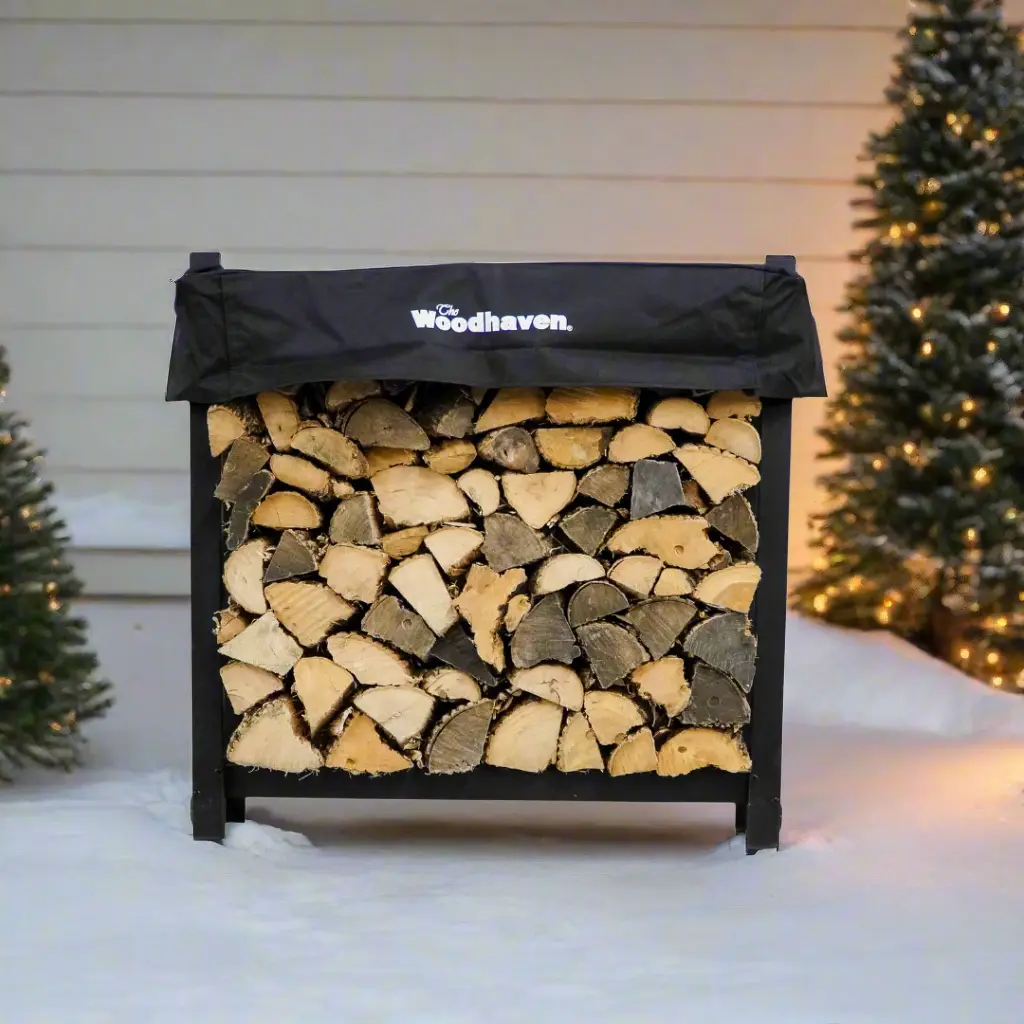
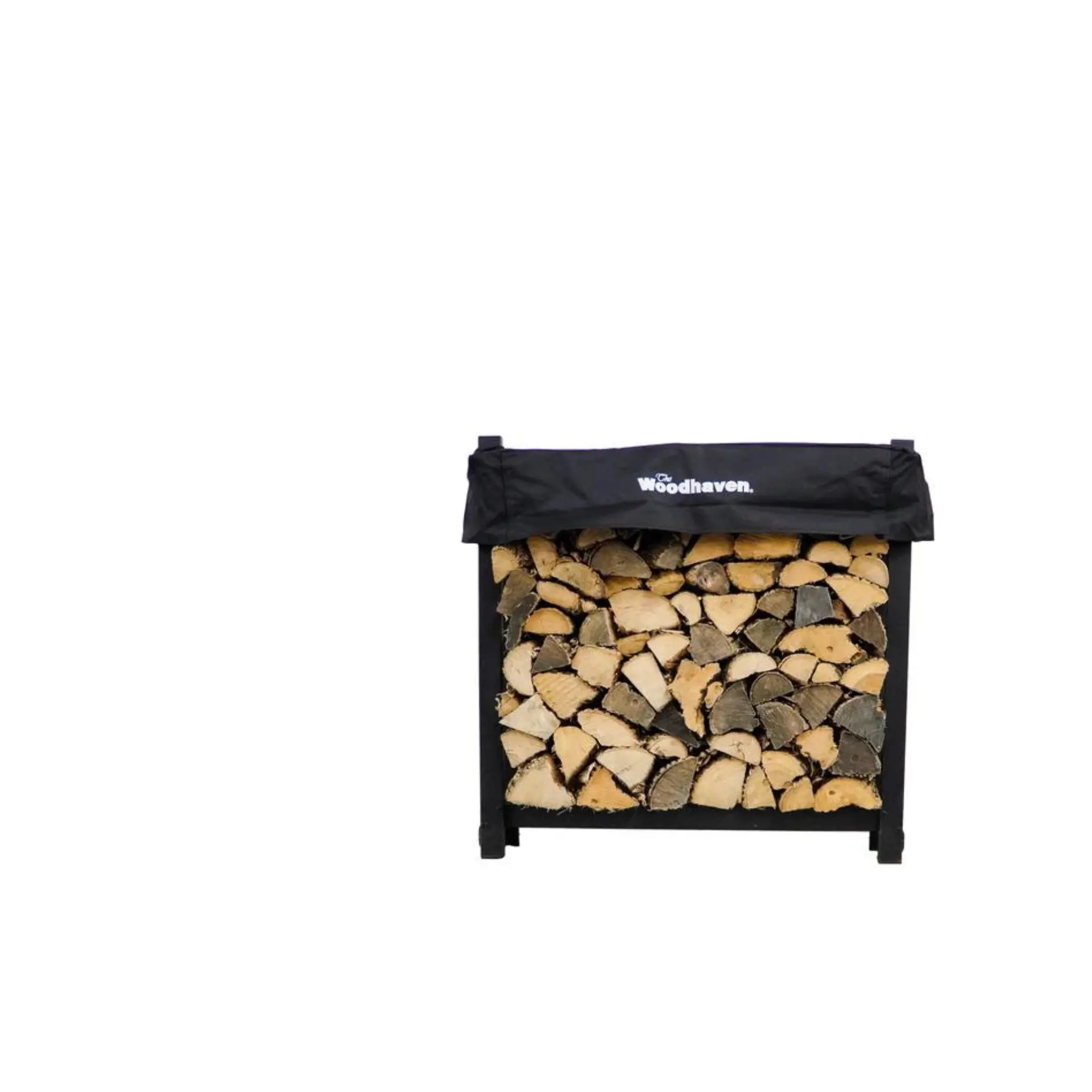
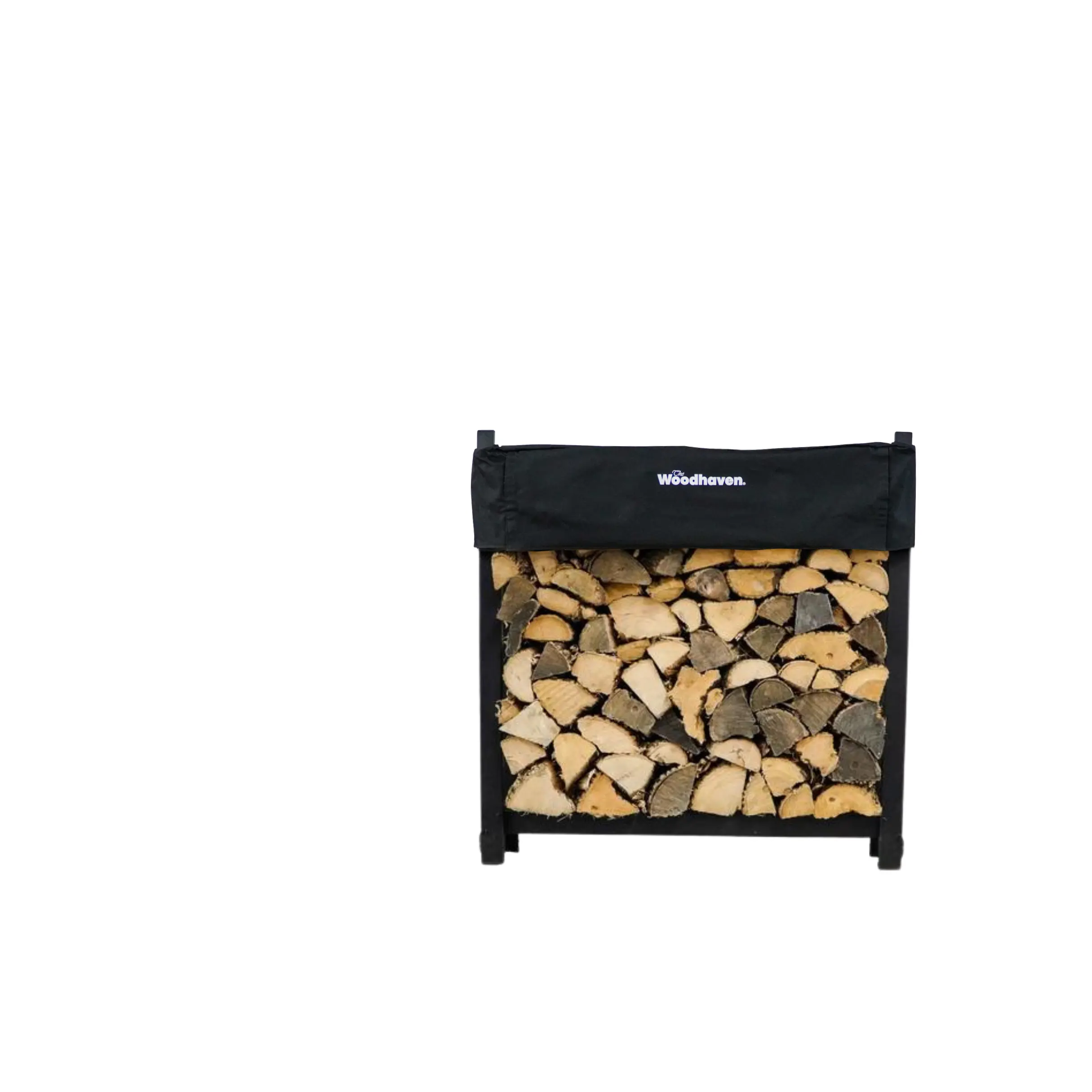
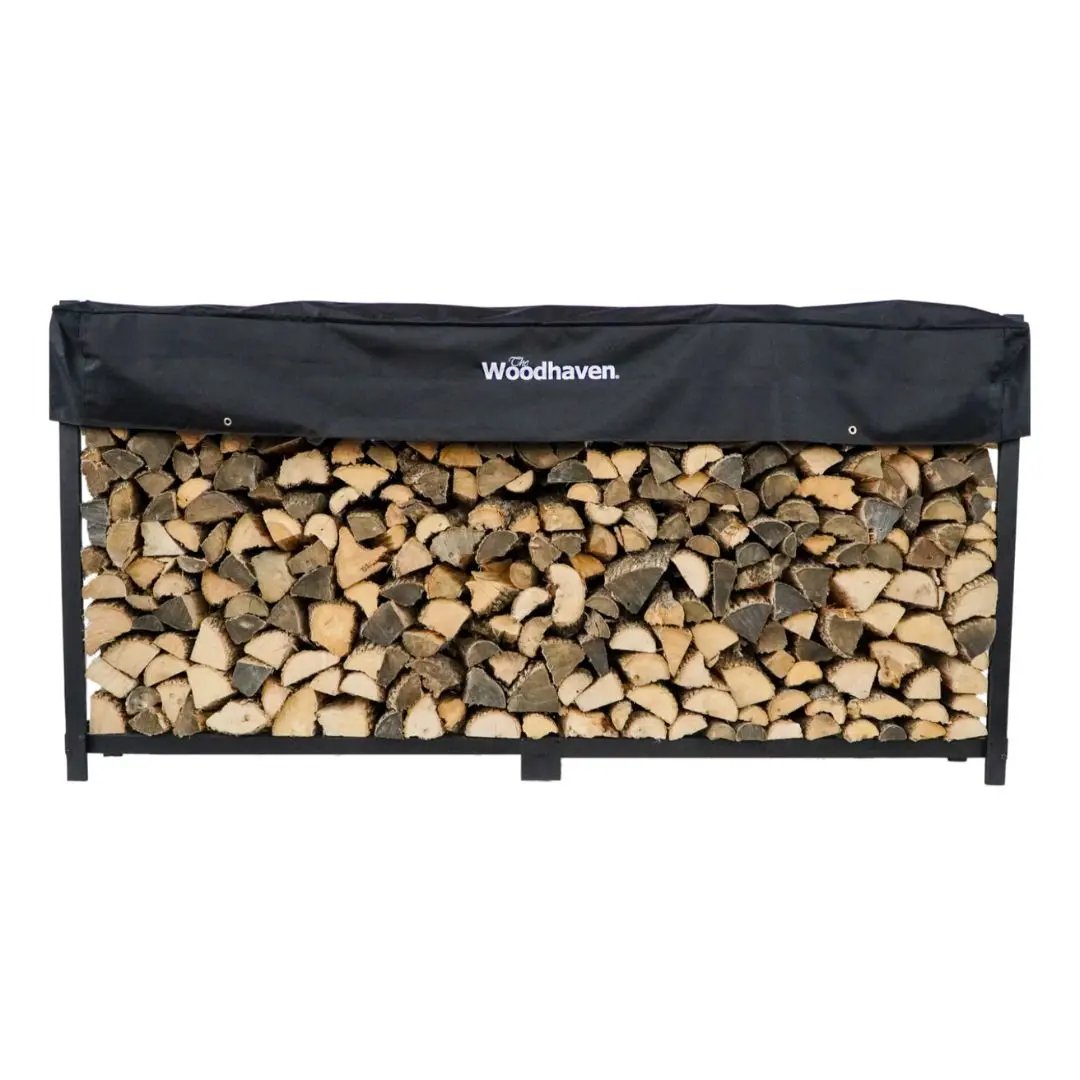
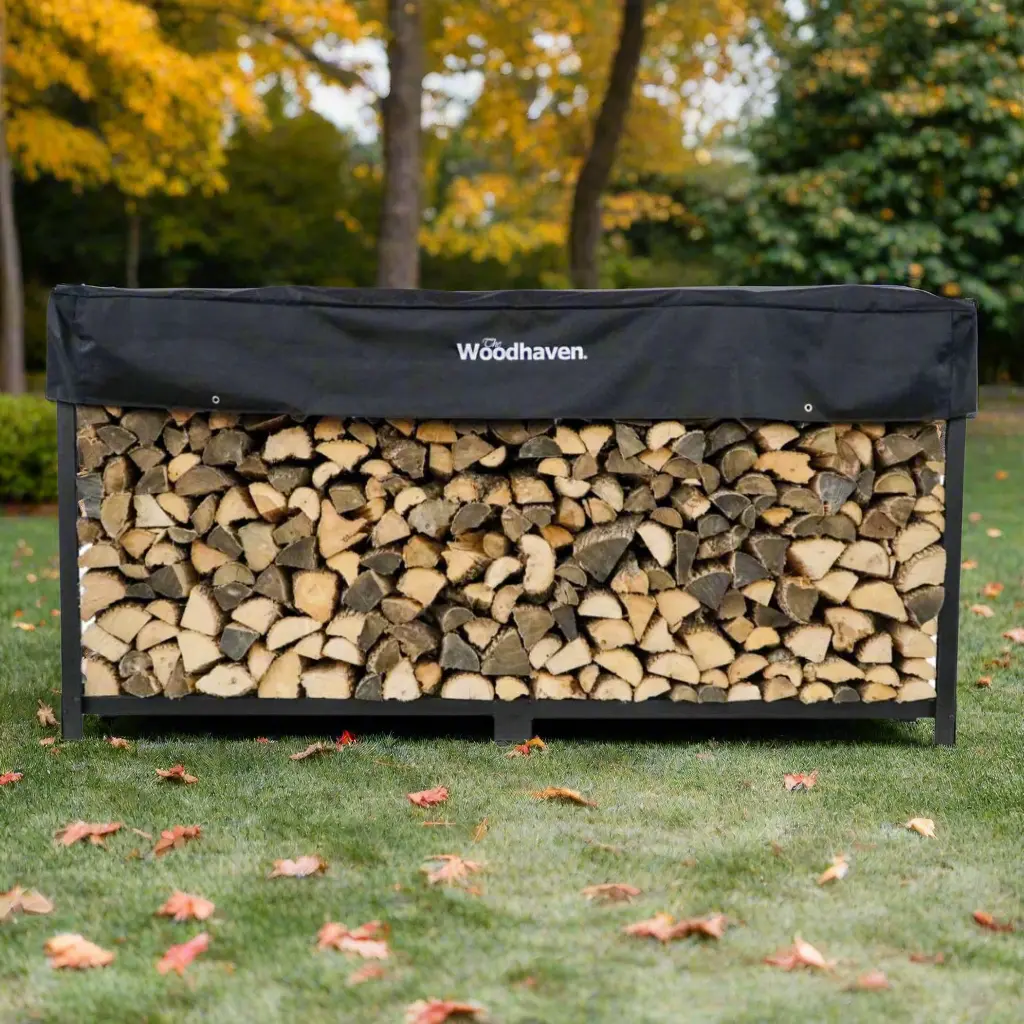
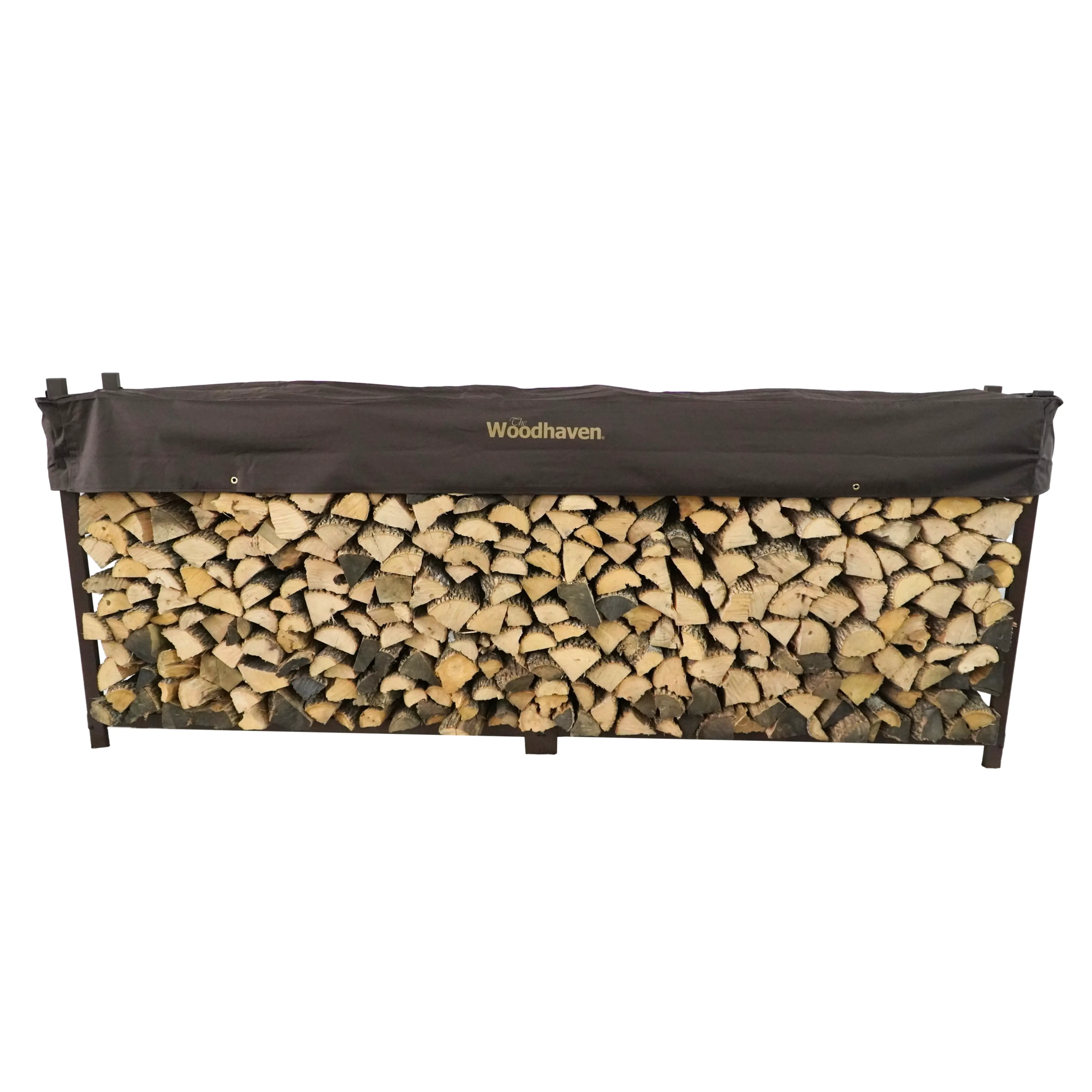
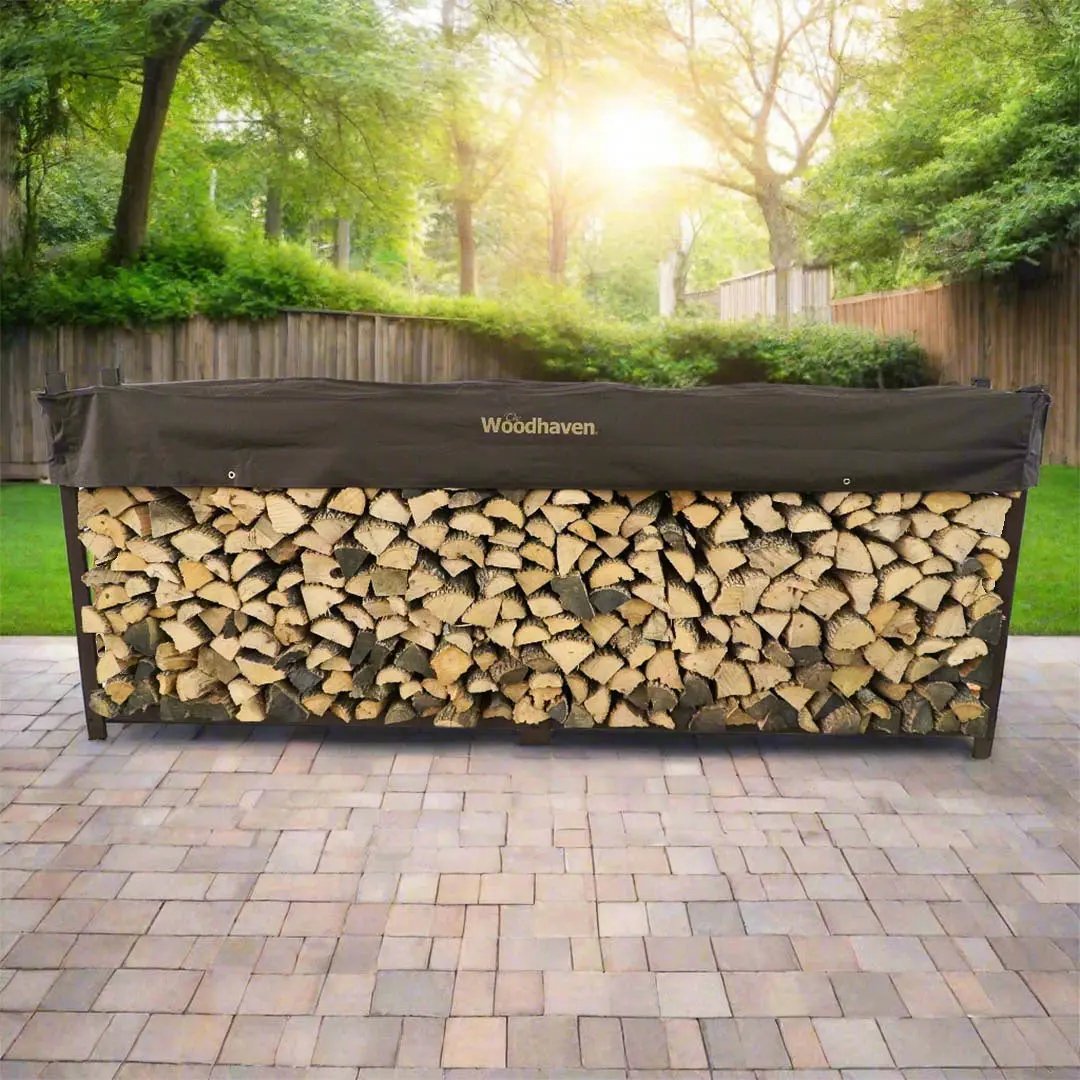
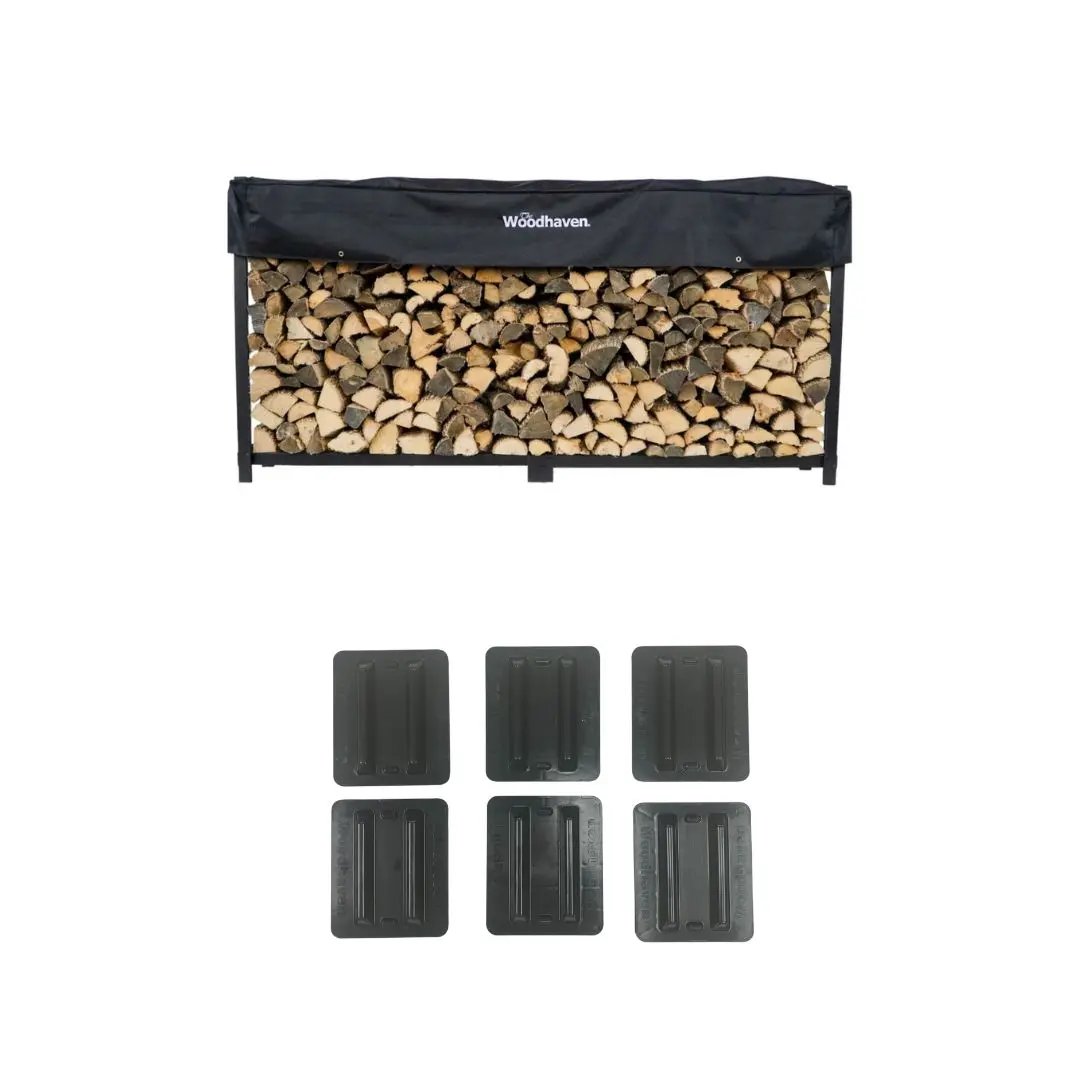
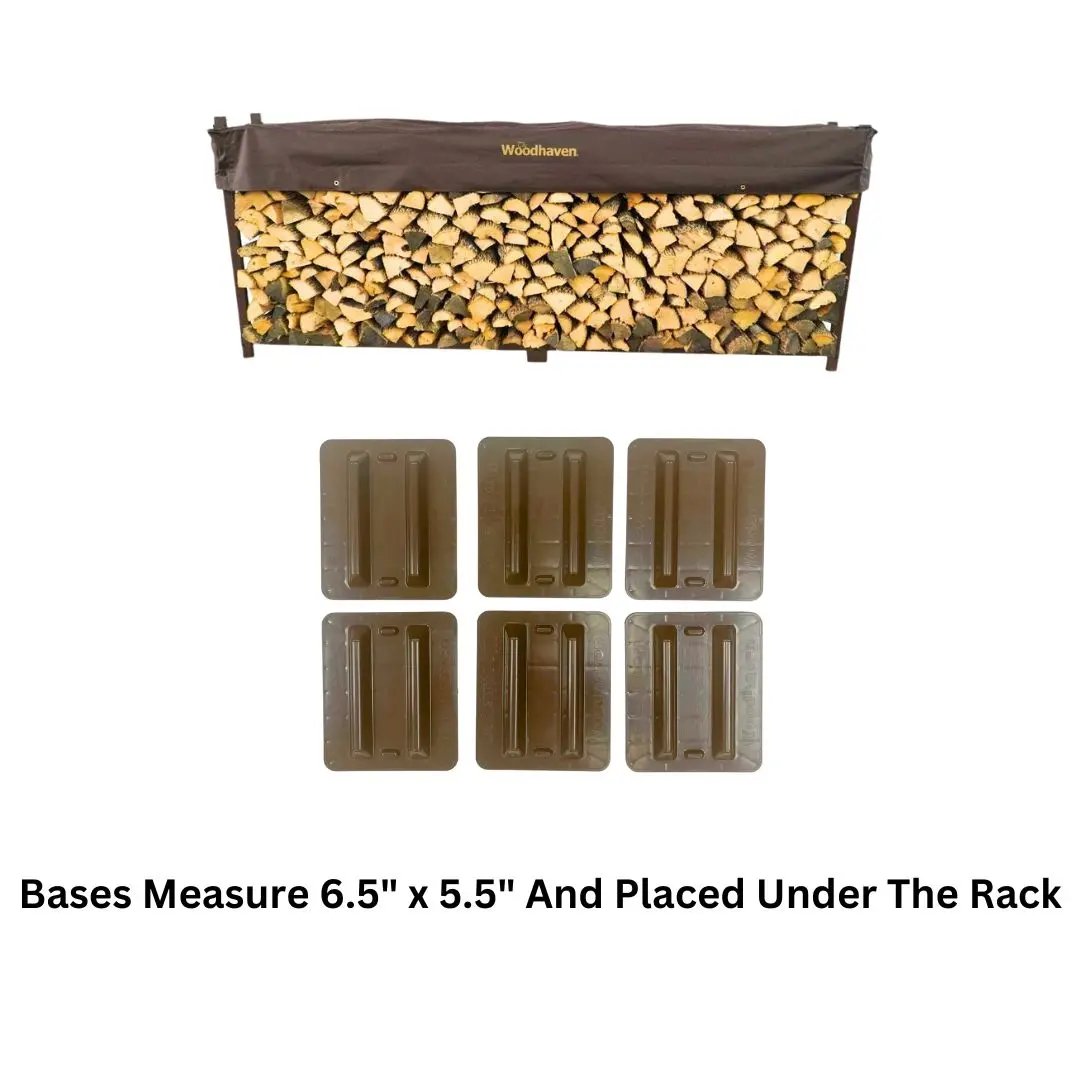
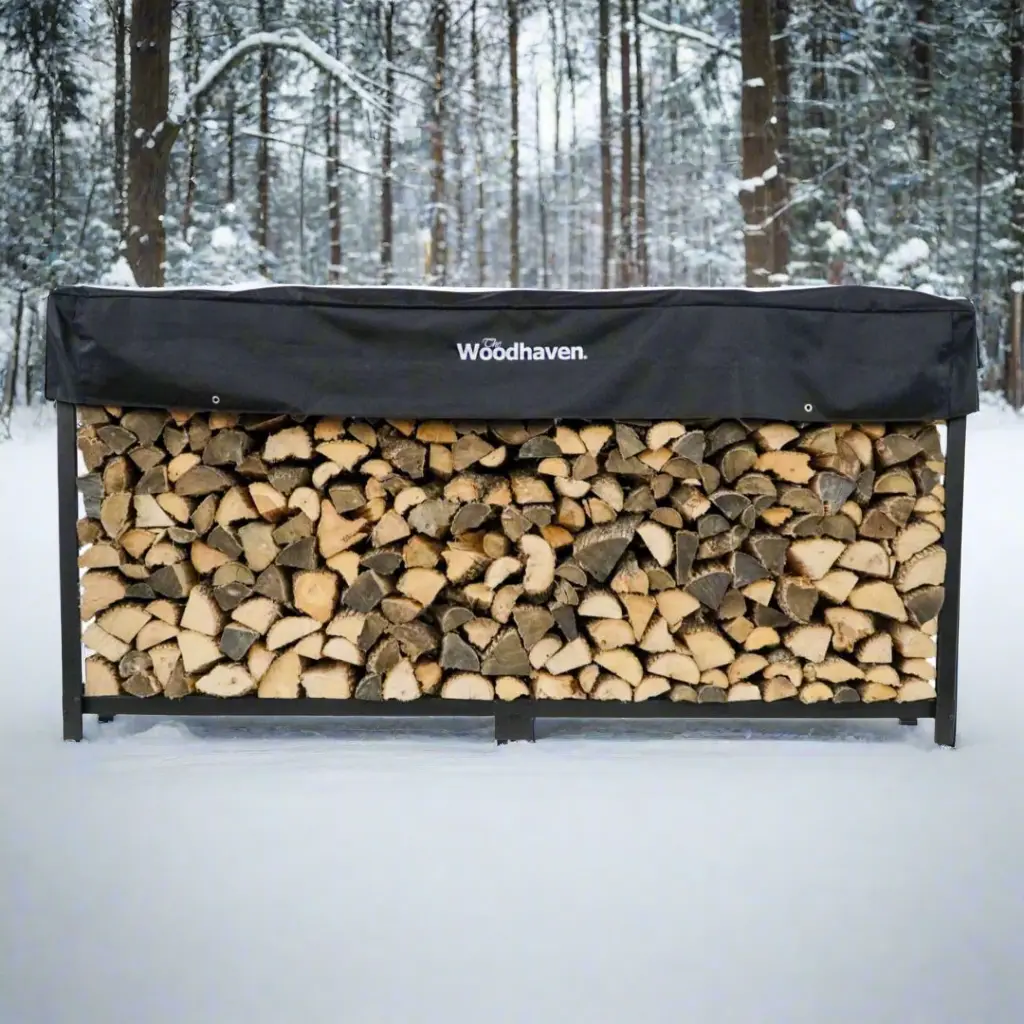
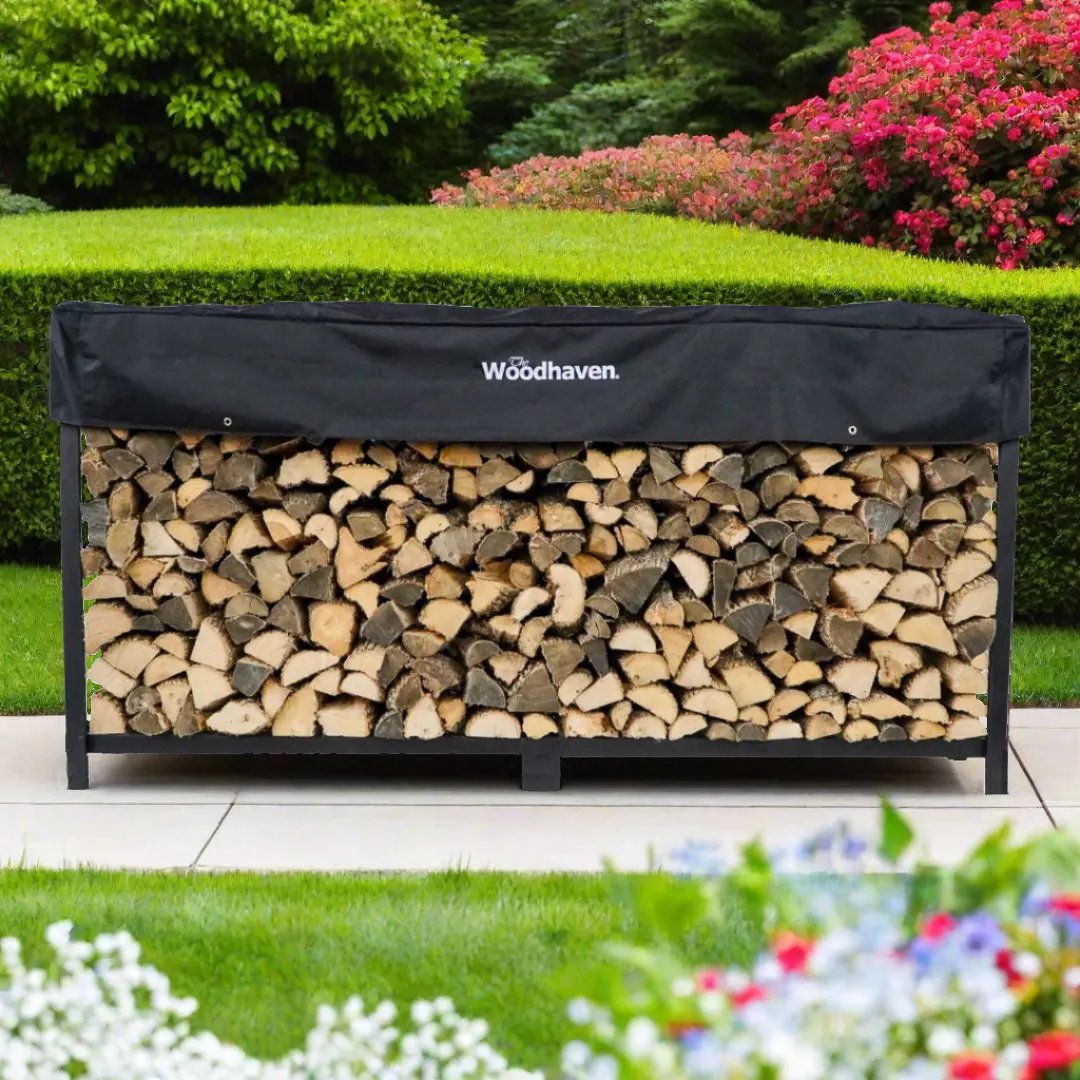
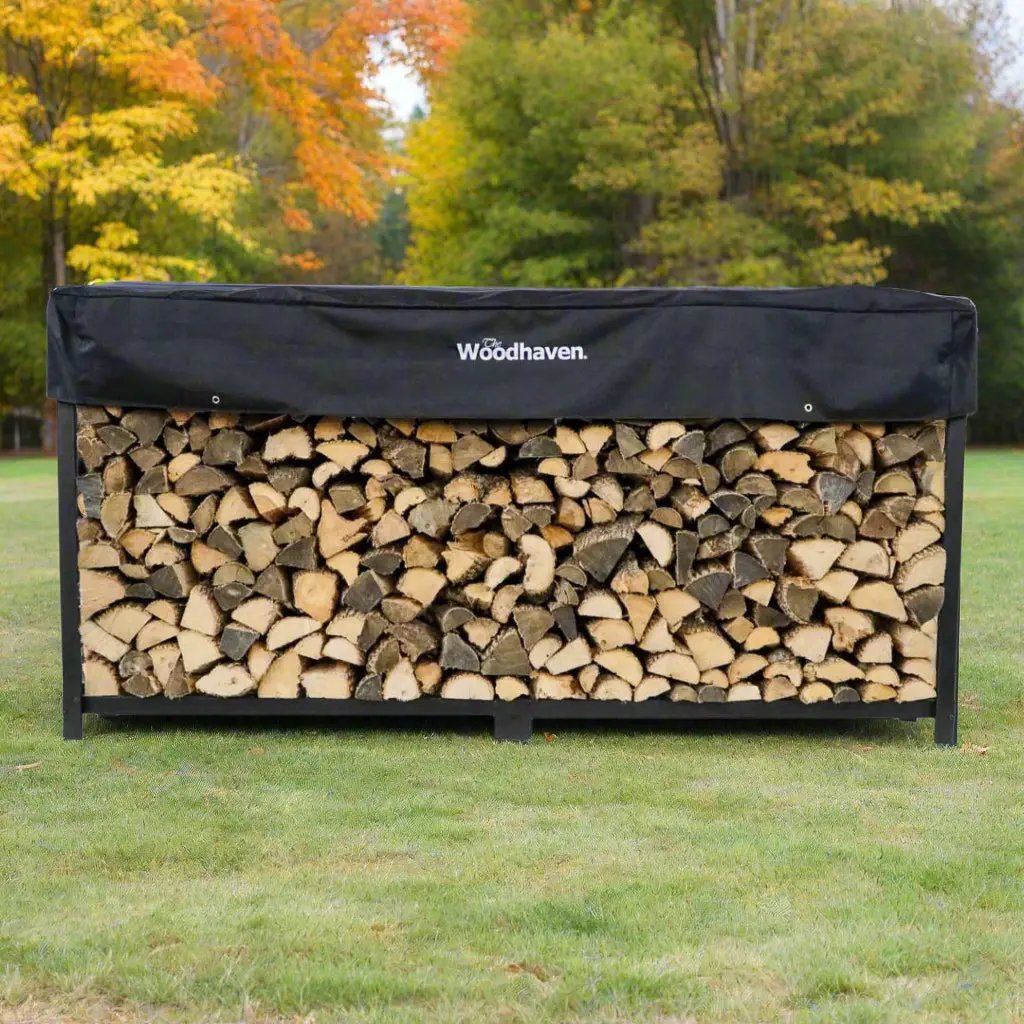
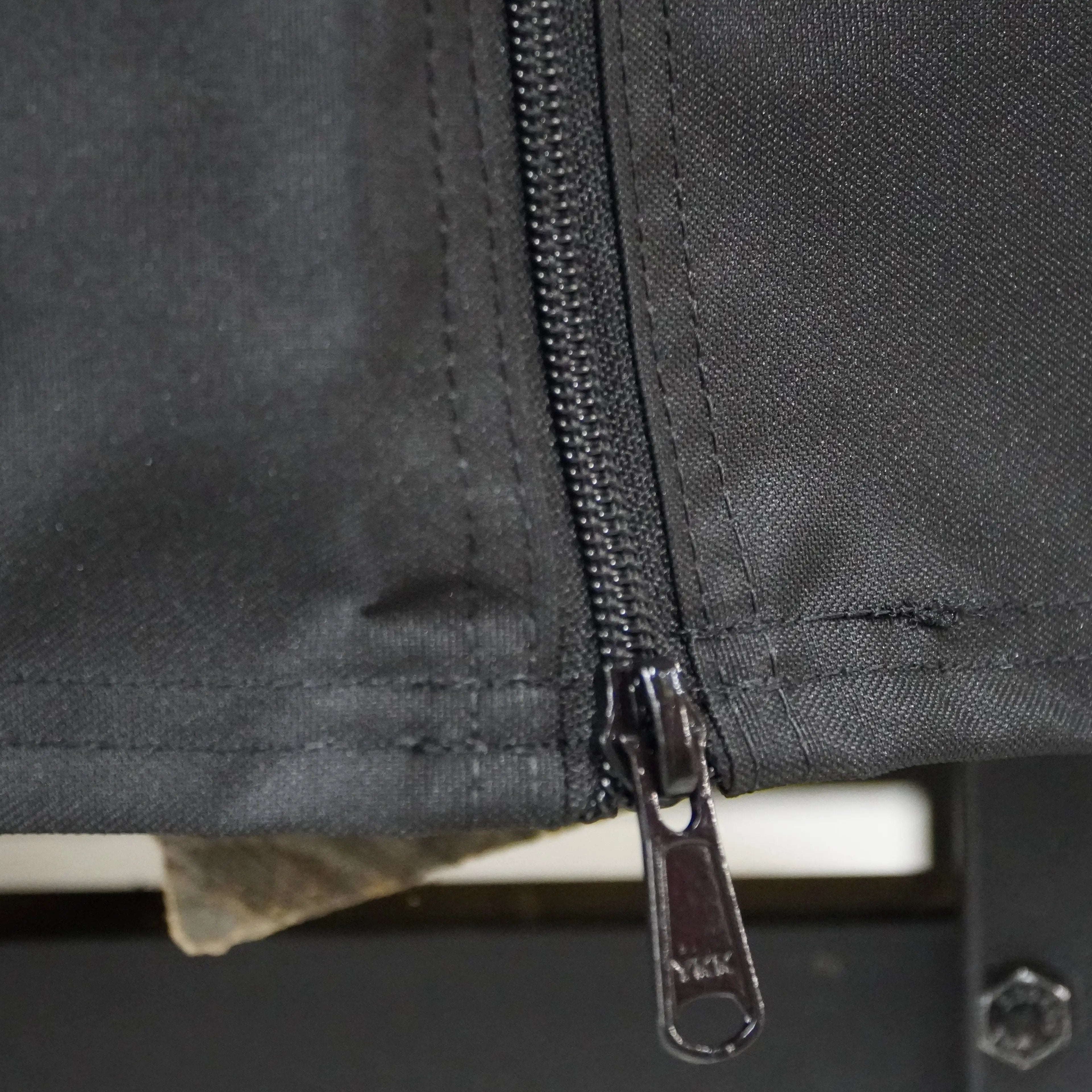
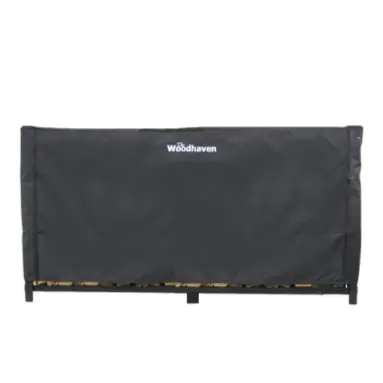
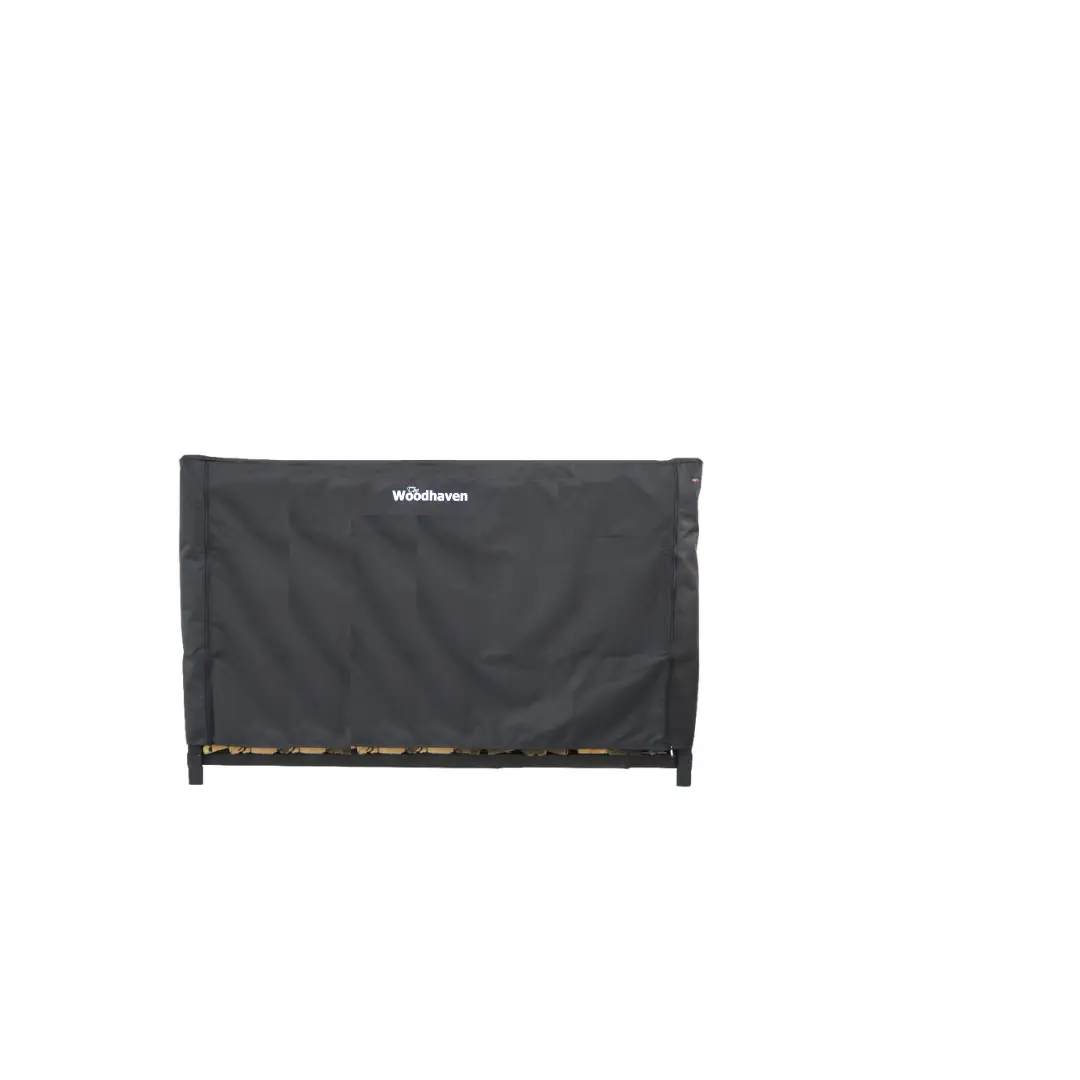
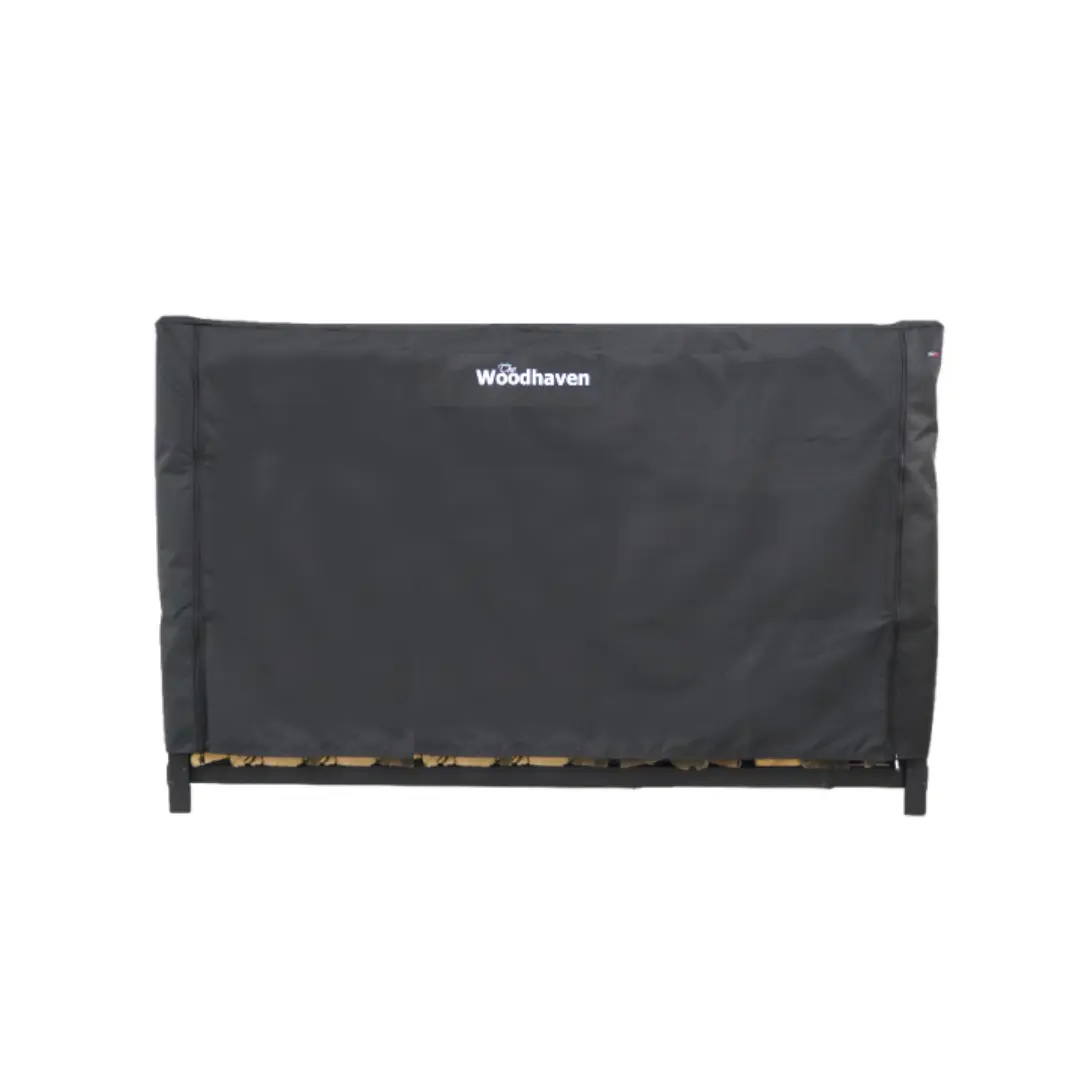
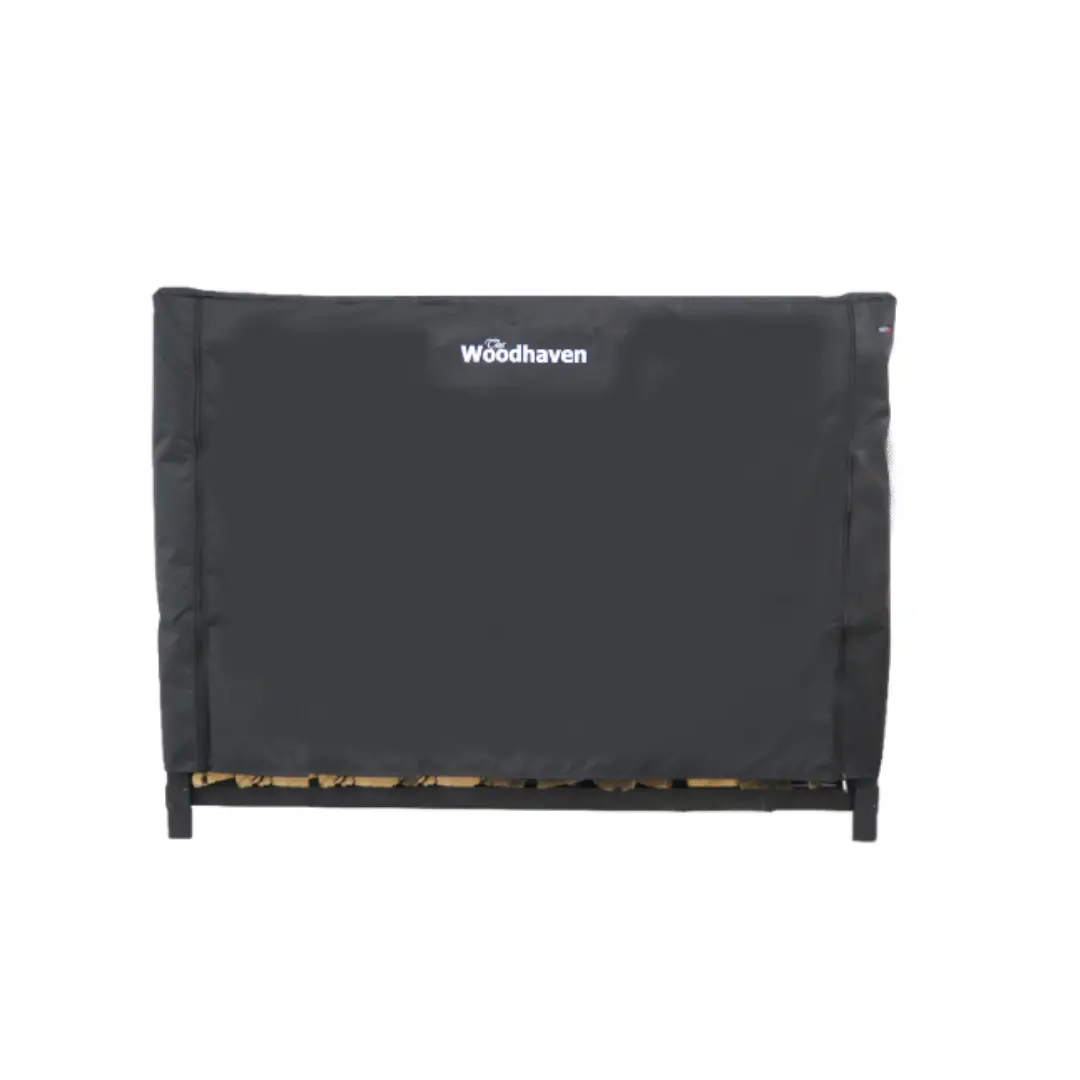
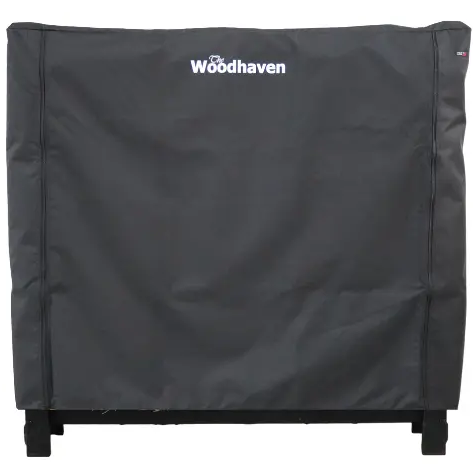
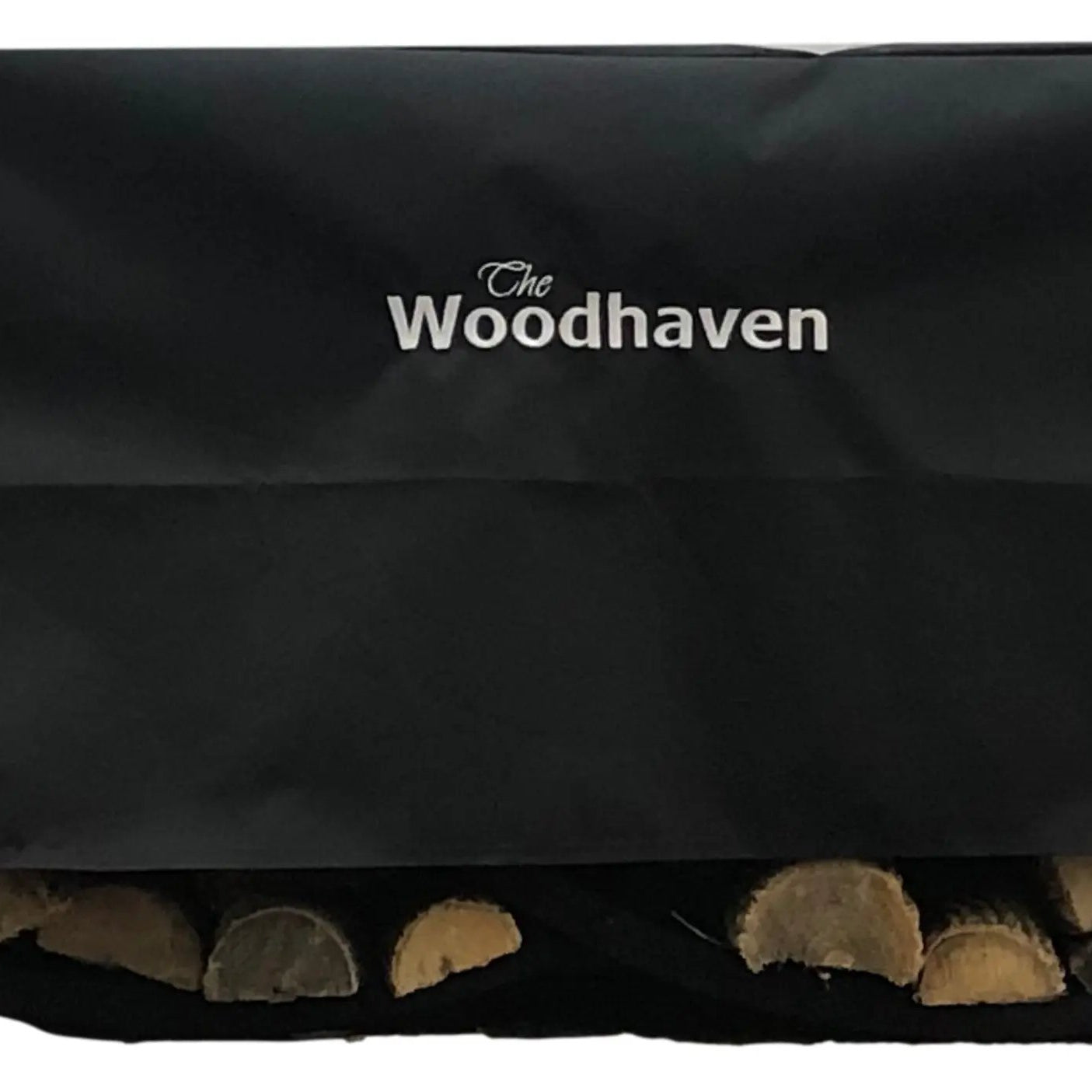
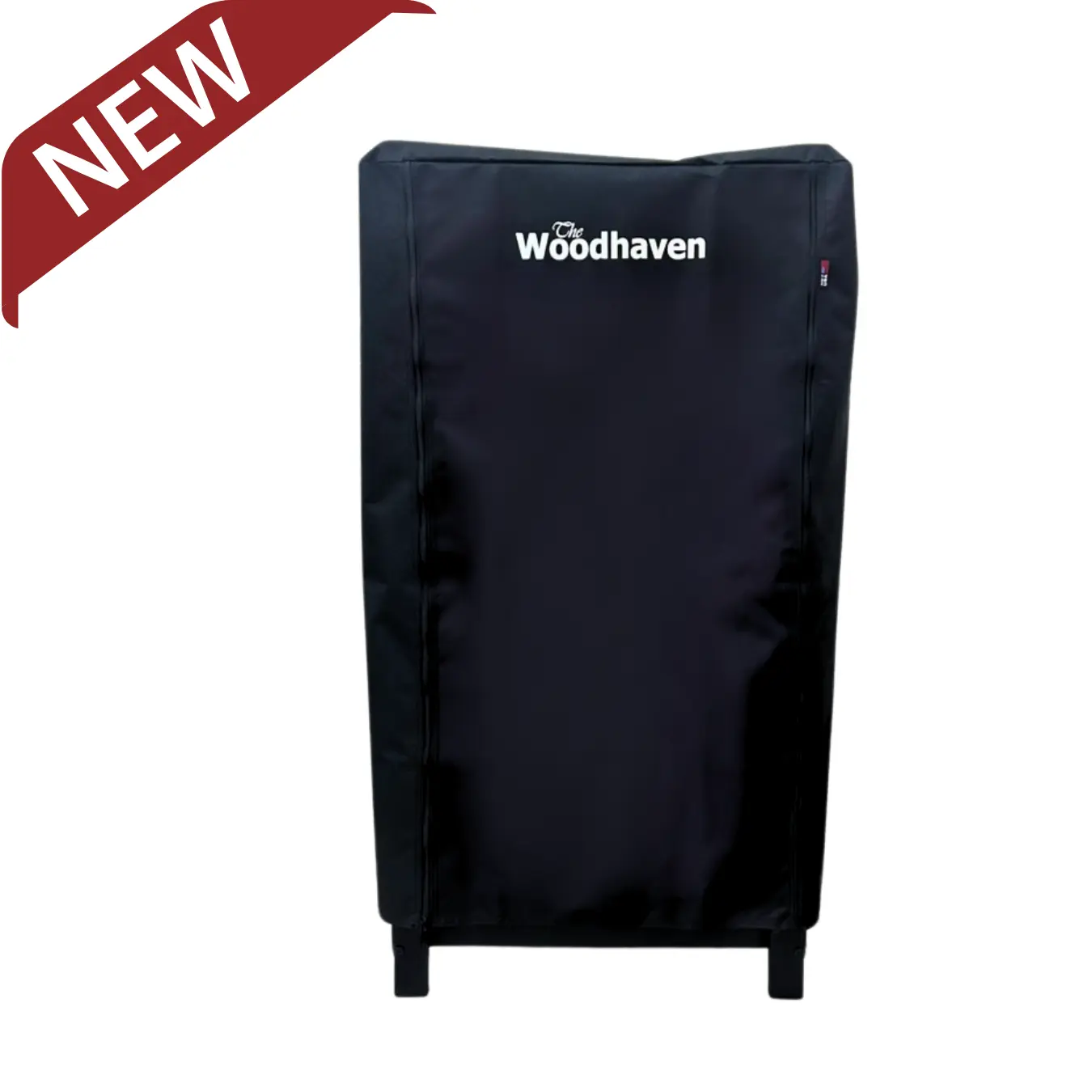
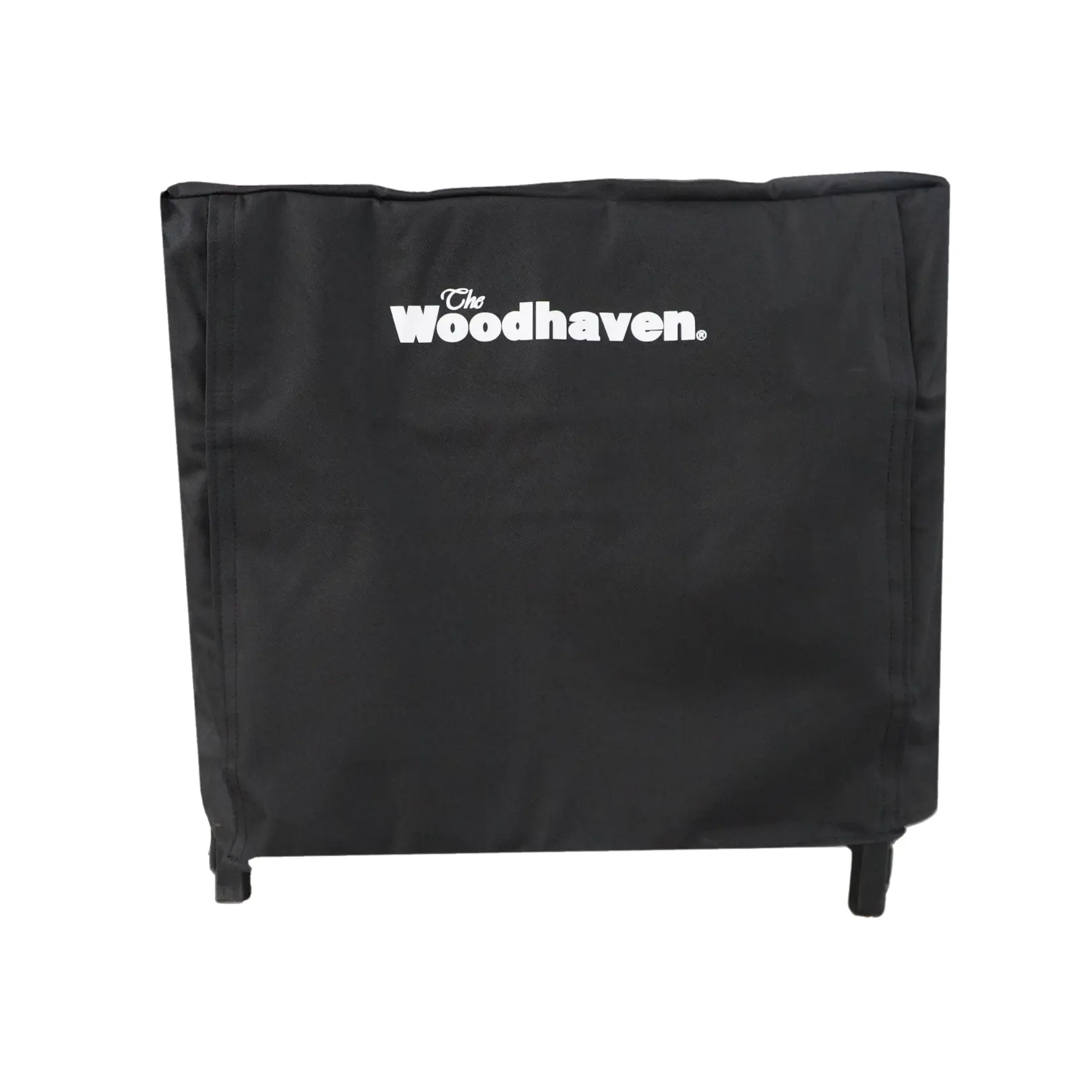
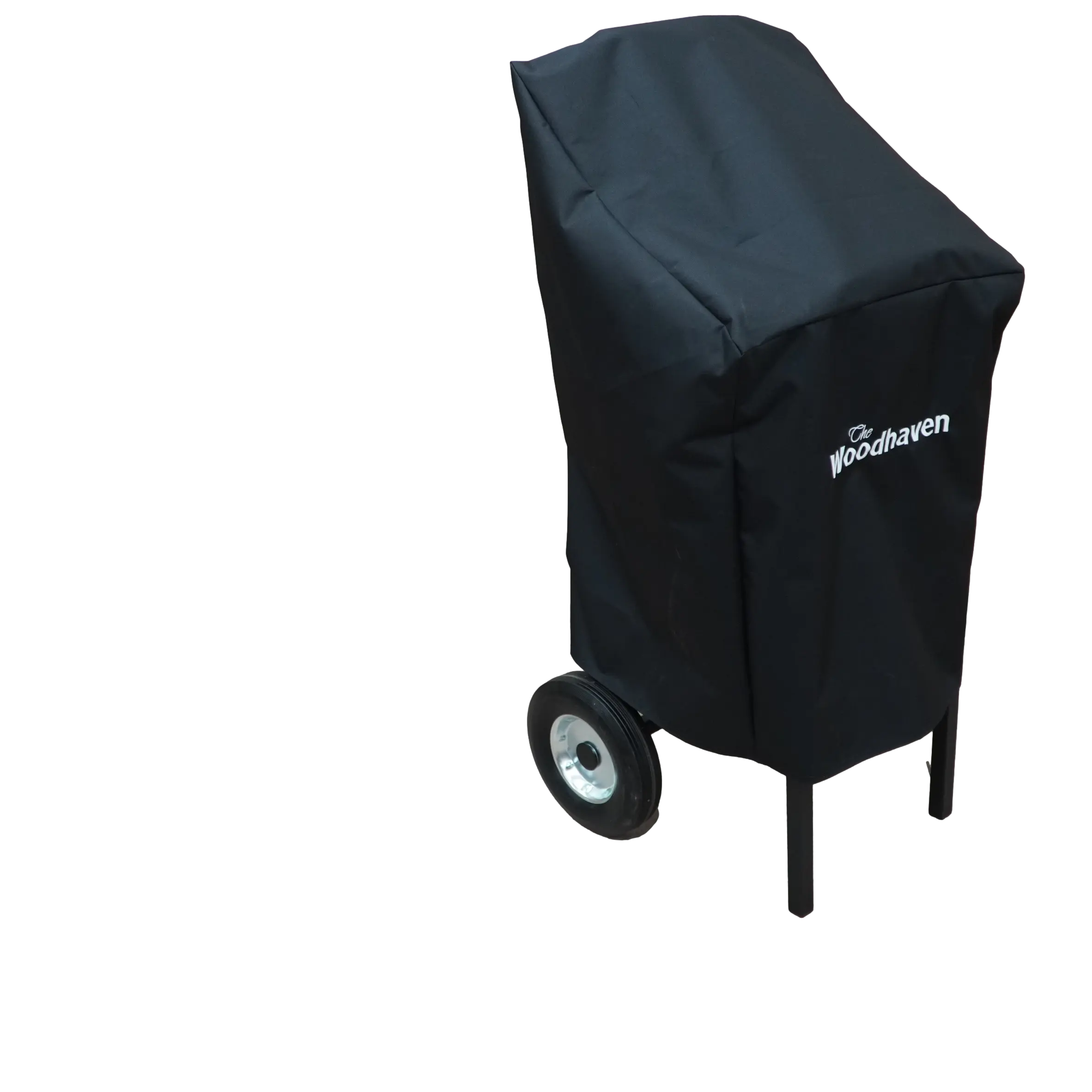
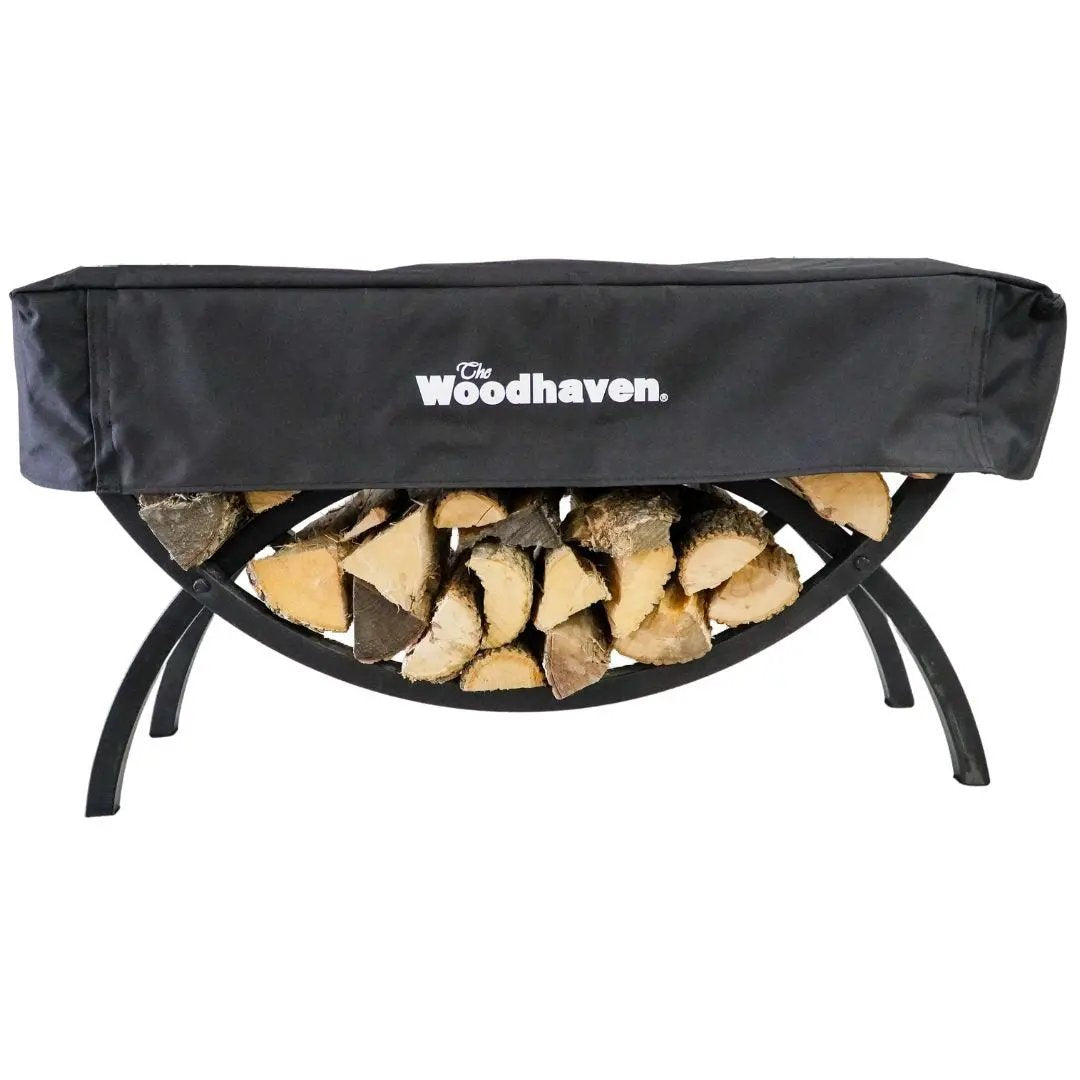
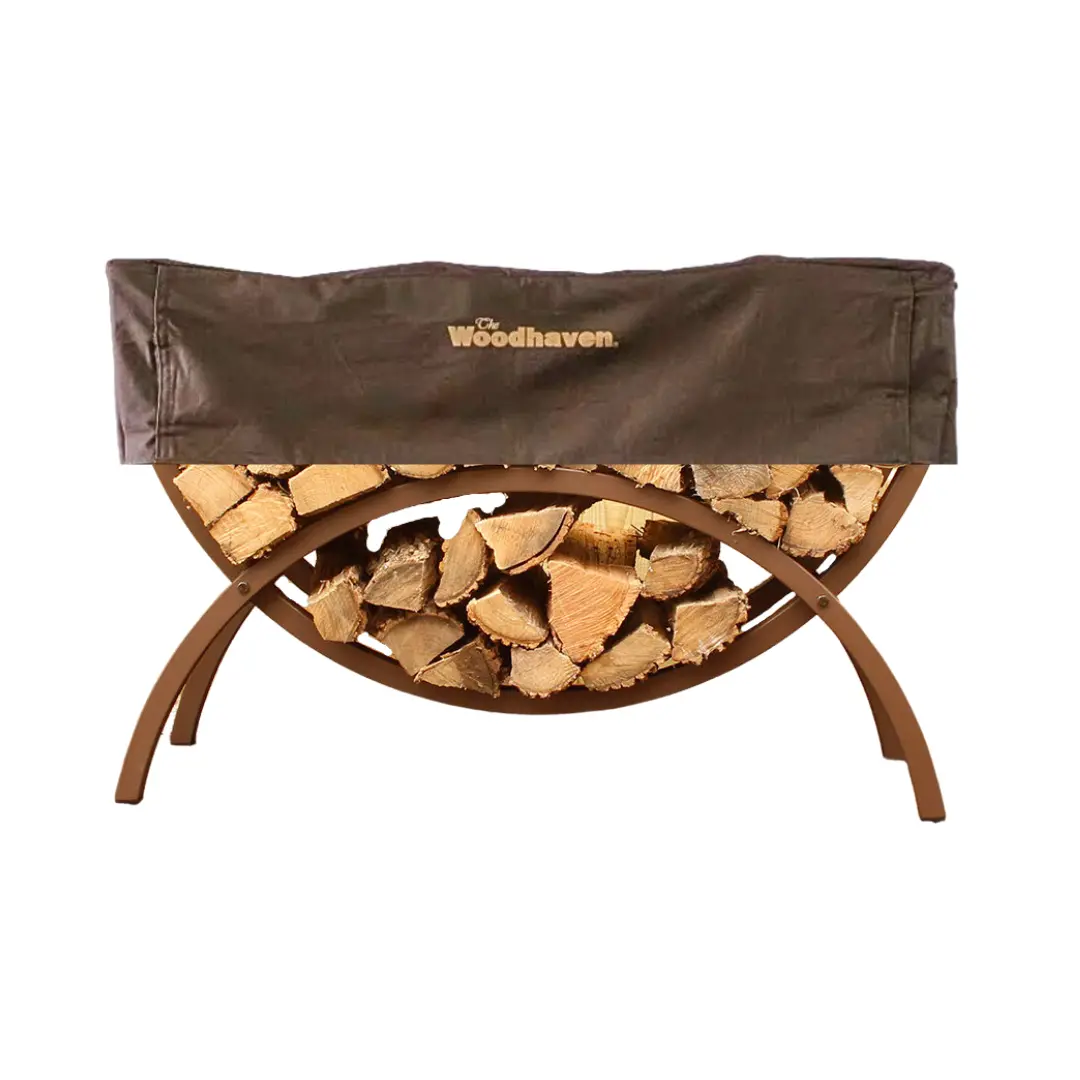
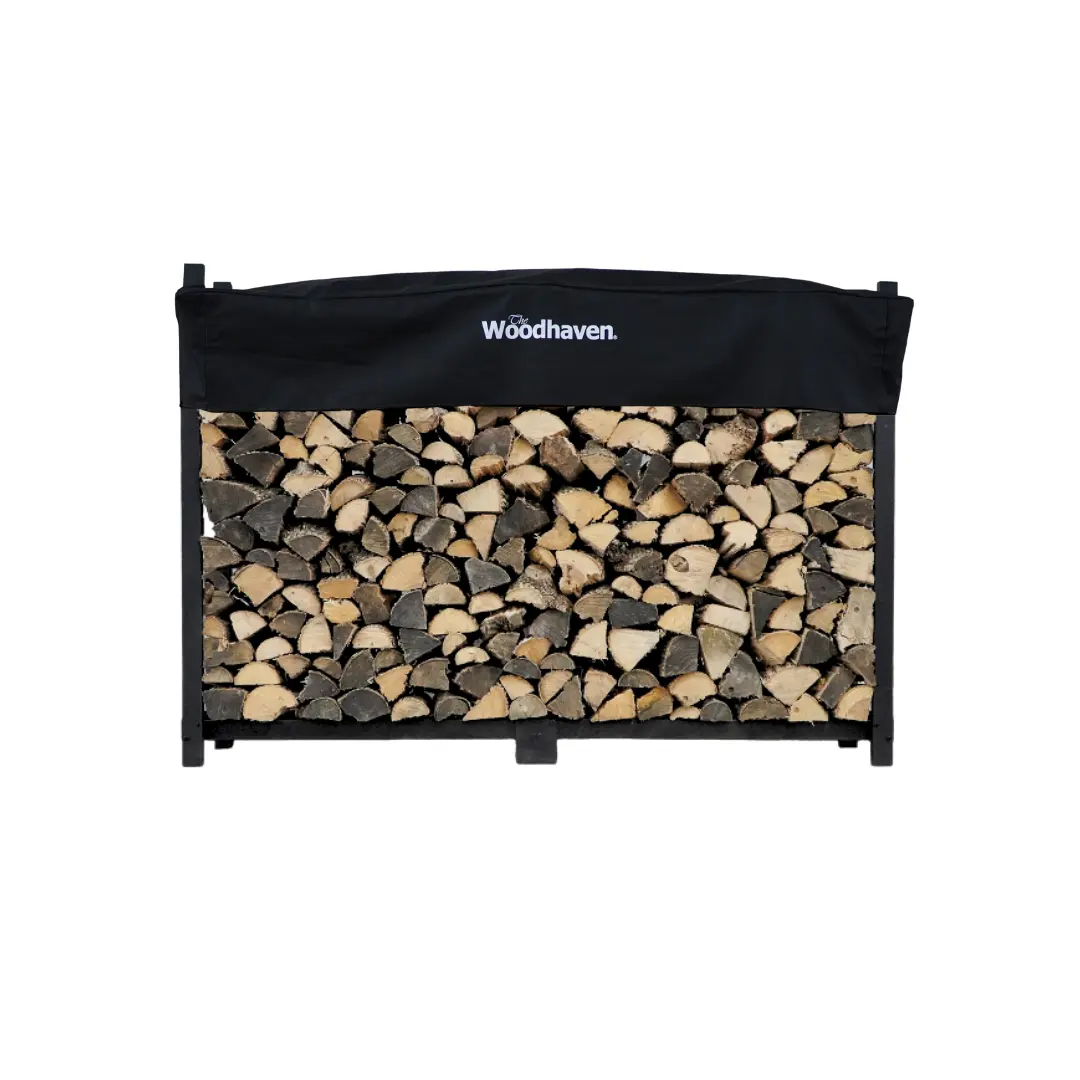
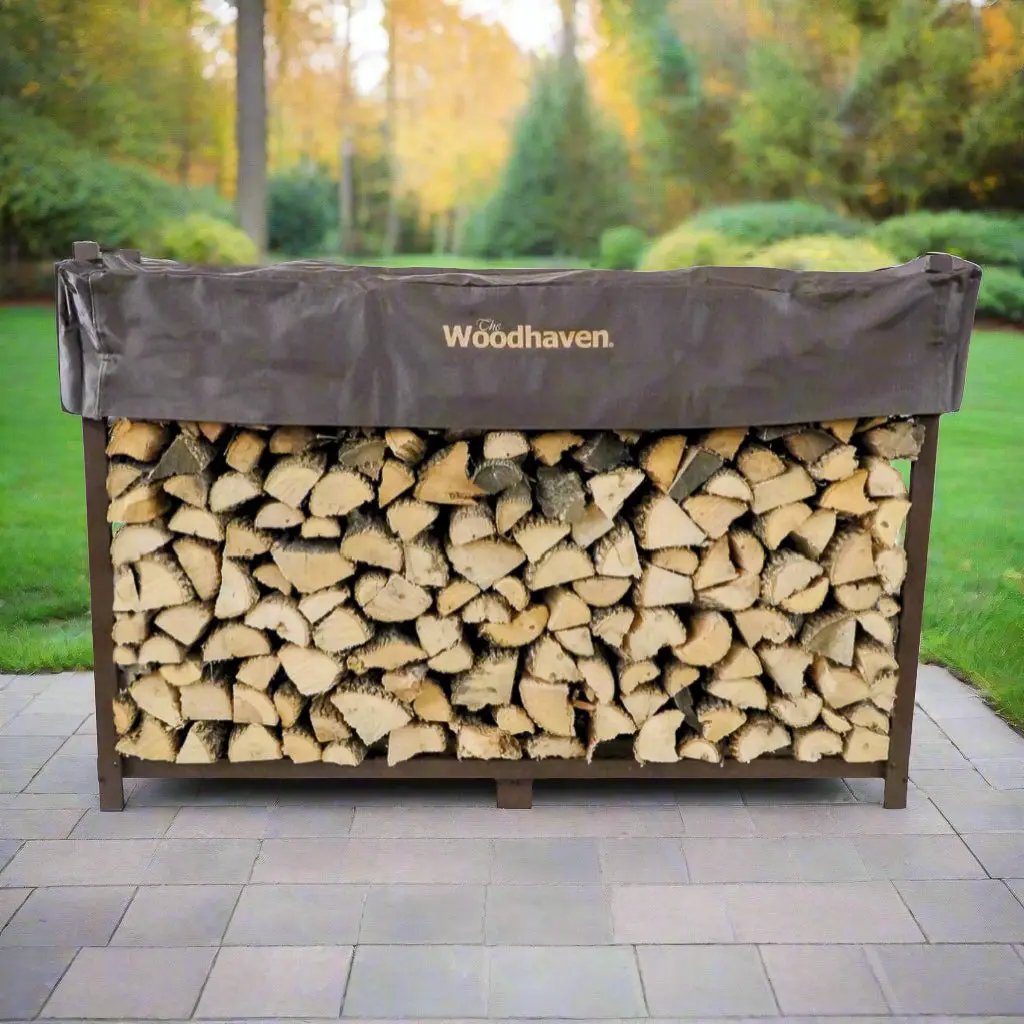
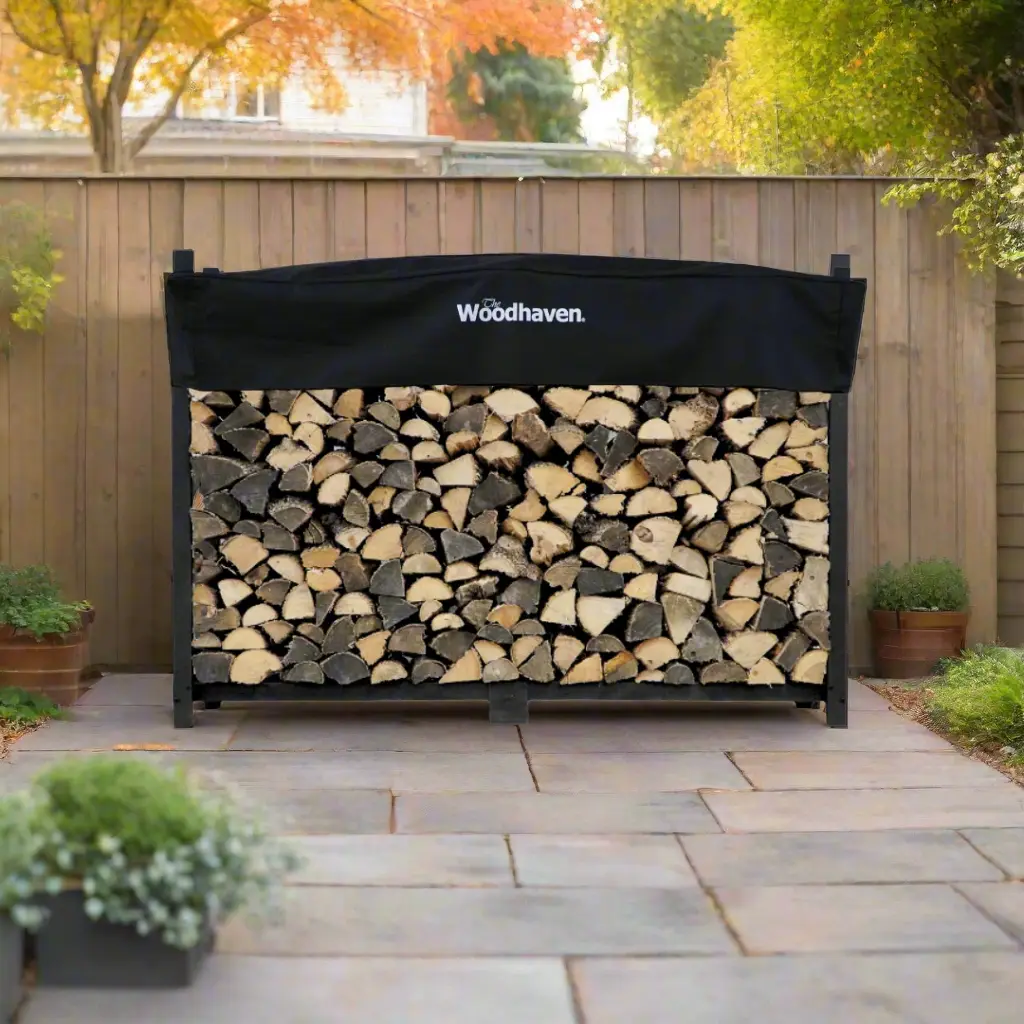
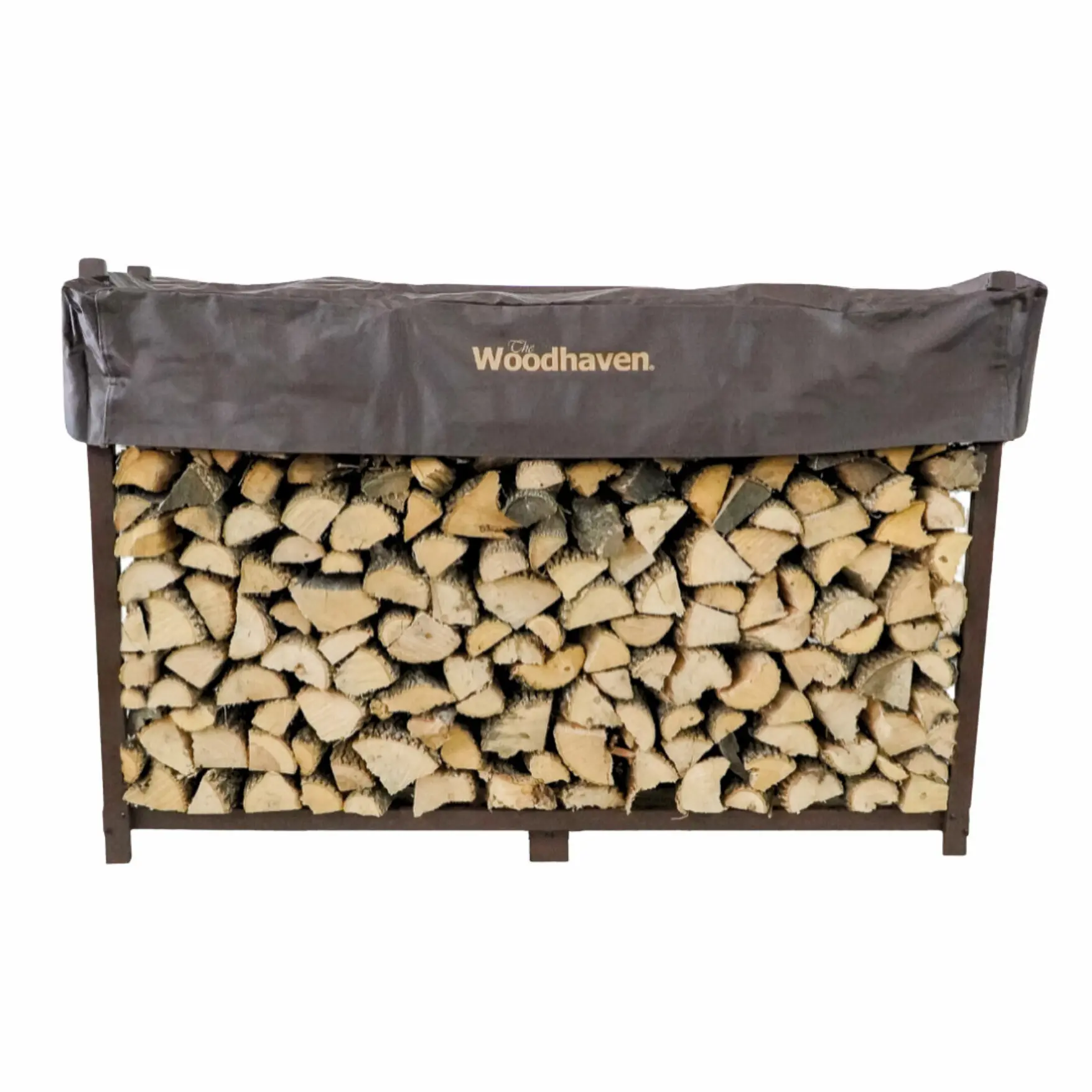
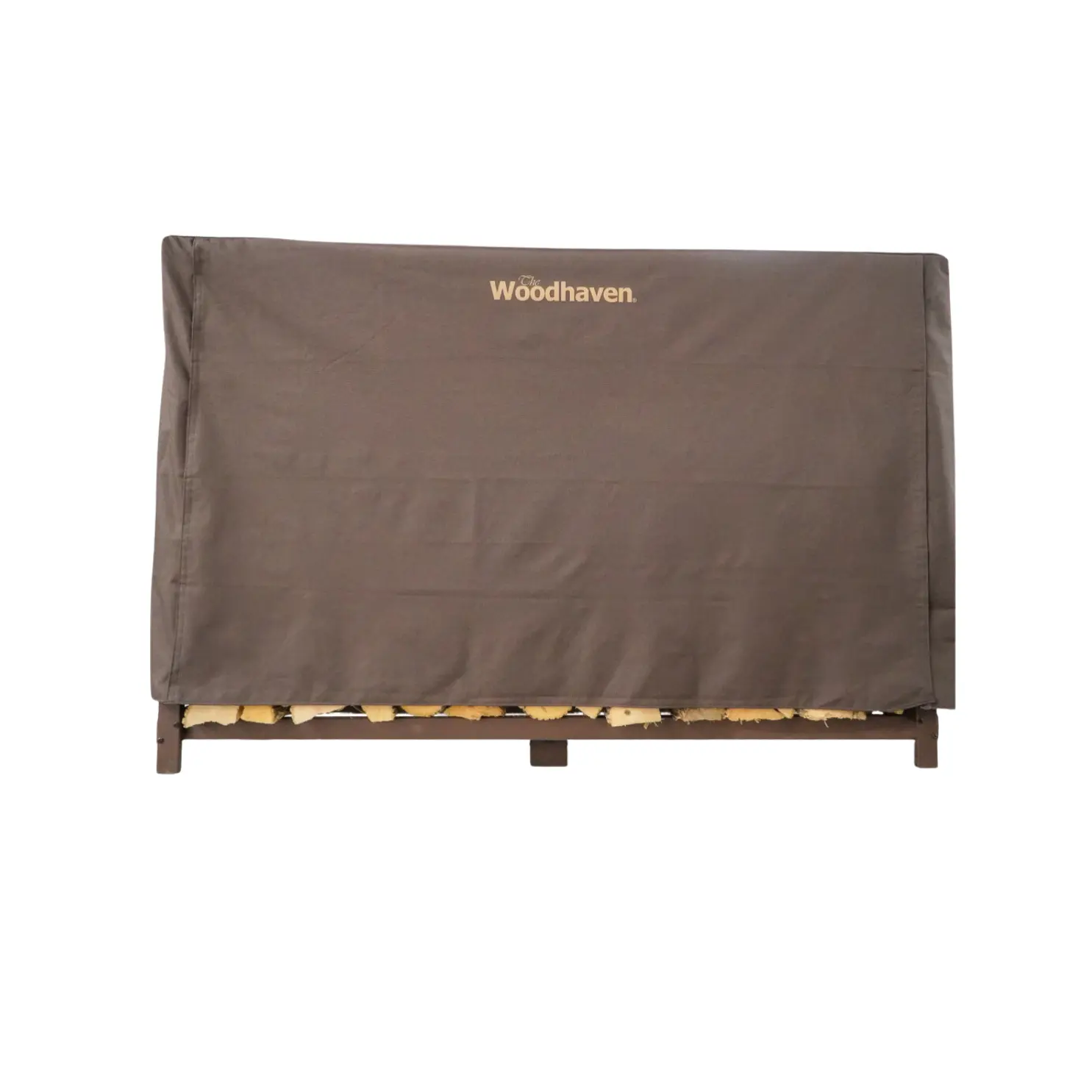
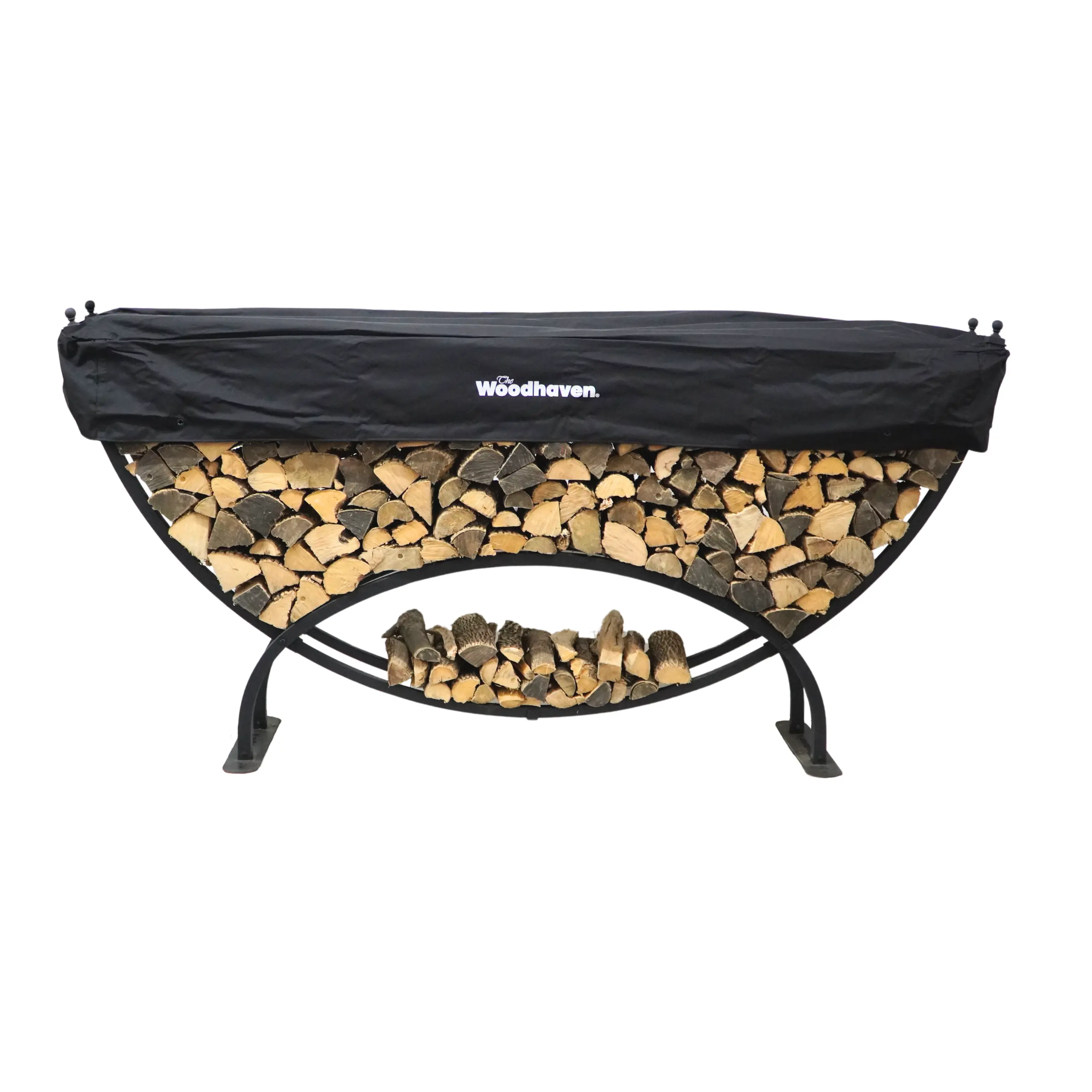
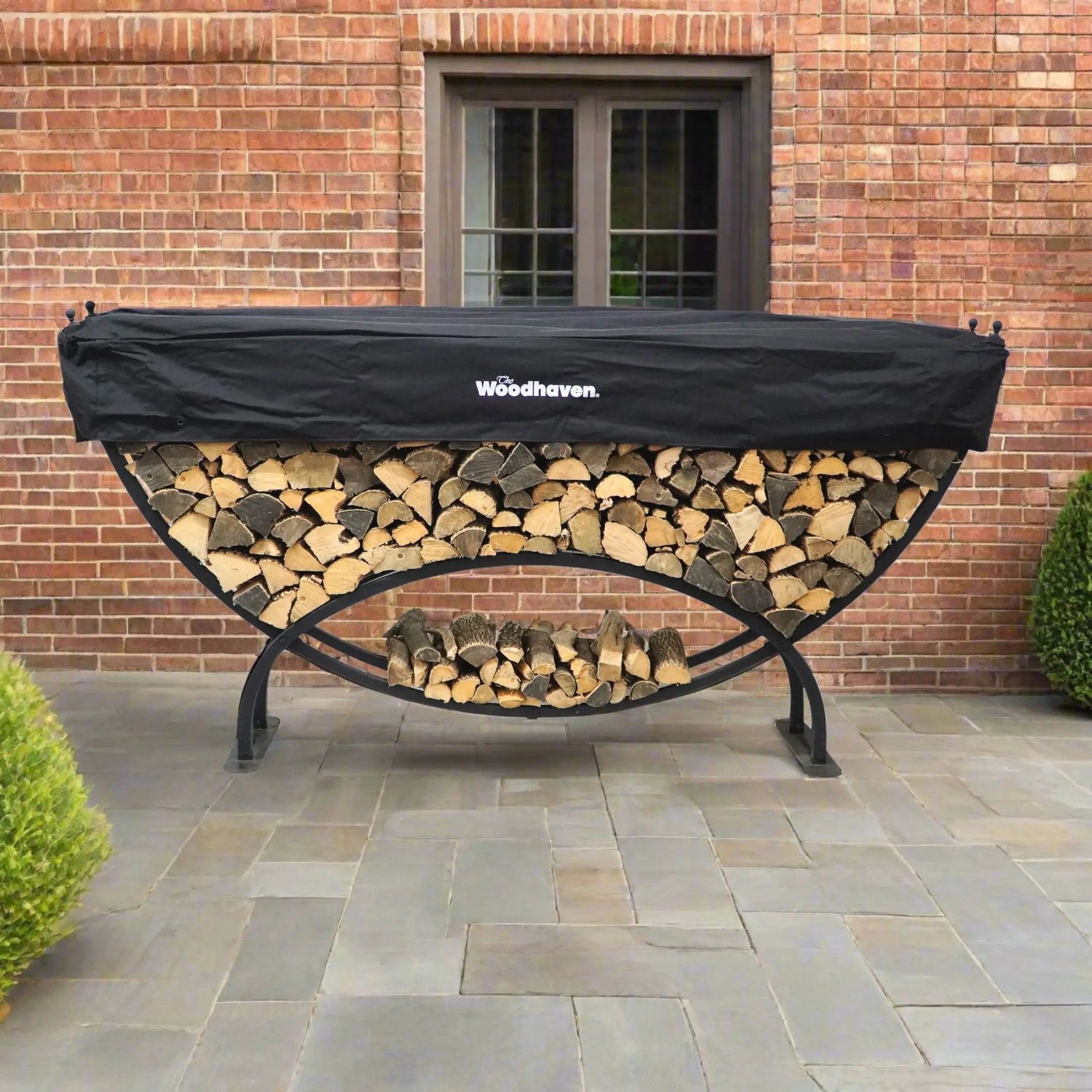
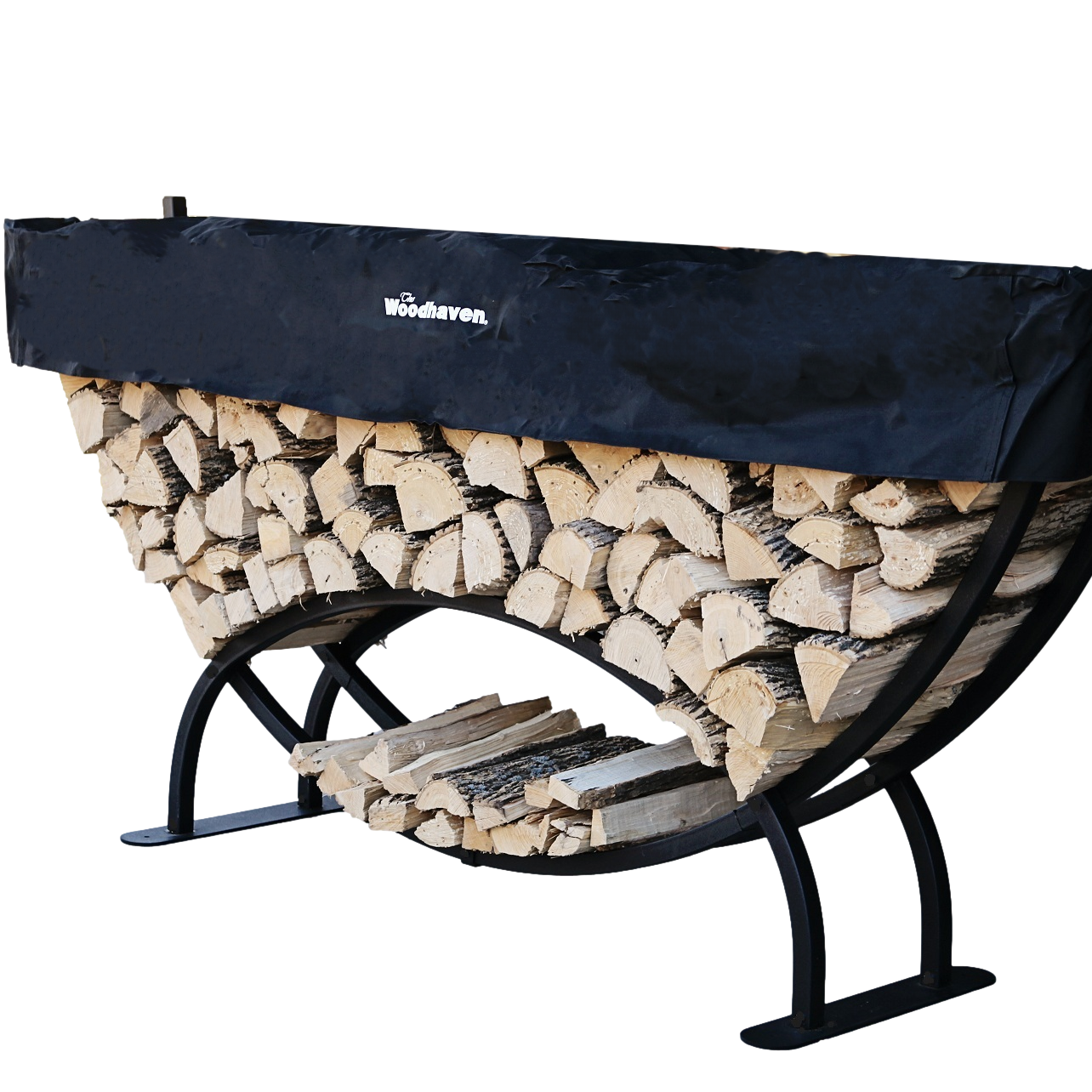
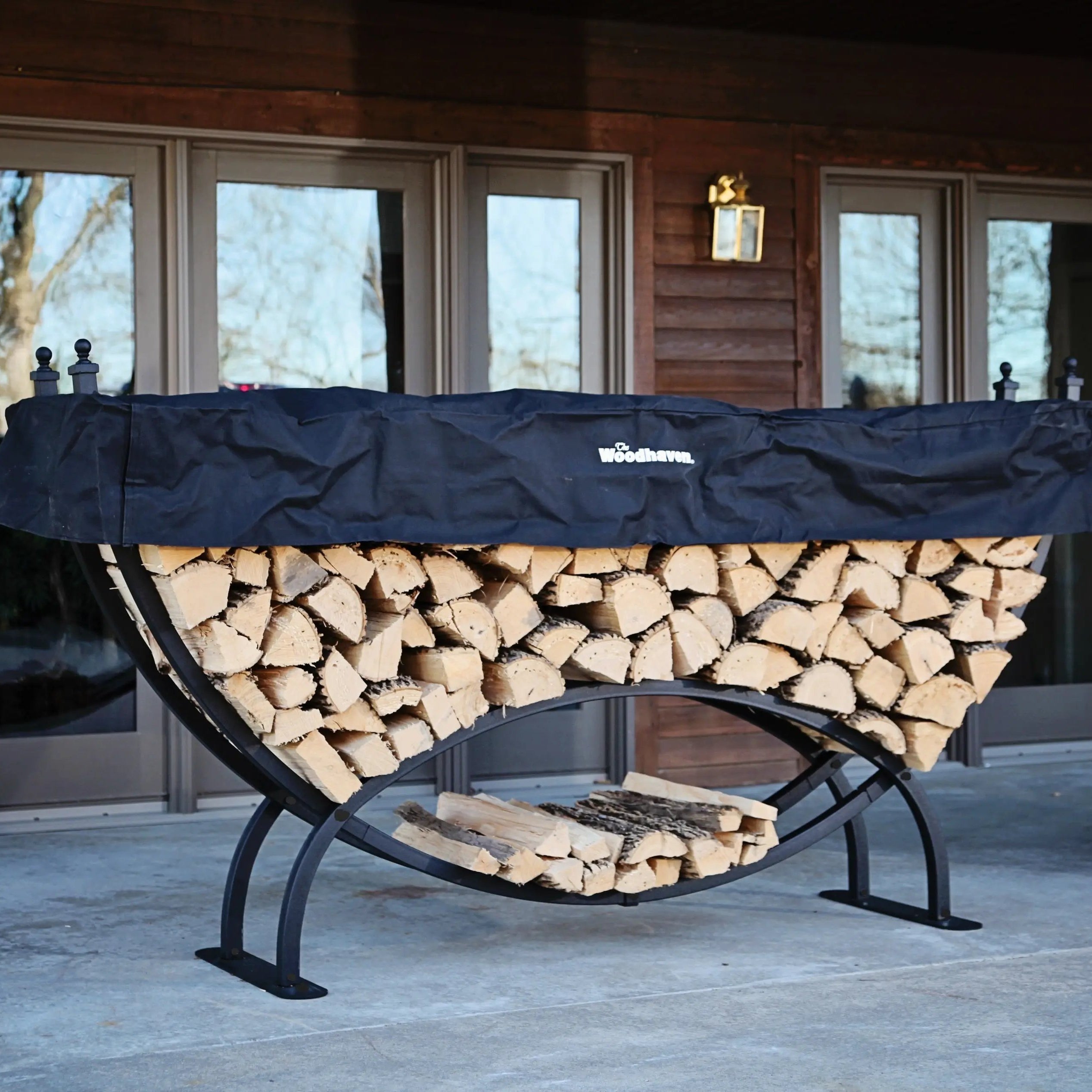
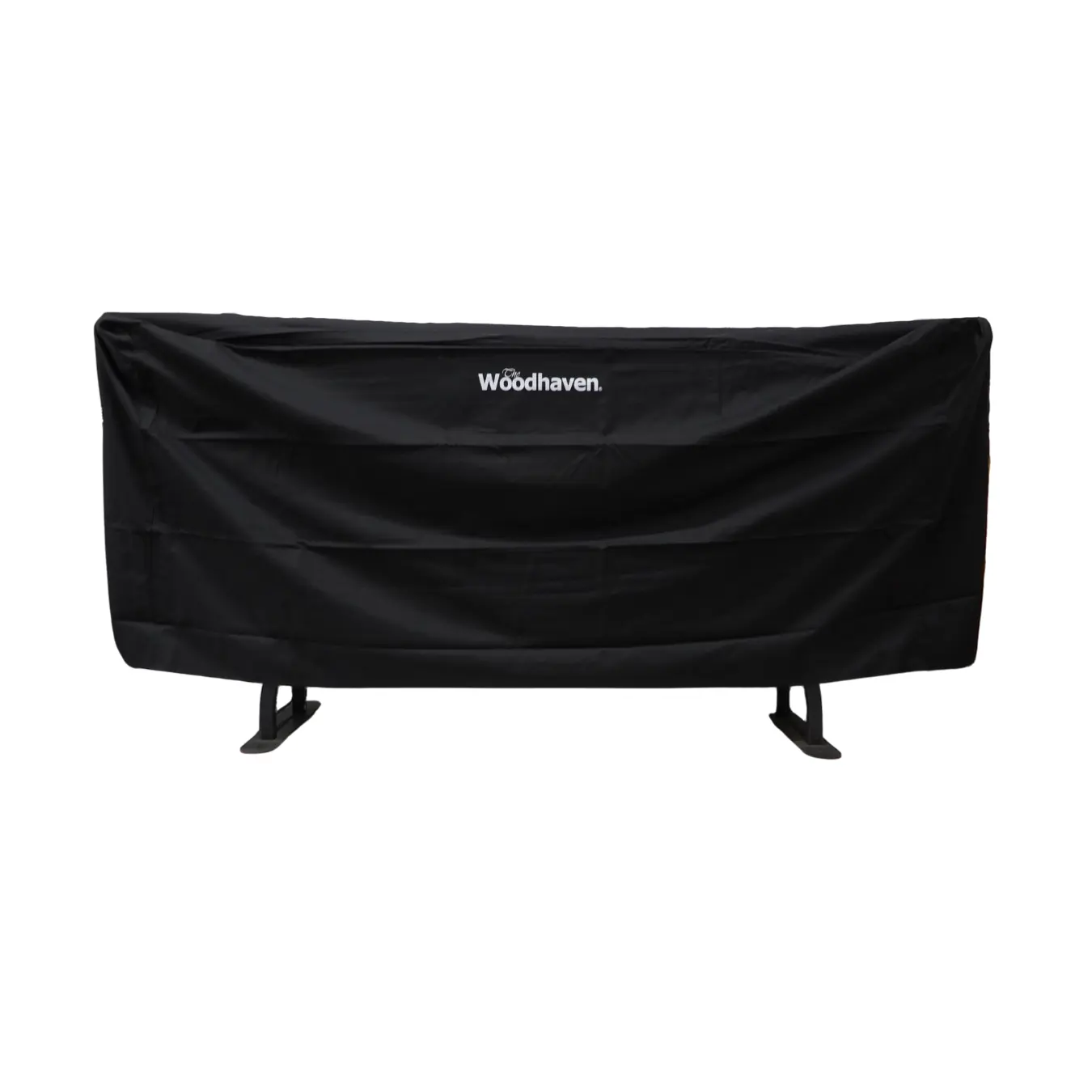
A quality Holz hausen cover eliminates these problems entirely. Designed with peak vents, our covers maintain the natural convective drying that makes Holz hausens such an effective wood storage method in the first place. When you need firewood, simply unbuckle one or two straps and lift the cover—no complicated tarps to retie, no logs to dig out from under snow-buried coverings. Once you've taken what you need, snap the buckles back together and you're done. Your wood stays protected, accessible, and ready to use.
Frequently Asked Questions
Do Holz hausen covers prevent proper wood drying?
No. Our covers feature vents at the peak that allow air circulation and convective drying to continue naturally, preserving one of the key advantages of the Holz hausen design.
How easy is it to access wood with a cover in place?
Very easy. Simply unbuckle one or two straps and lift the cover. There's no need to untie tarps or move logs around each time you need firewood.
What happens to the cover when I'm taking wood out regularly?
The cover lifts up and stays secured with buckles. Once you've taken what you need, snap the buckles back together. It's designed for frequent, convenient access.
Will a cover keep leaves and pests out of my wood pile?
Yes. A cover protects your wood from leaves, debris, and pests that would otherwise accumulate in an open or poorly covered pile, keeping your firewood clean and pest-free.
Can I use a regular tarp instead of a dedicated cover?
While tarps are inexpensive, they require constant retying and adjustment, especially when accessing wood regularly. Logs often get buried under tarps during snow, making retrieval difficult. A purpose-built cover with buckles and vents is far more practical for active wood storage.