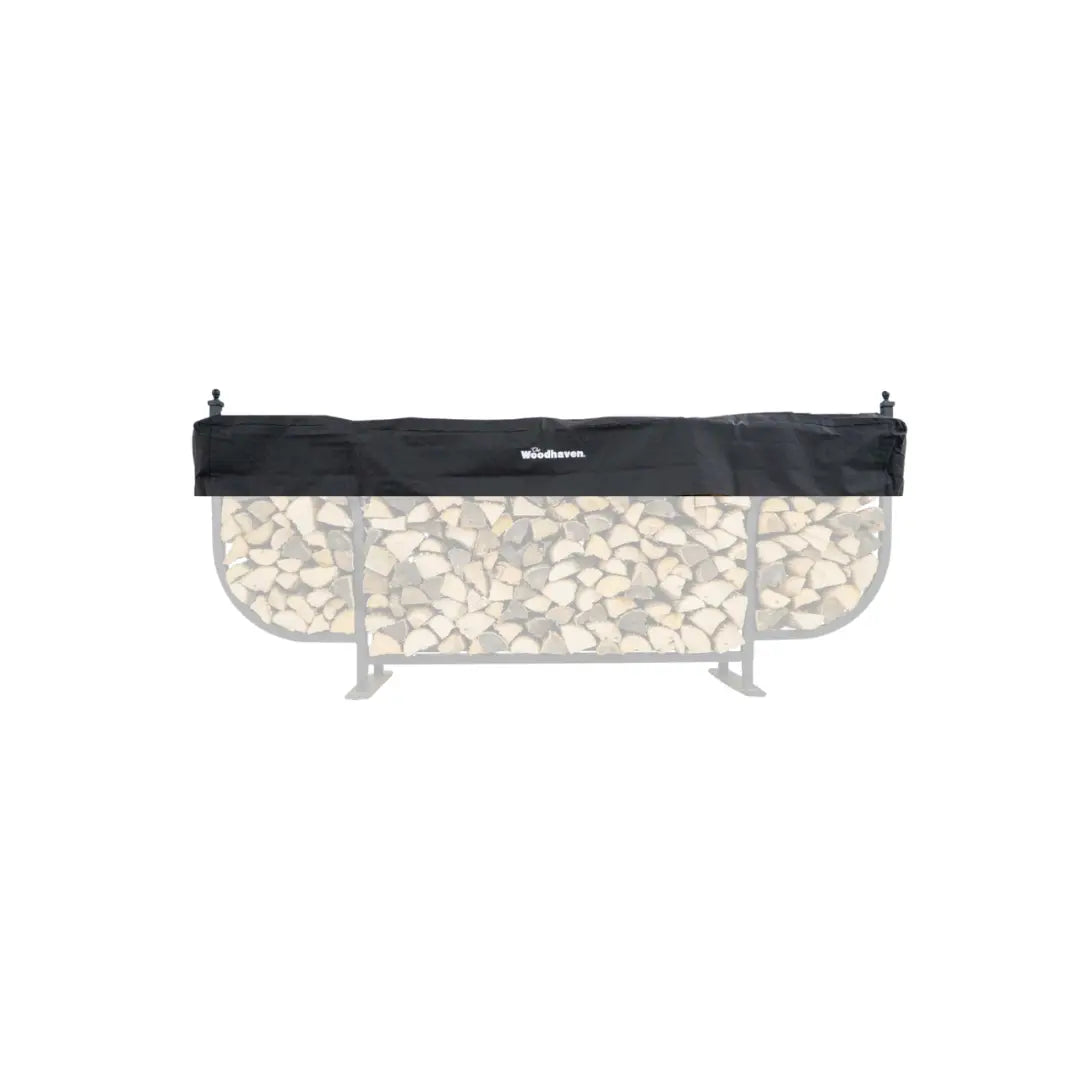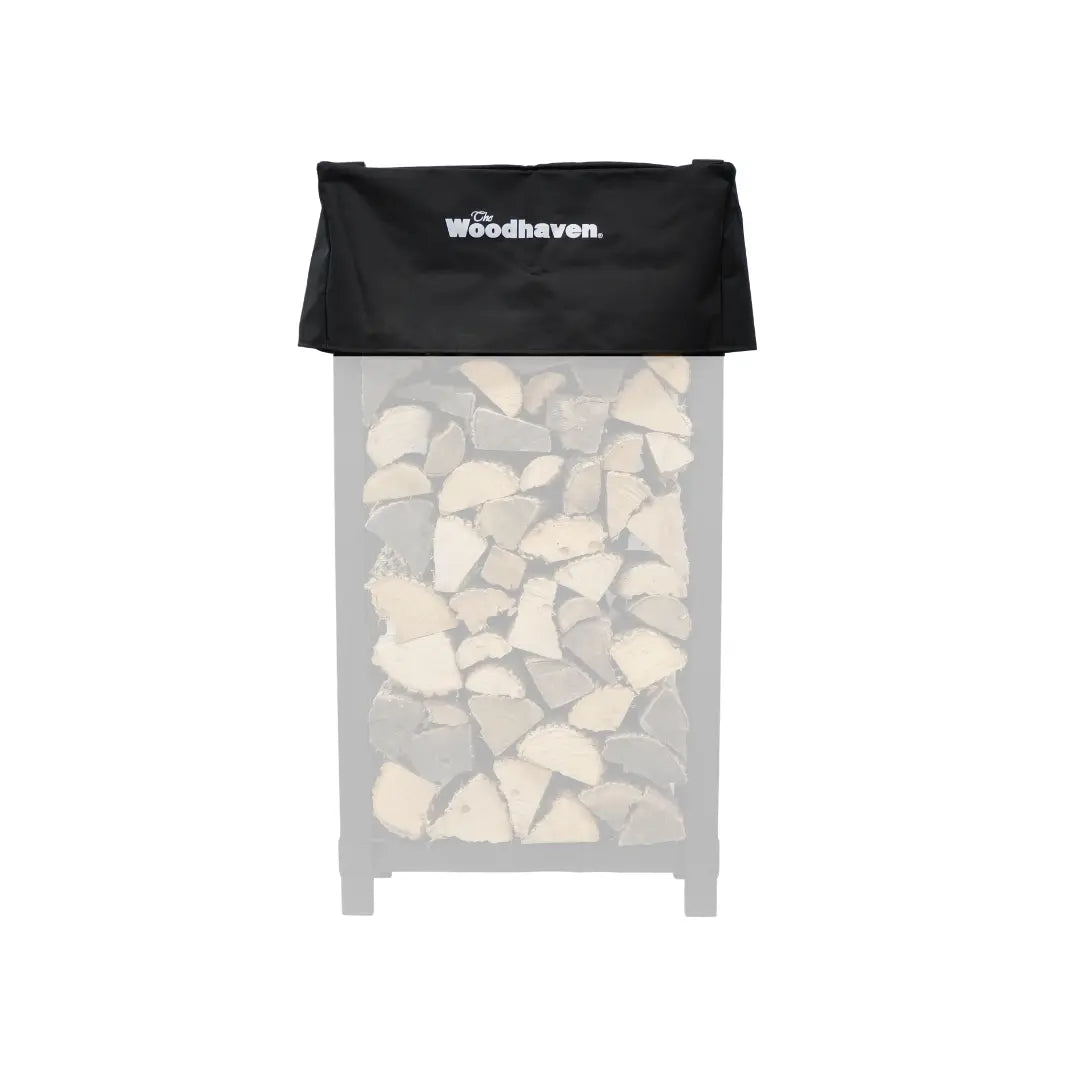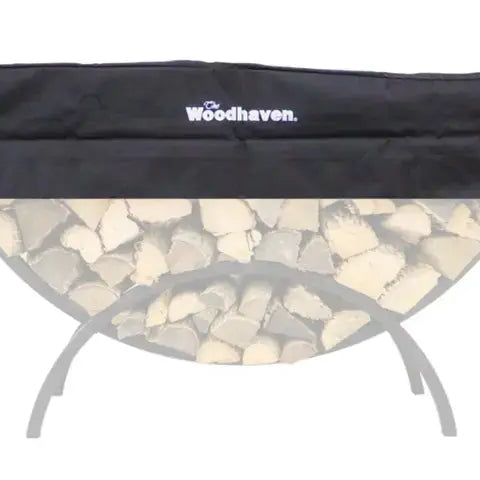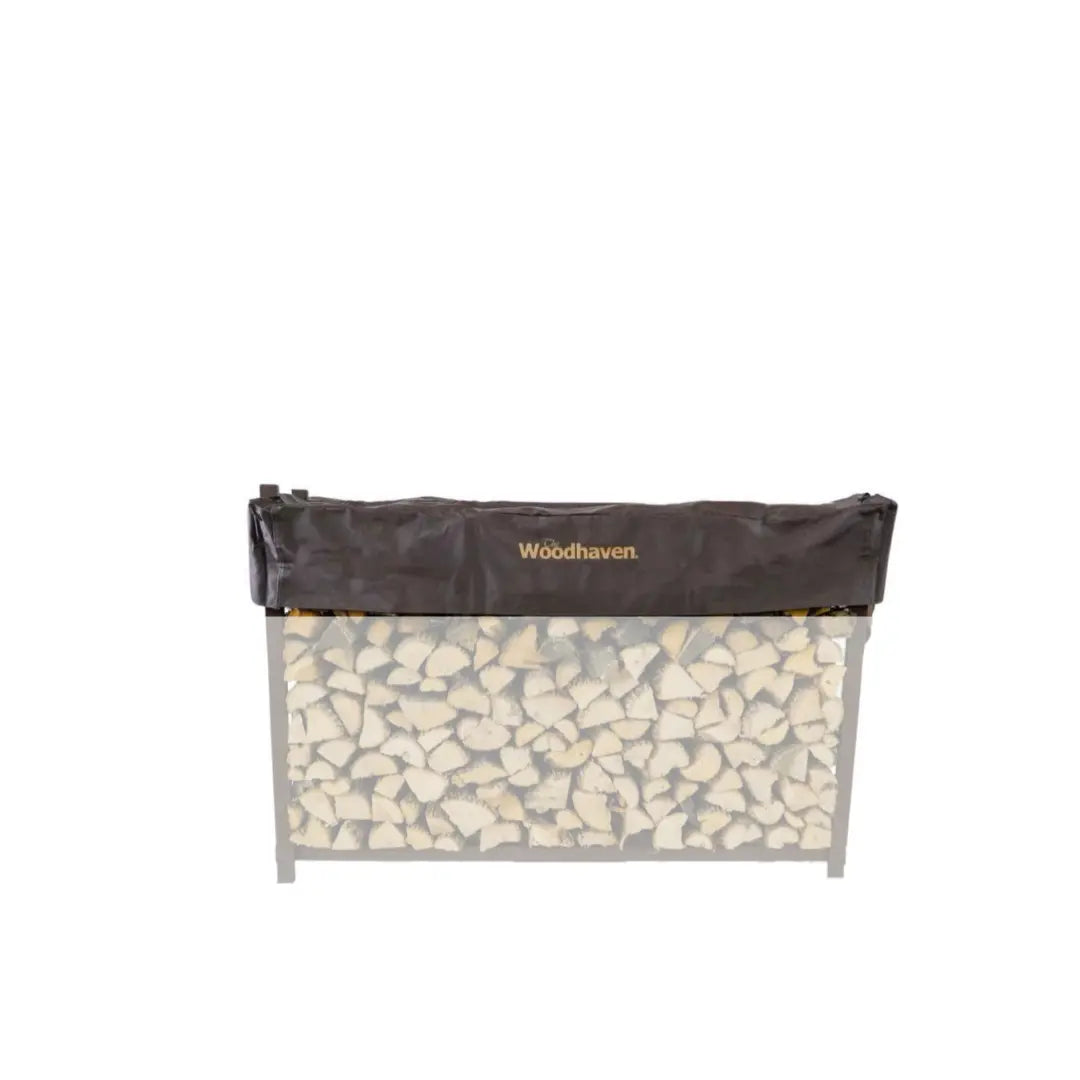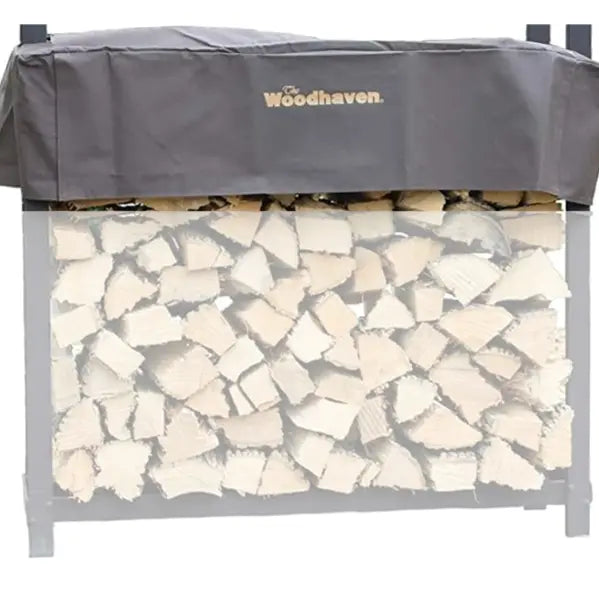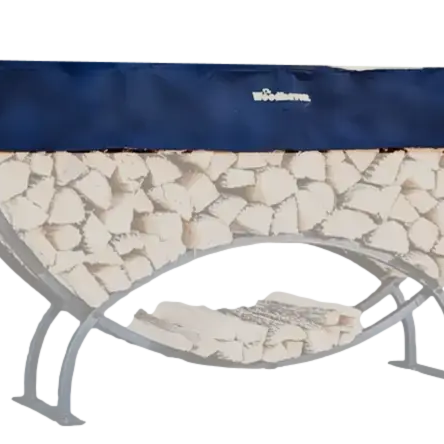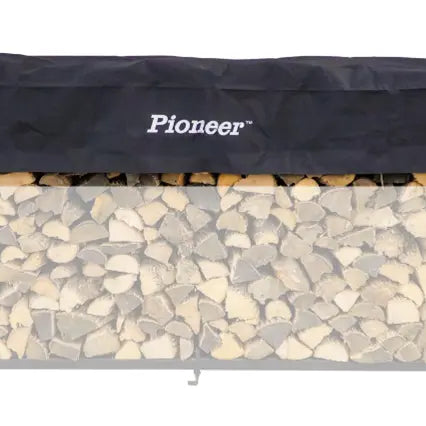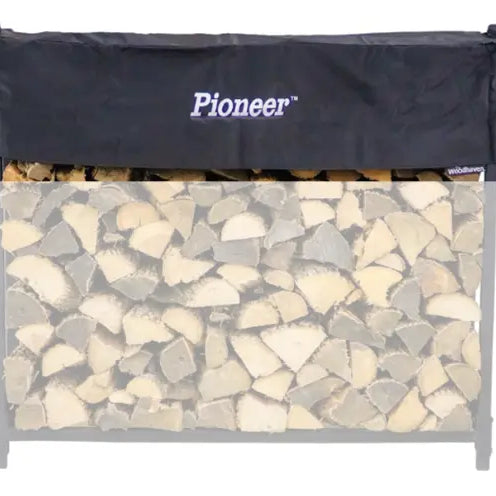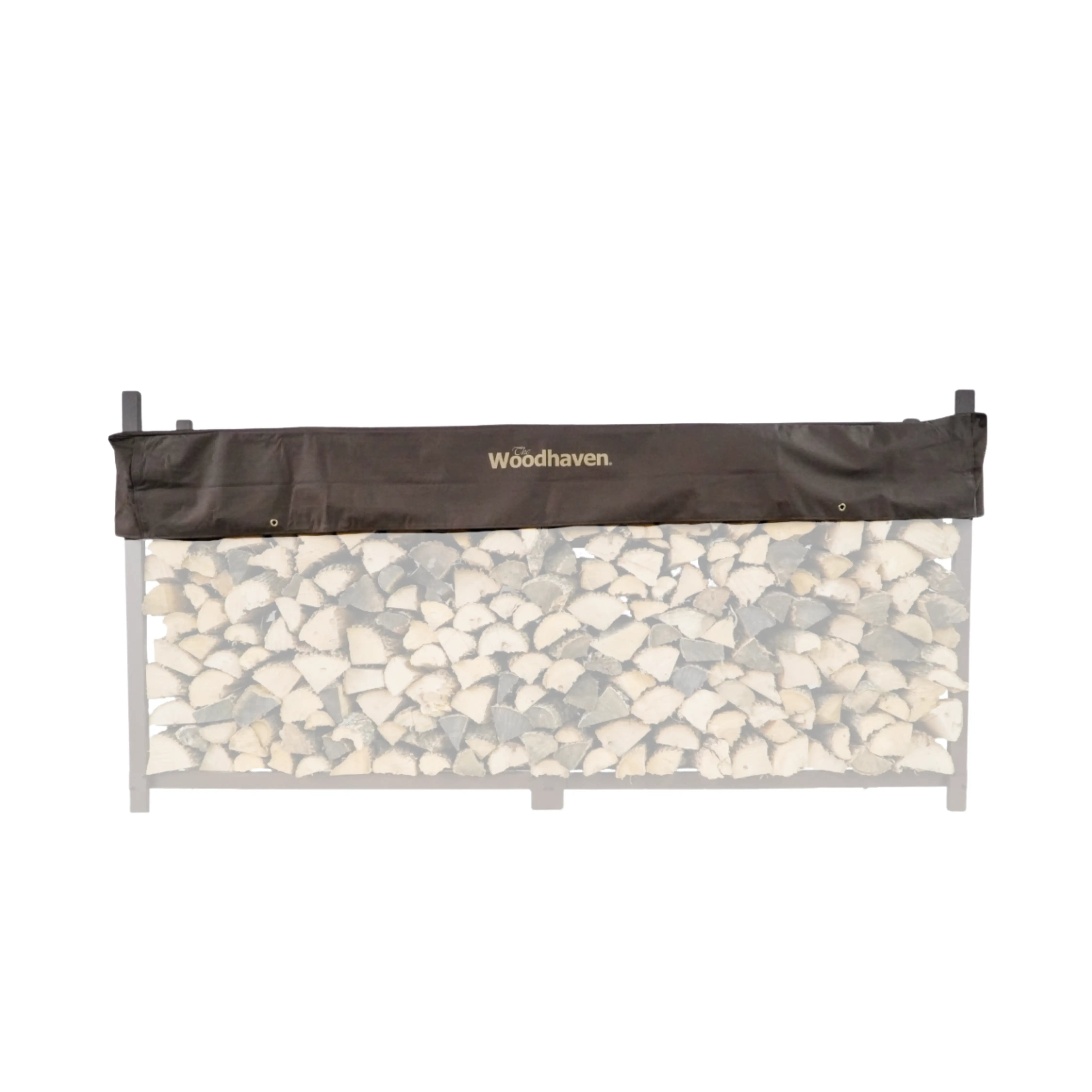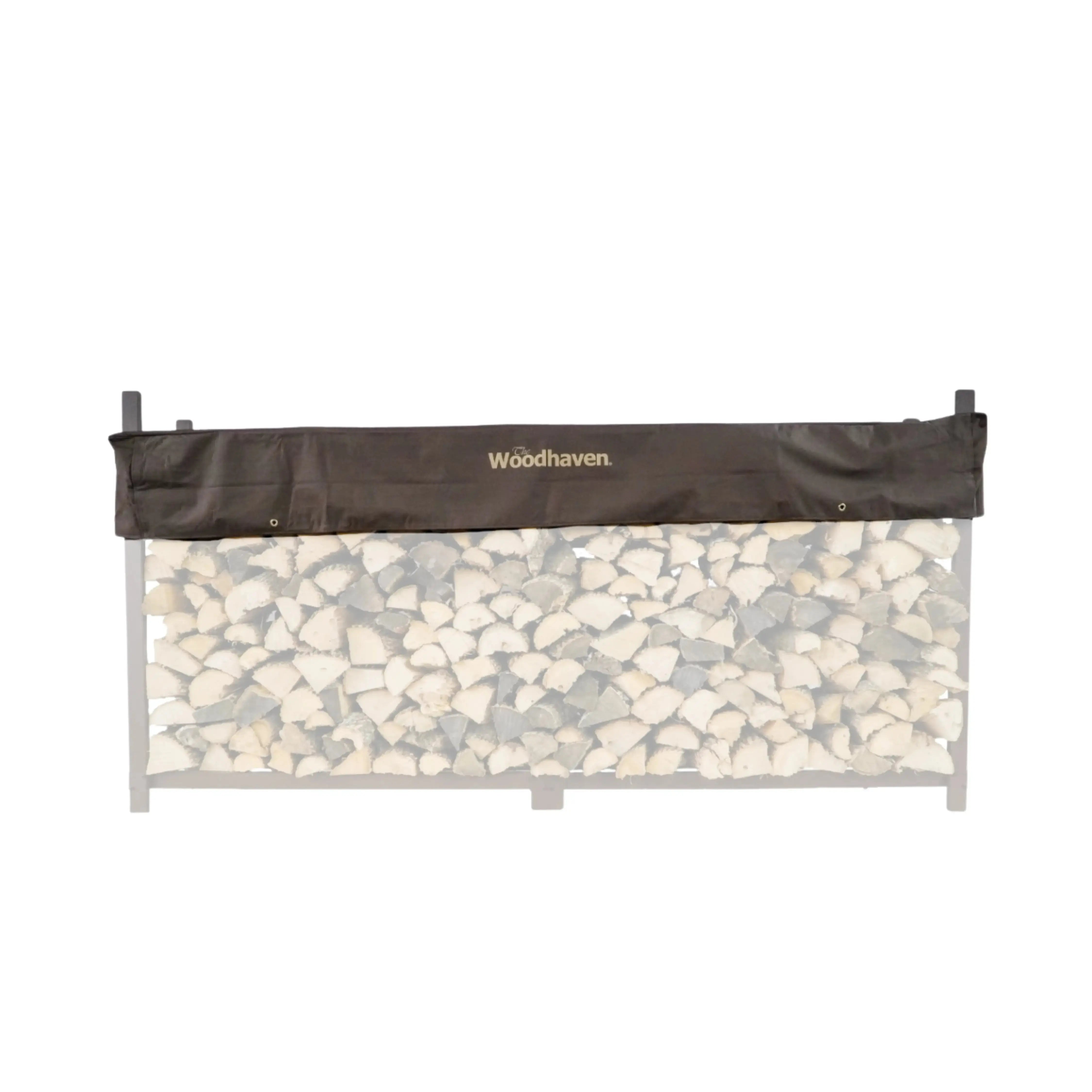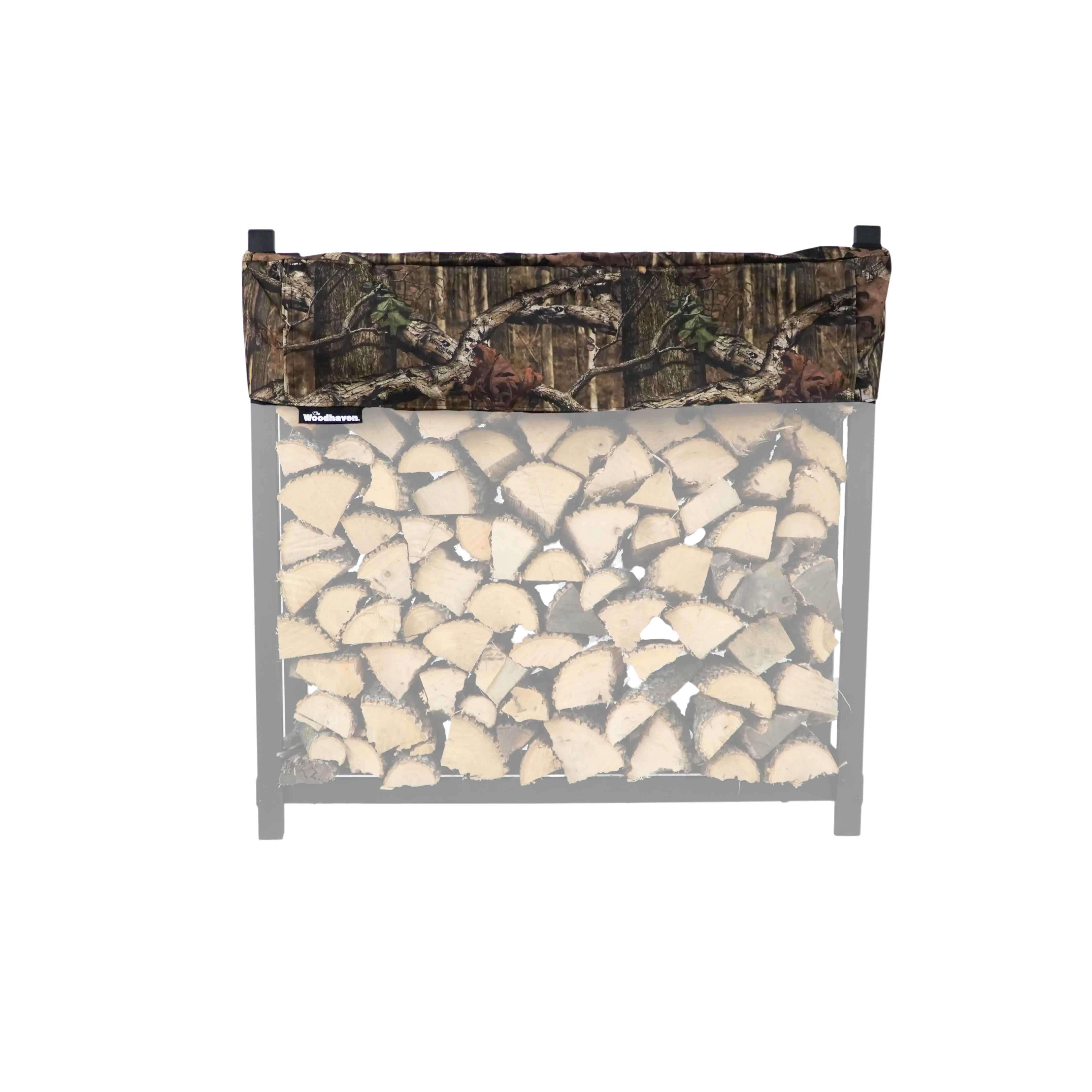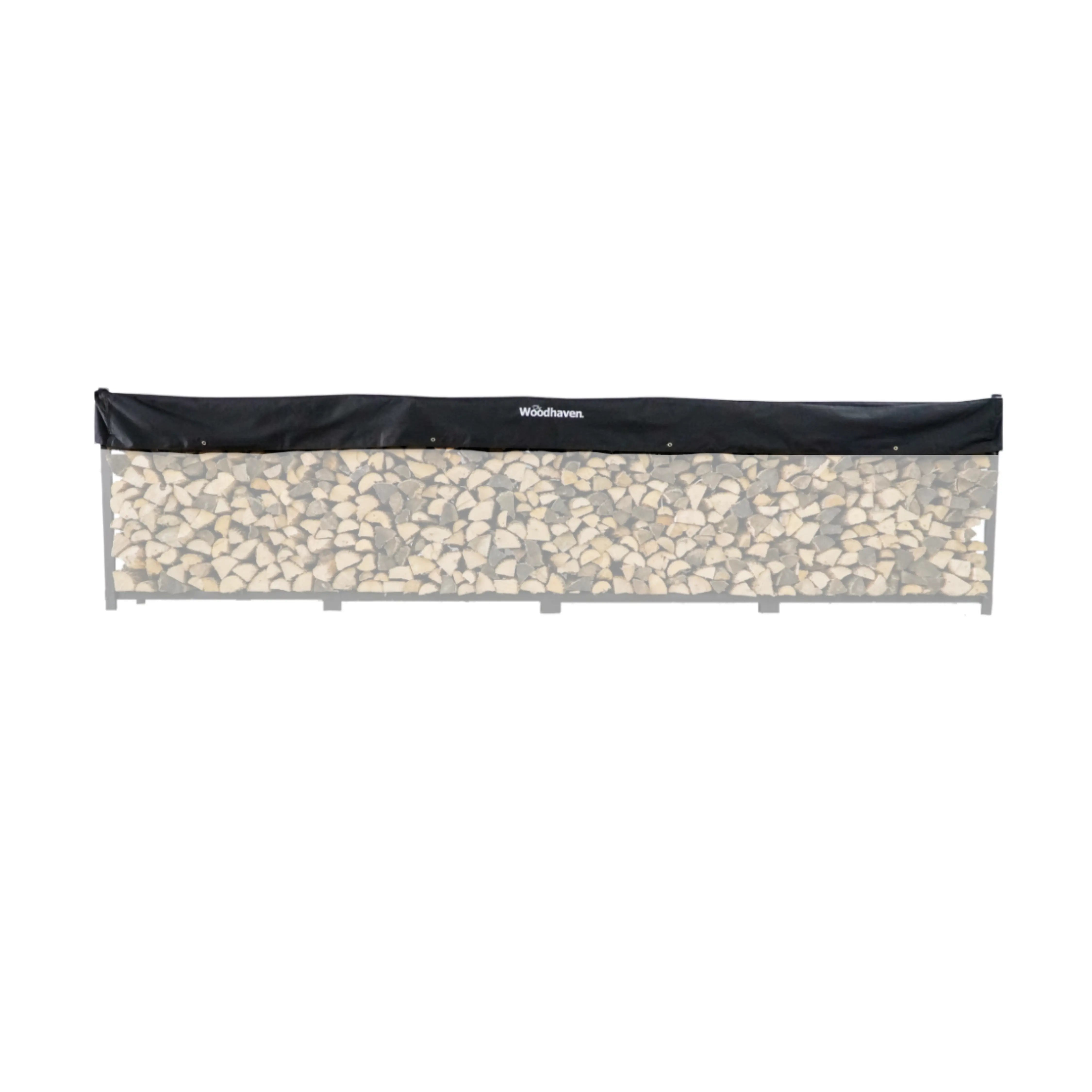


Tarp vs. Purpose-Built Firewood Covers: Quick Comparison
Cover the top of a round stack to shed rain and snow, while leaving room for air to move through the wood. The best choice depends on your stack shape, exposure, and how often you need access. Performance varies with material, fit, and how securely the cover is installed.
| Cover type | Wind exposure | Drainage | Airflow | Access | Durability | Best-fit use |
|---|---|---|---|---|---|---|
| Tarp | Loose edges can catch wind; secure carefully. | Needs a slope; low spots can collect water. | Leave sides open rather than wrapping the stack tightly. | Untie and fold back as needed. | Varies by material; check for tears and UV wear. | Budget or temporary protection for varied stack shapes. |
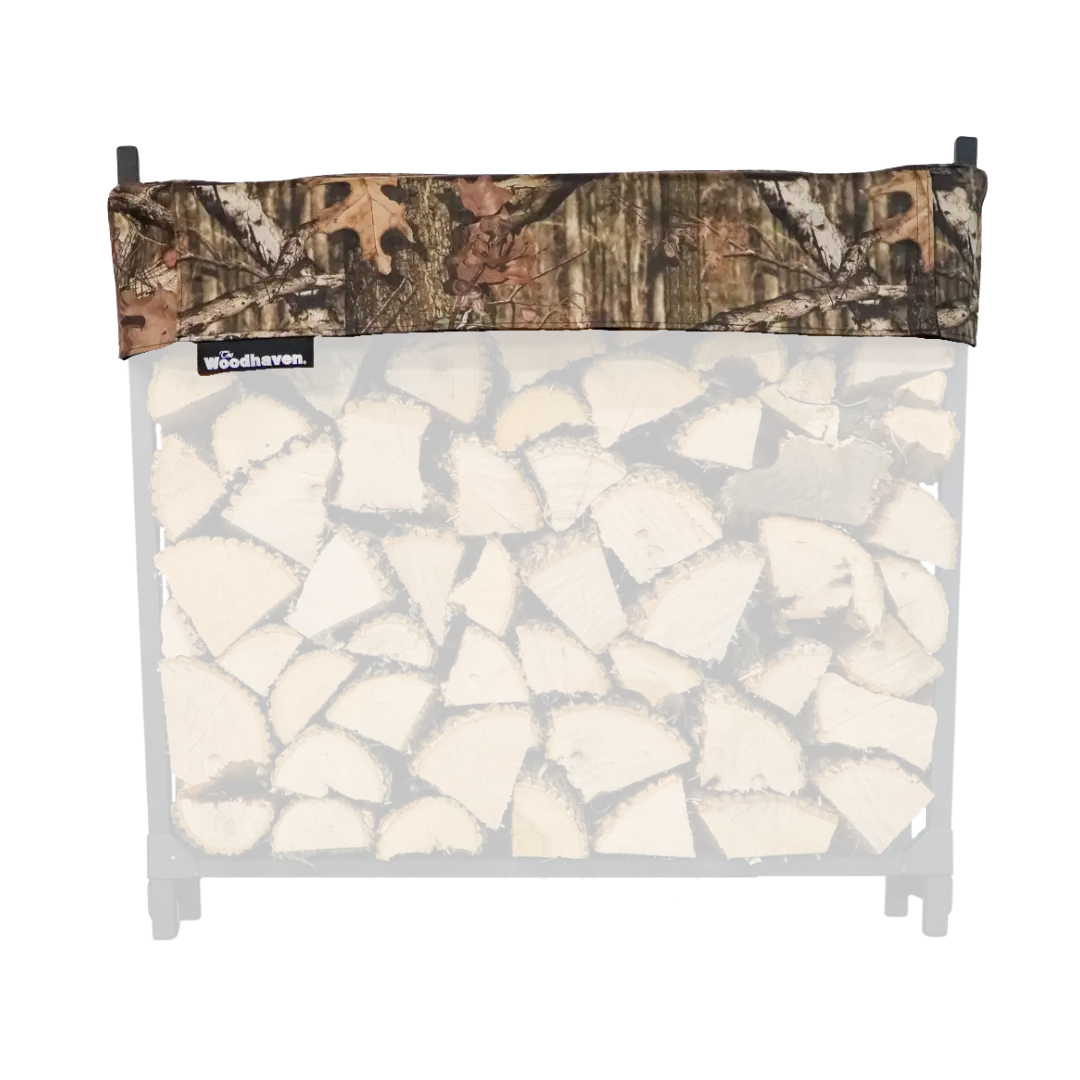
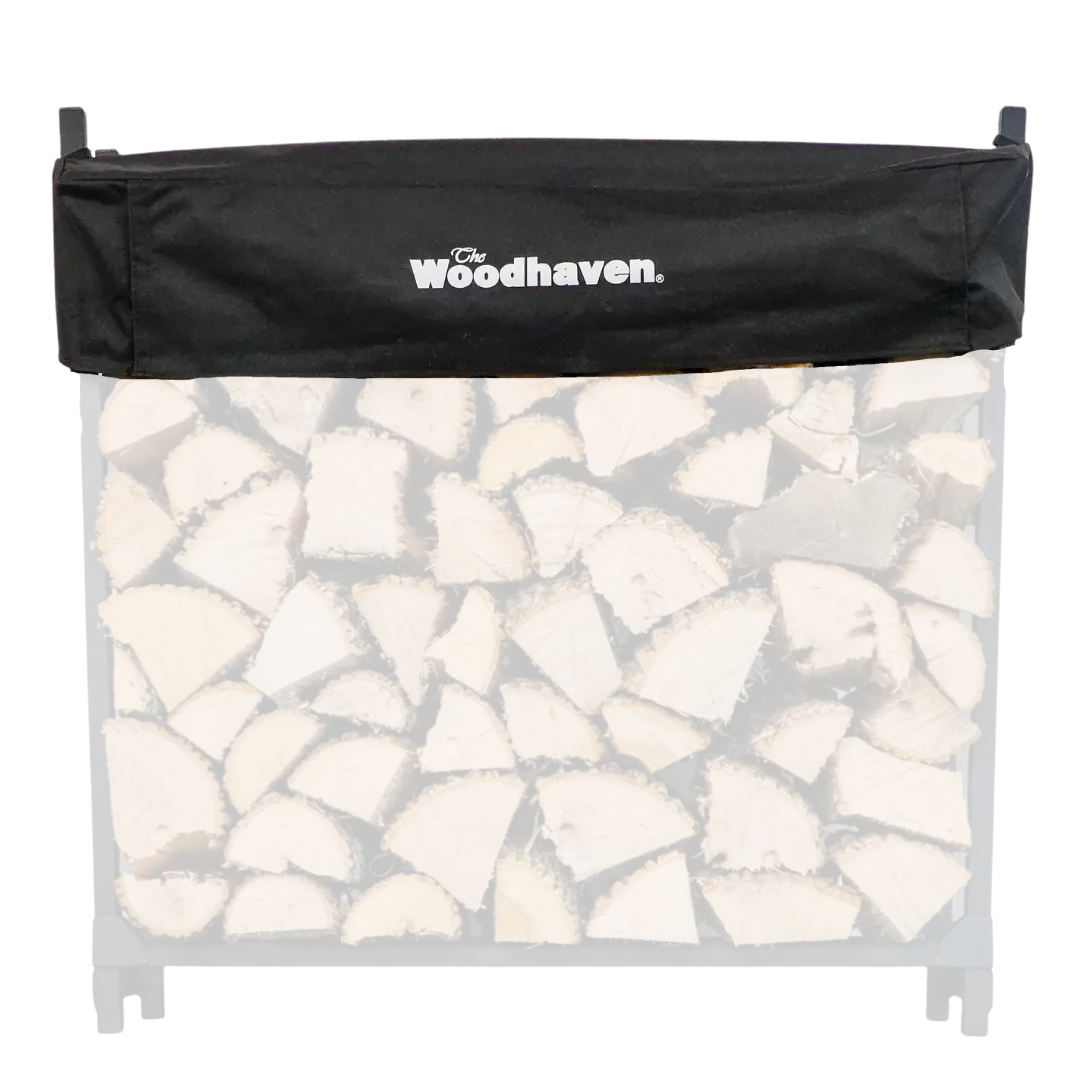
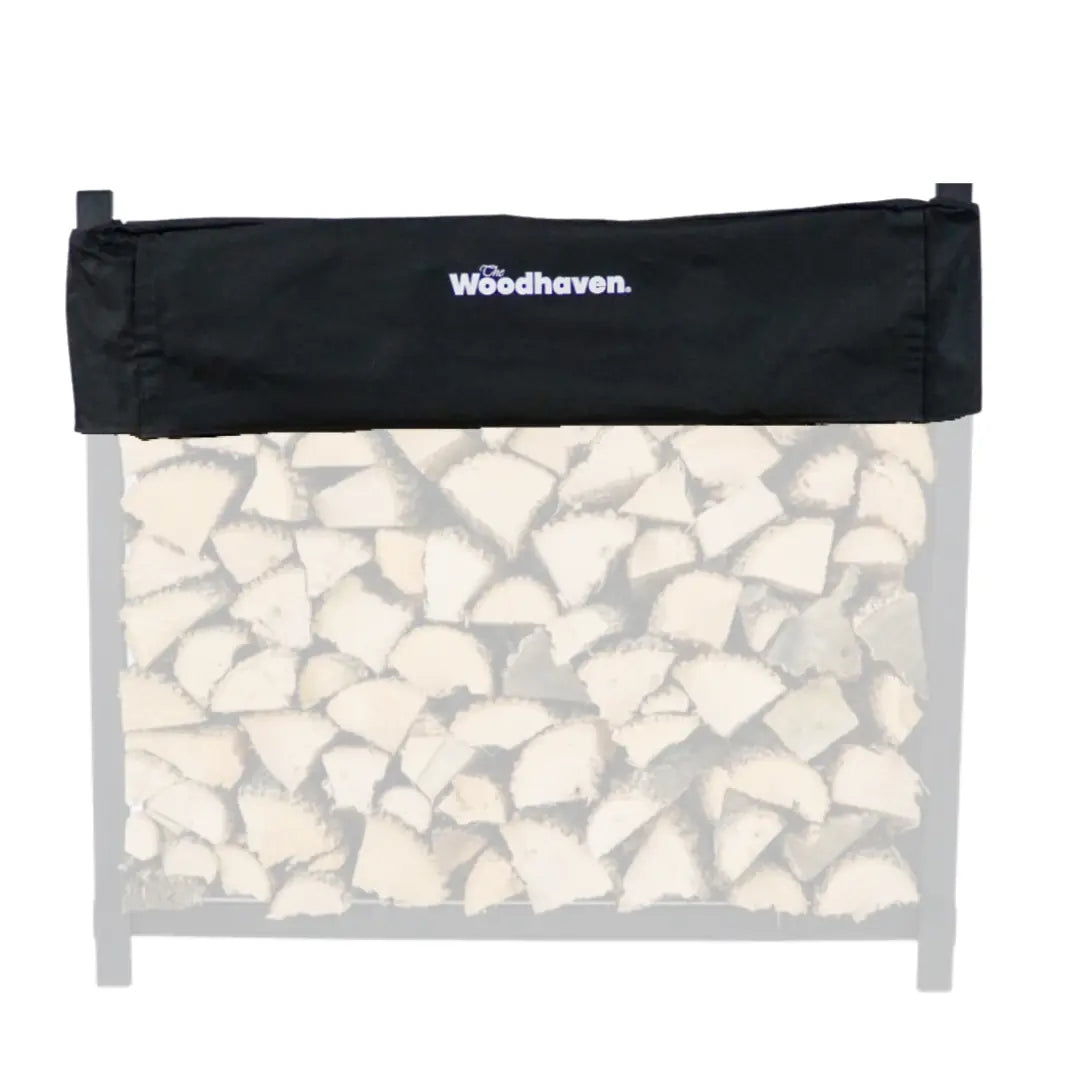
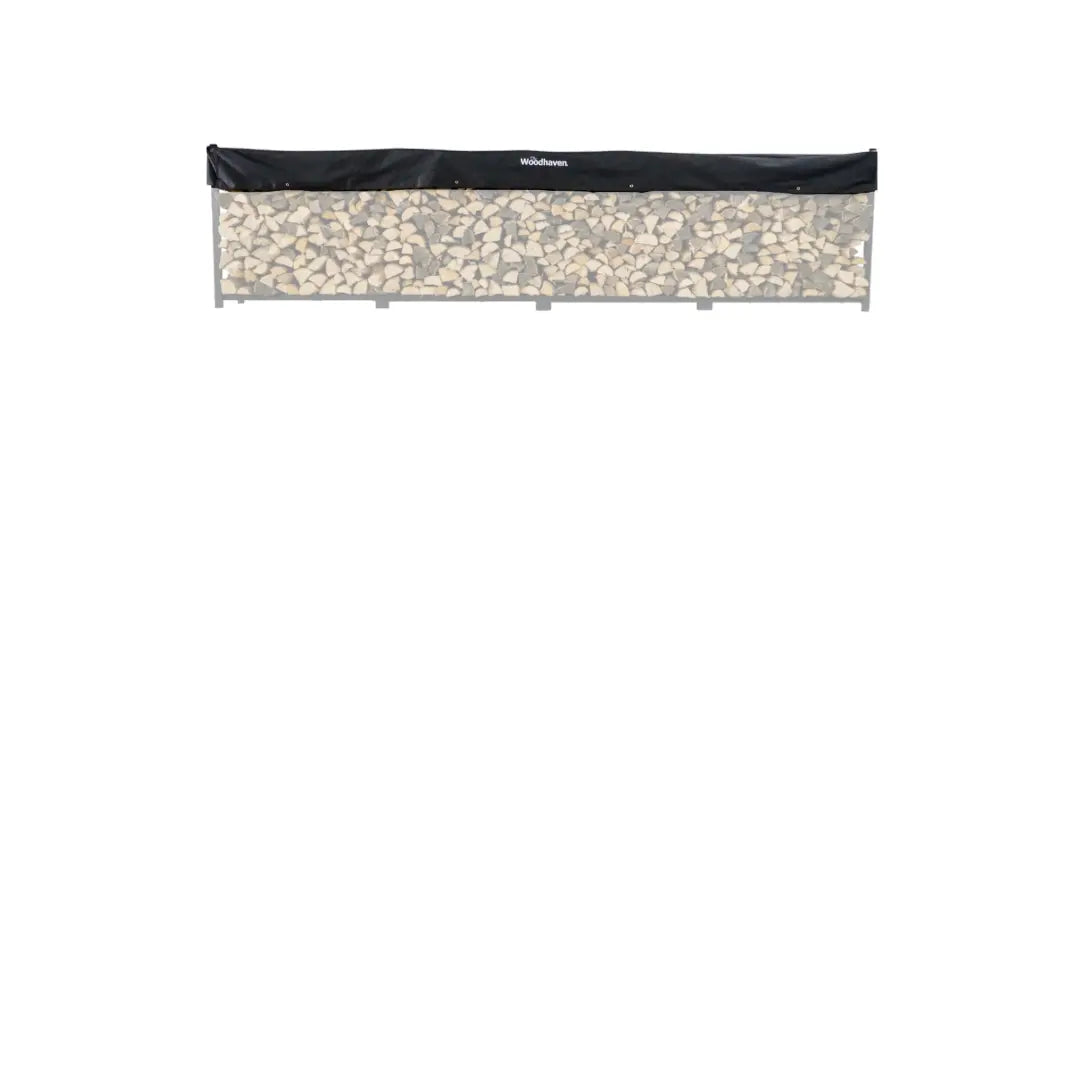
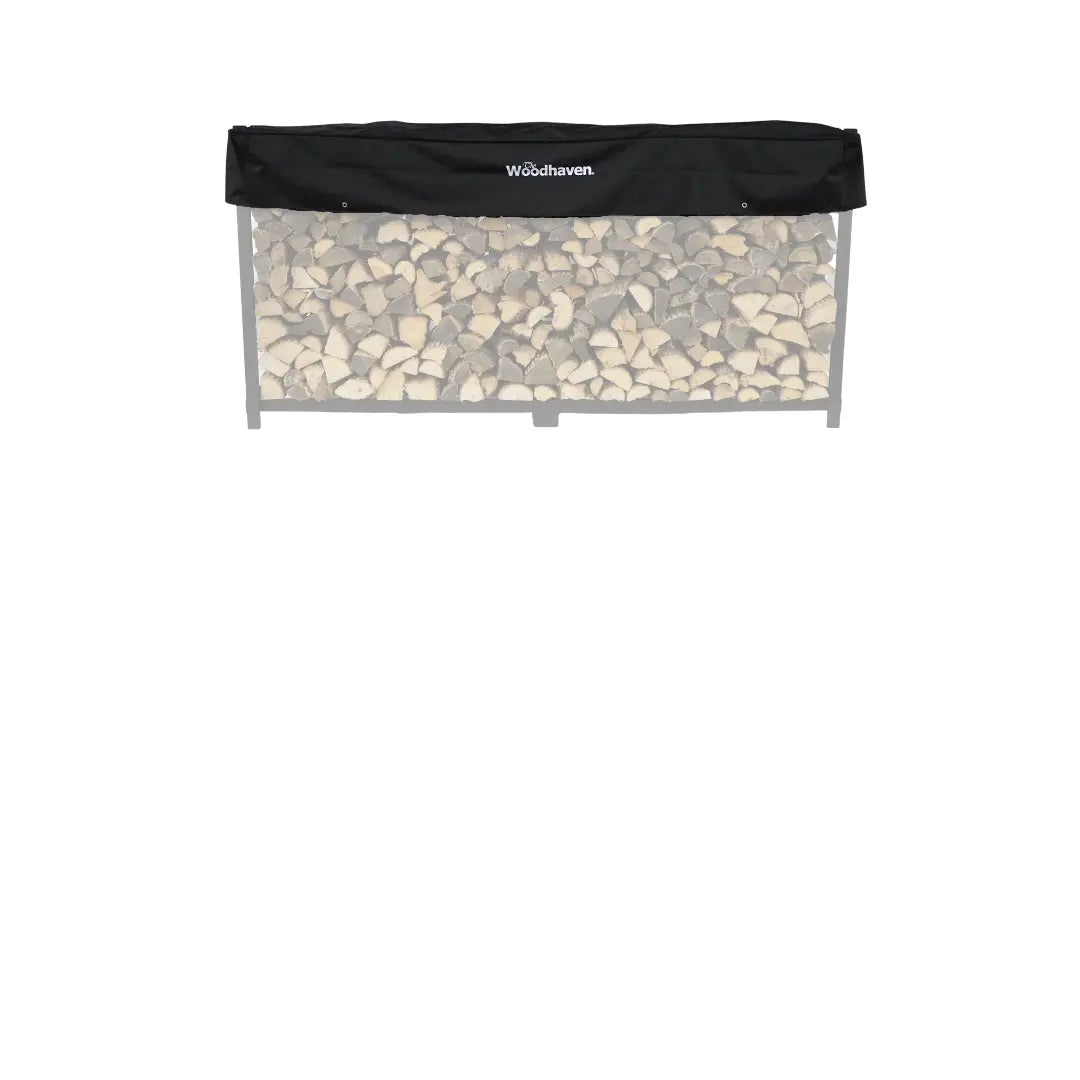
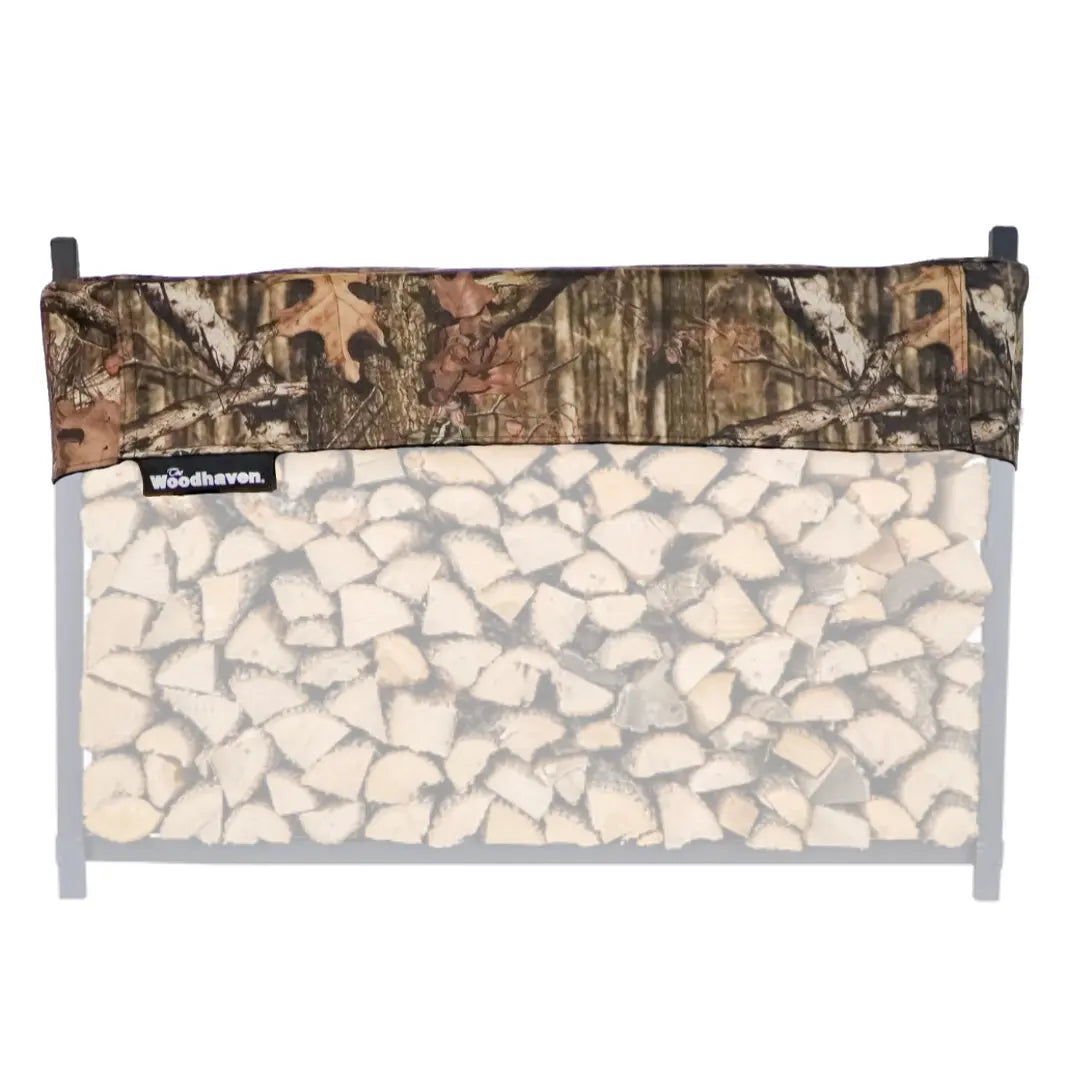
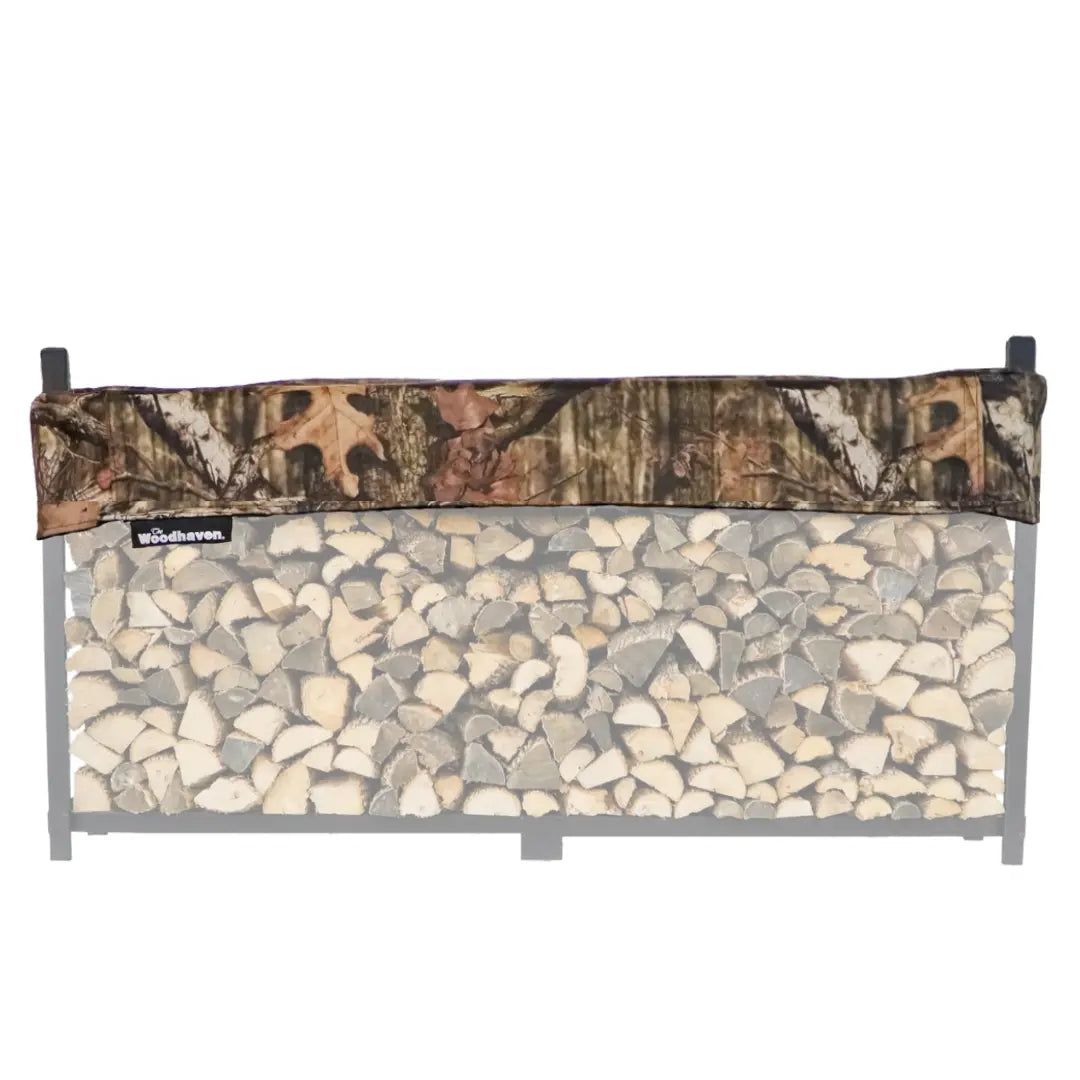
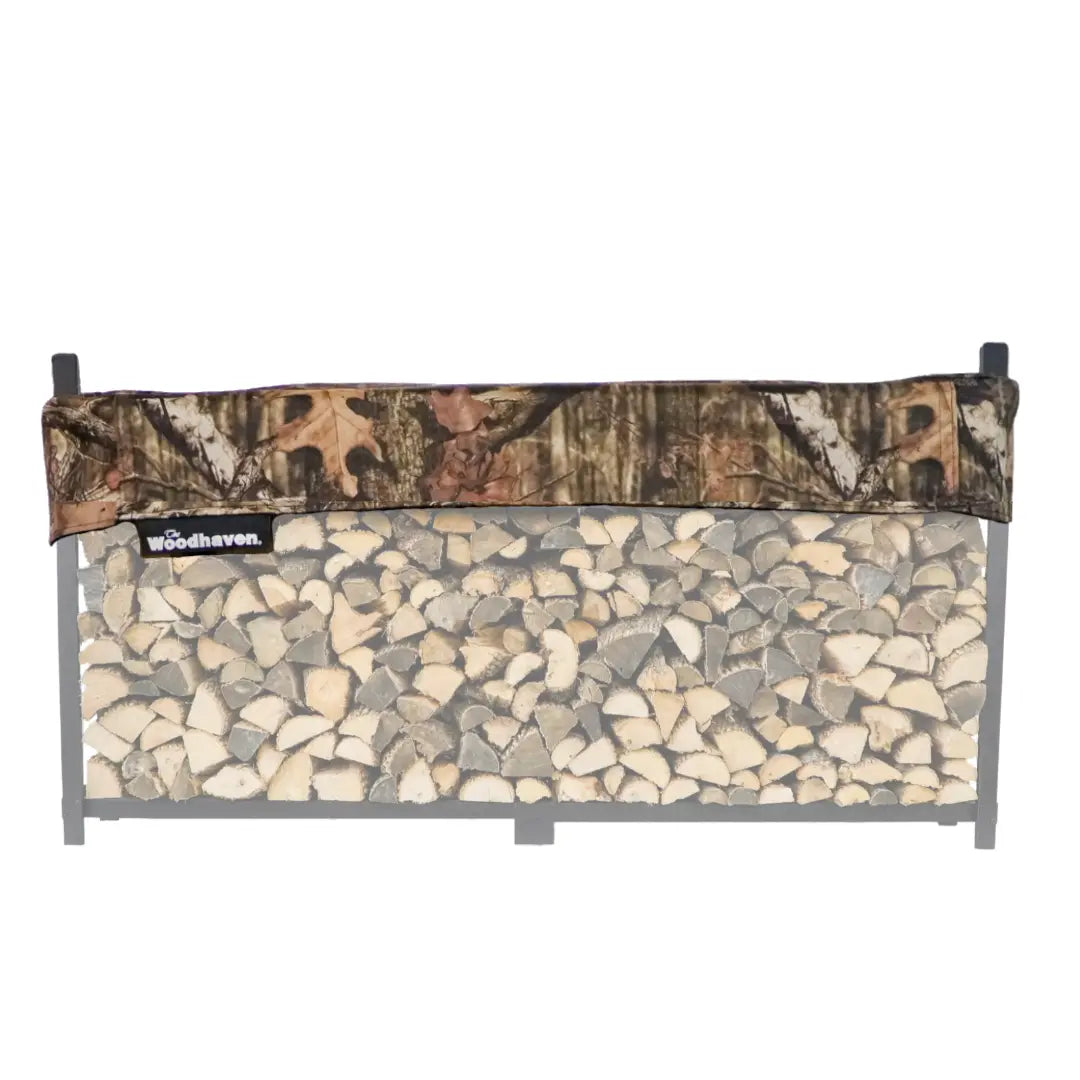
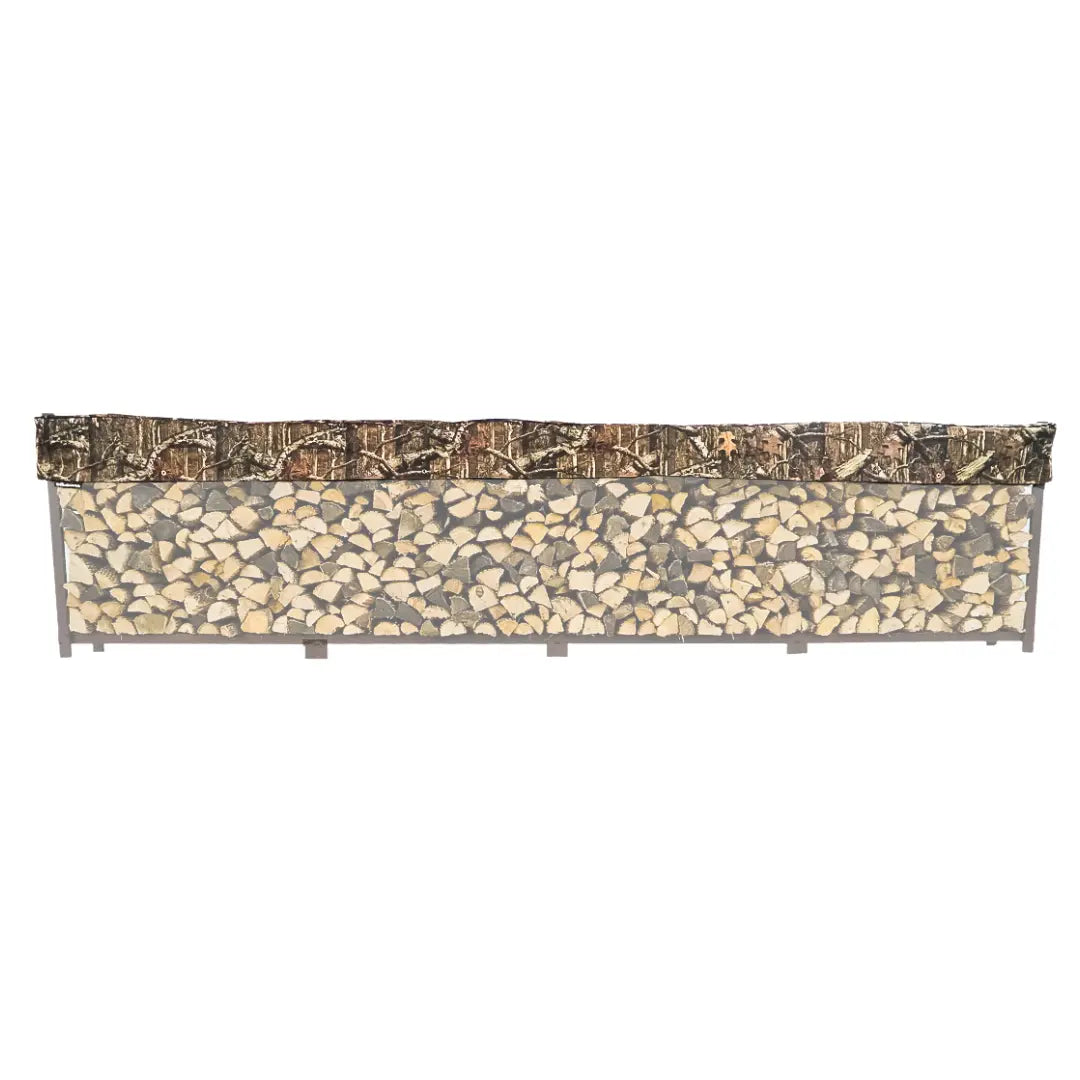
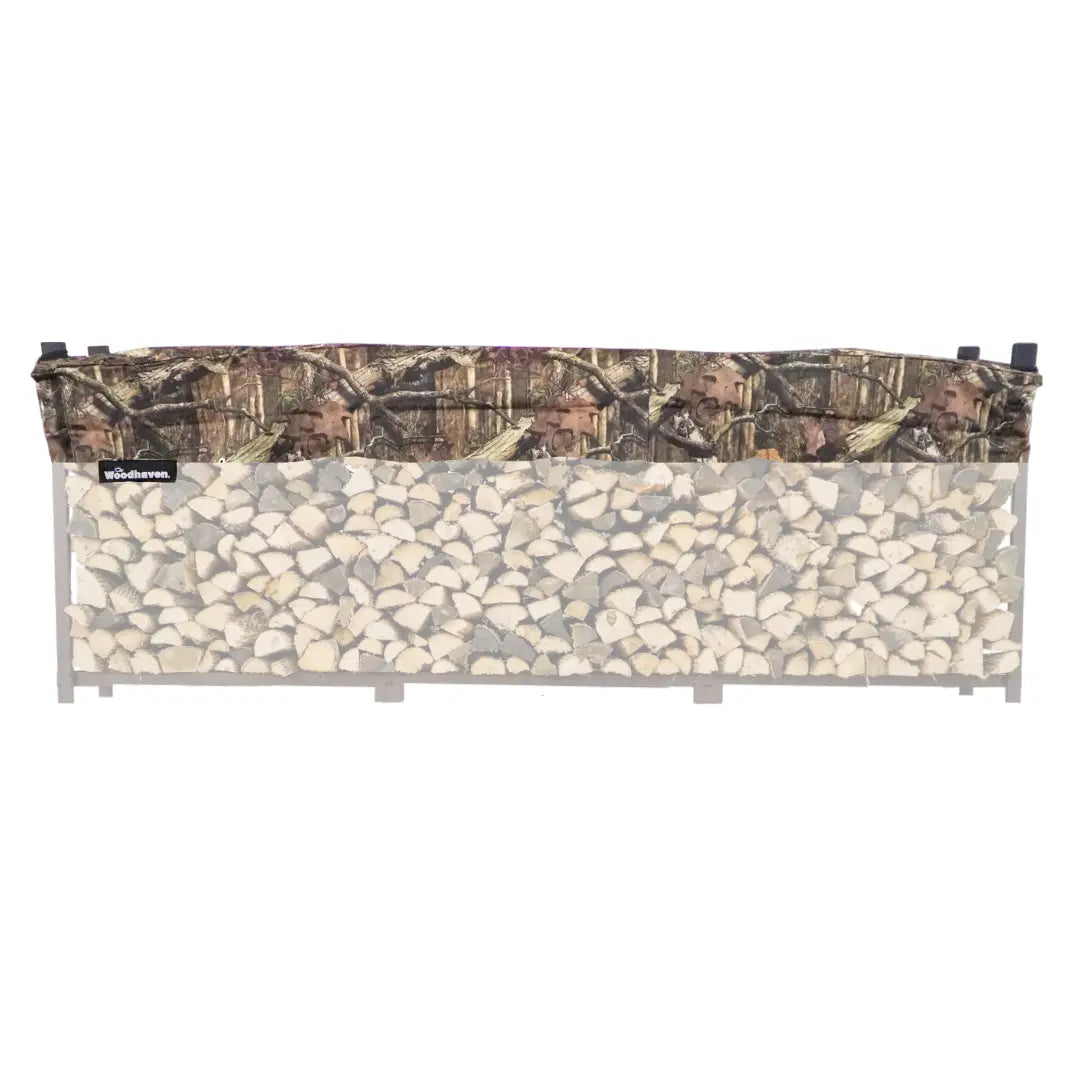
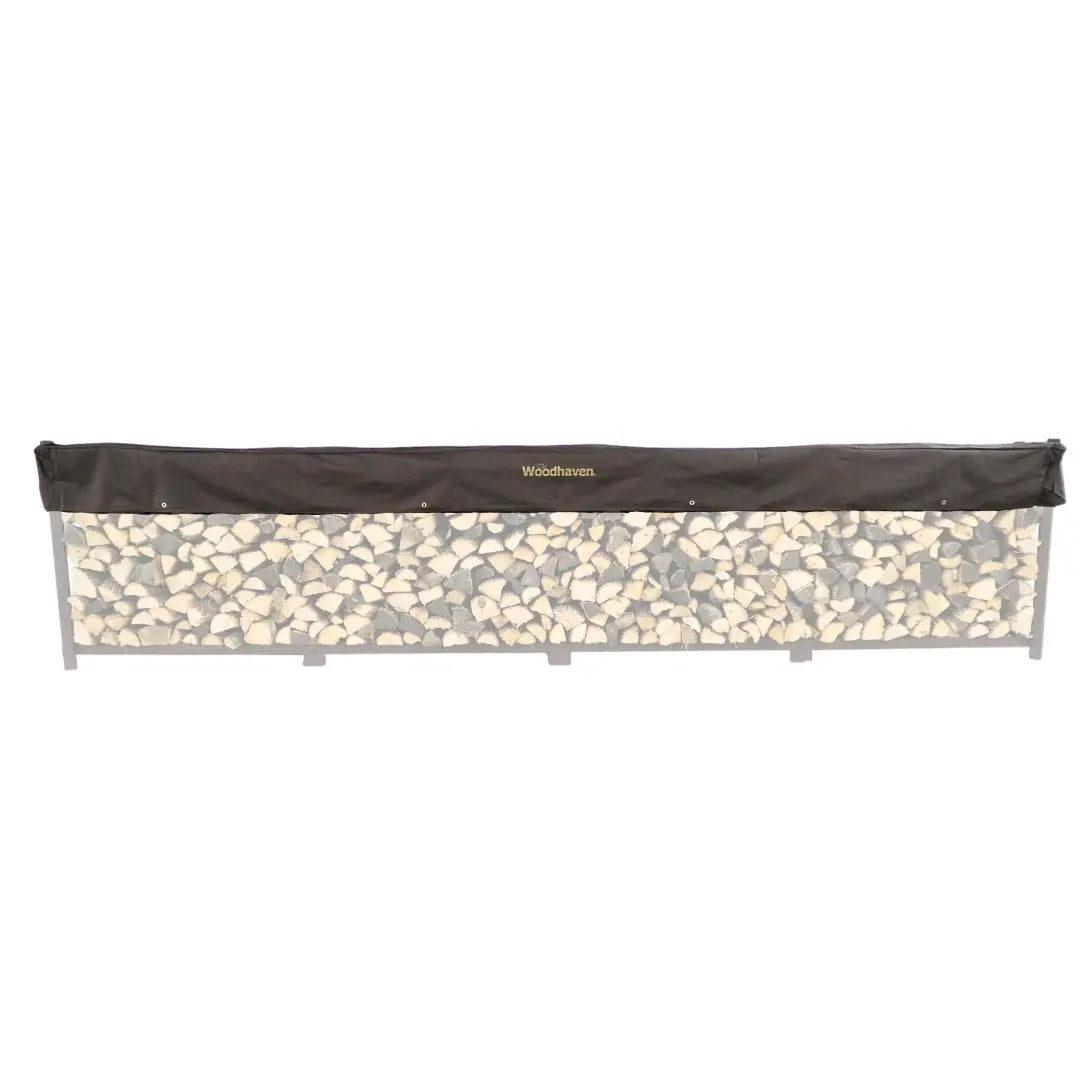
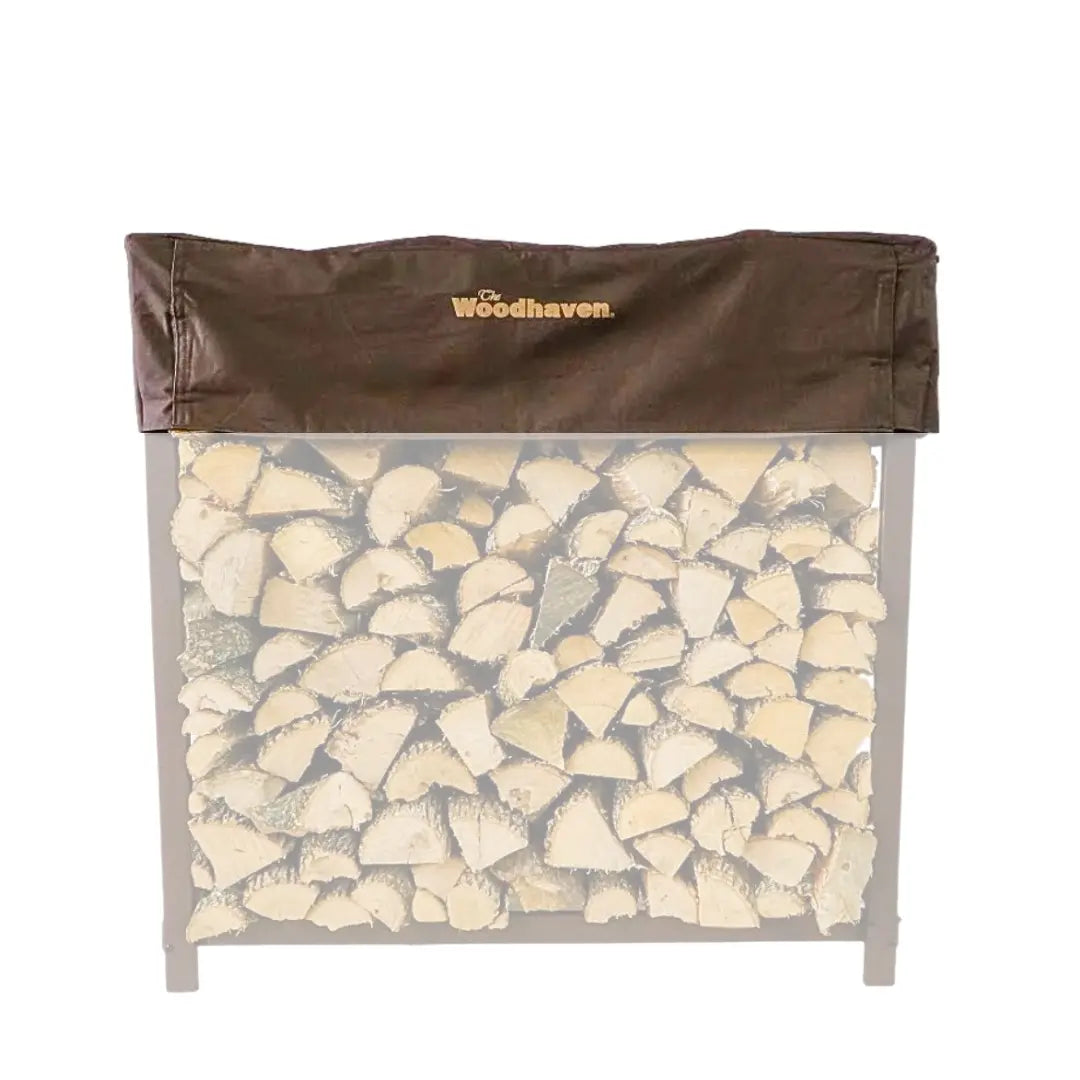
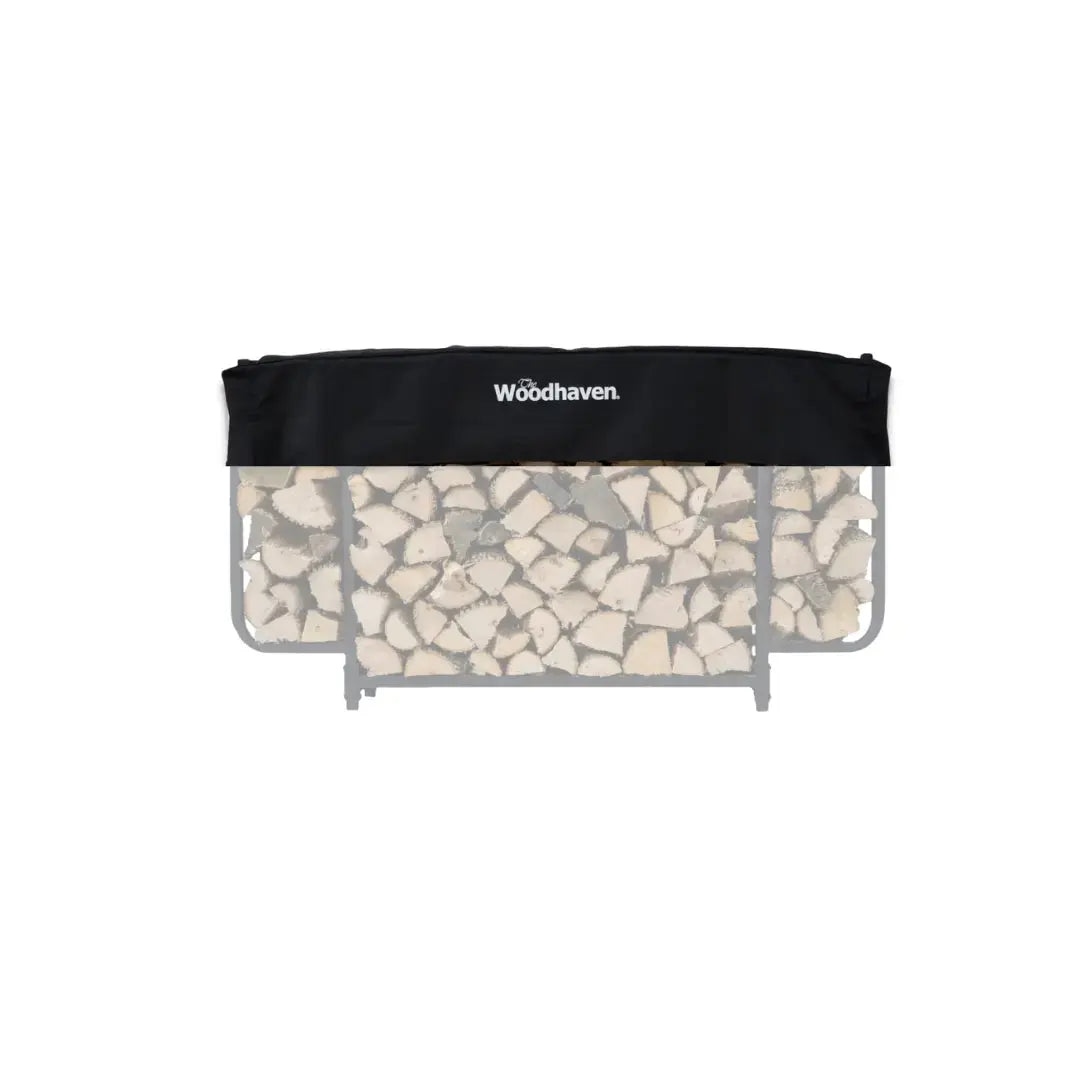
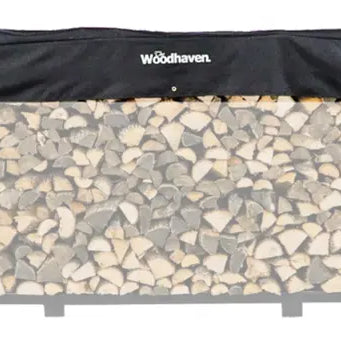
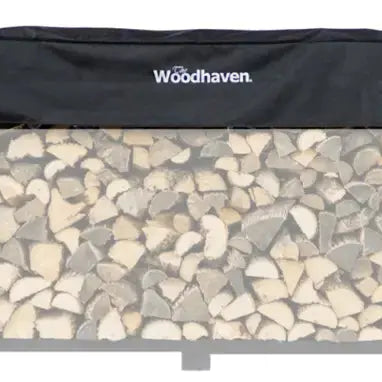
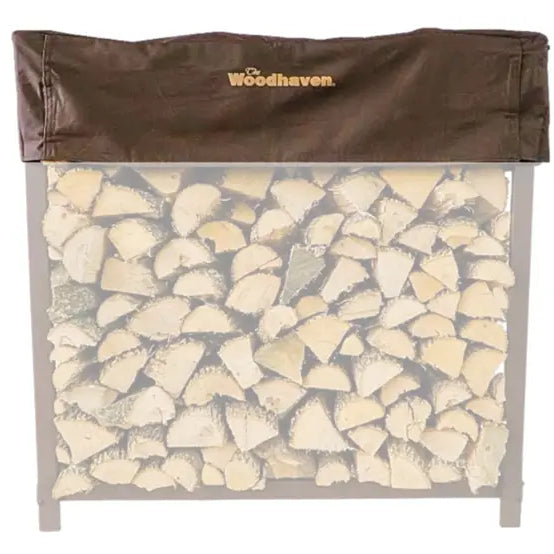
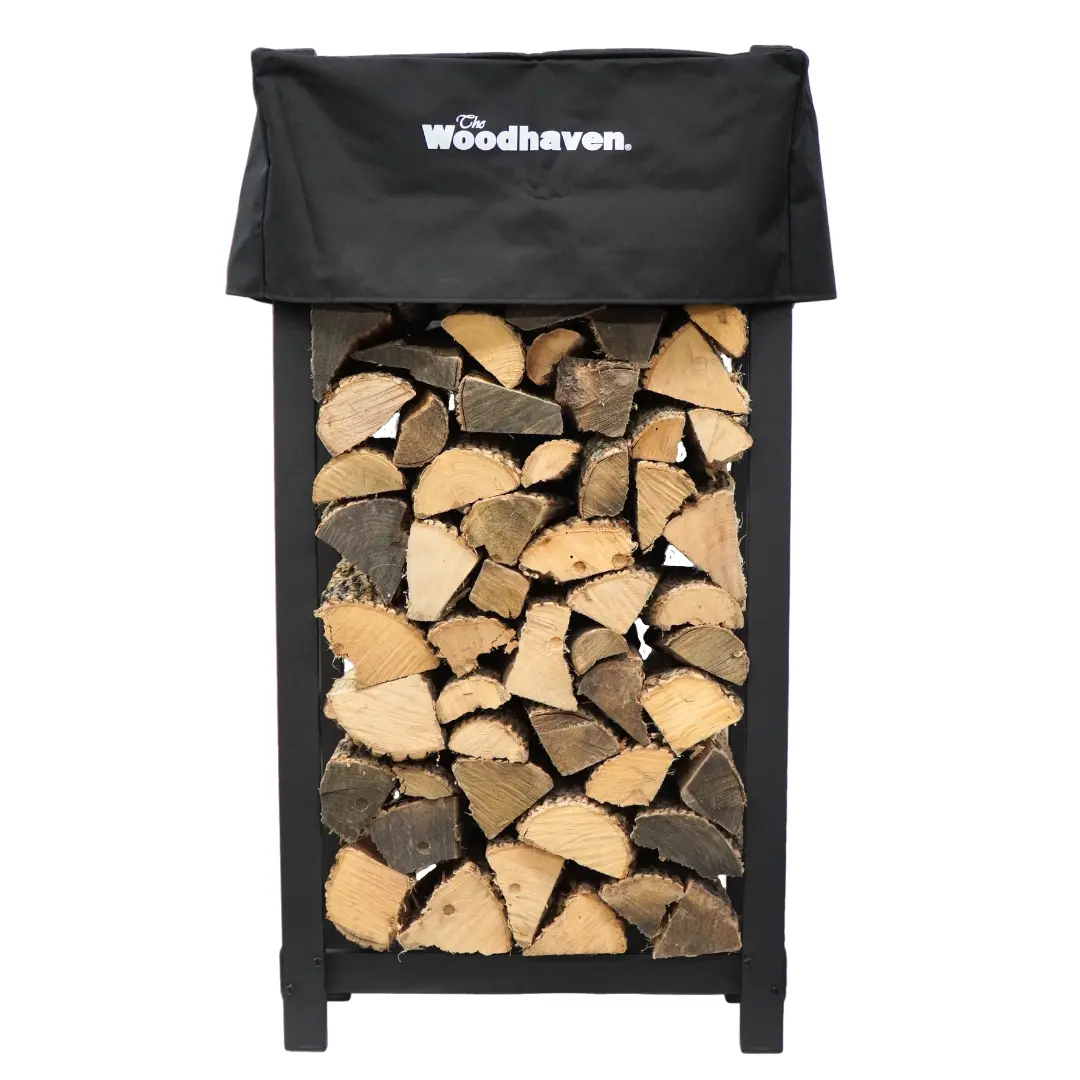
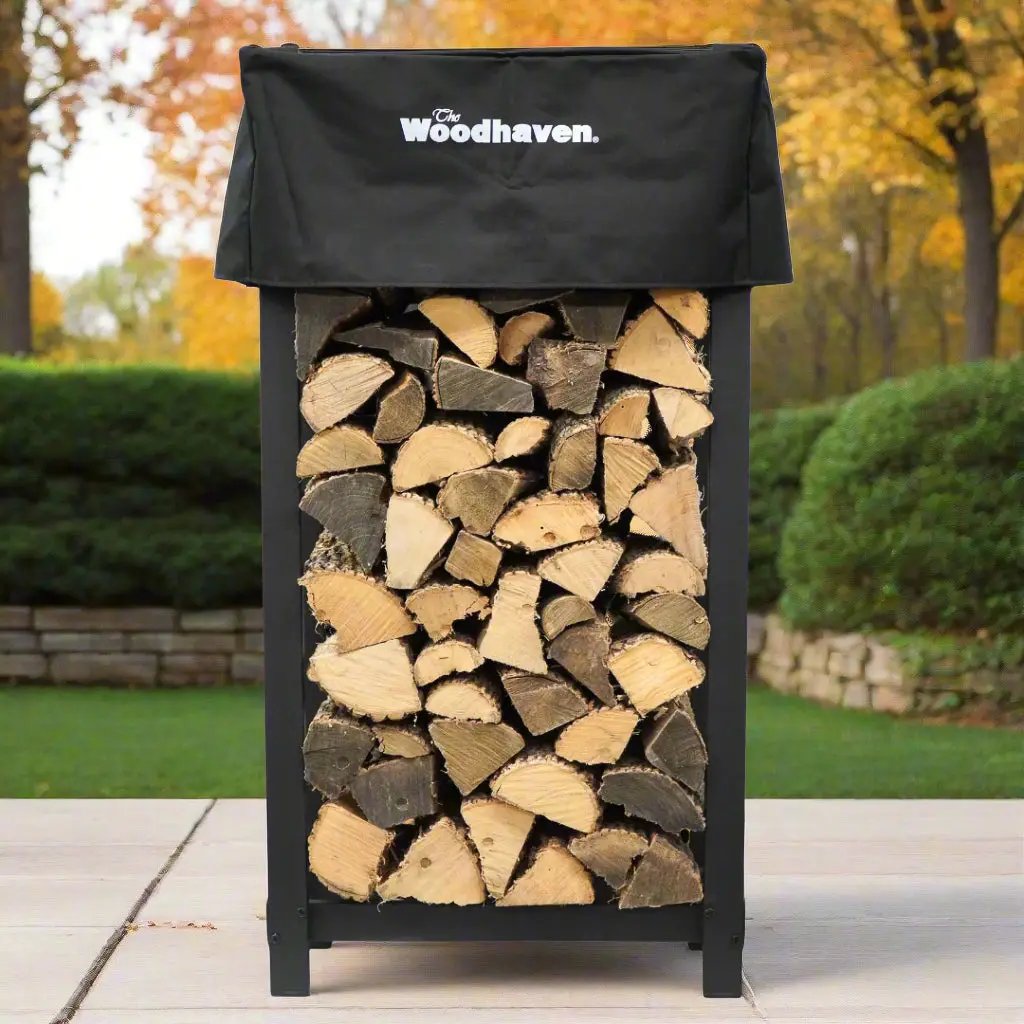
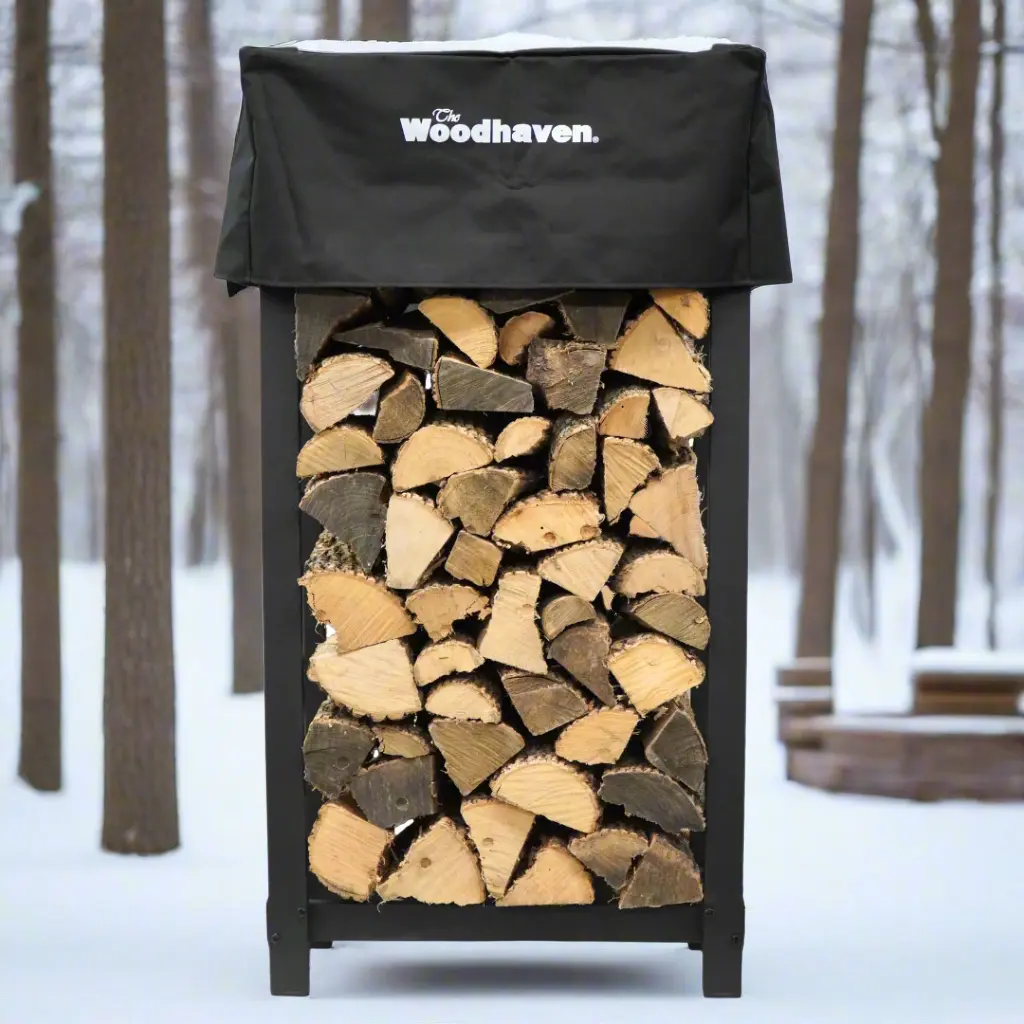
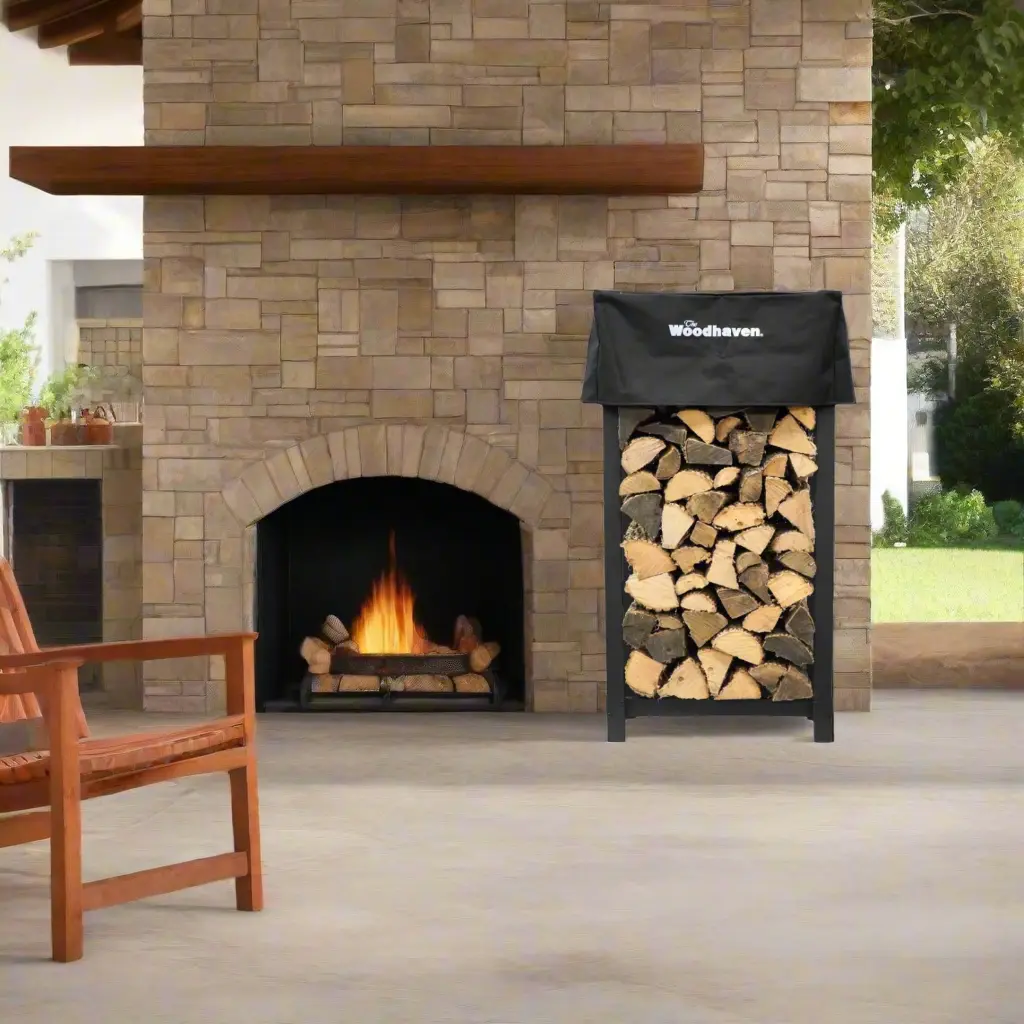
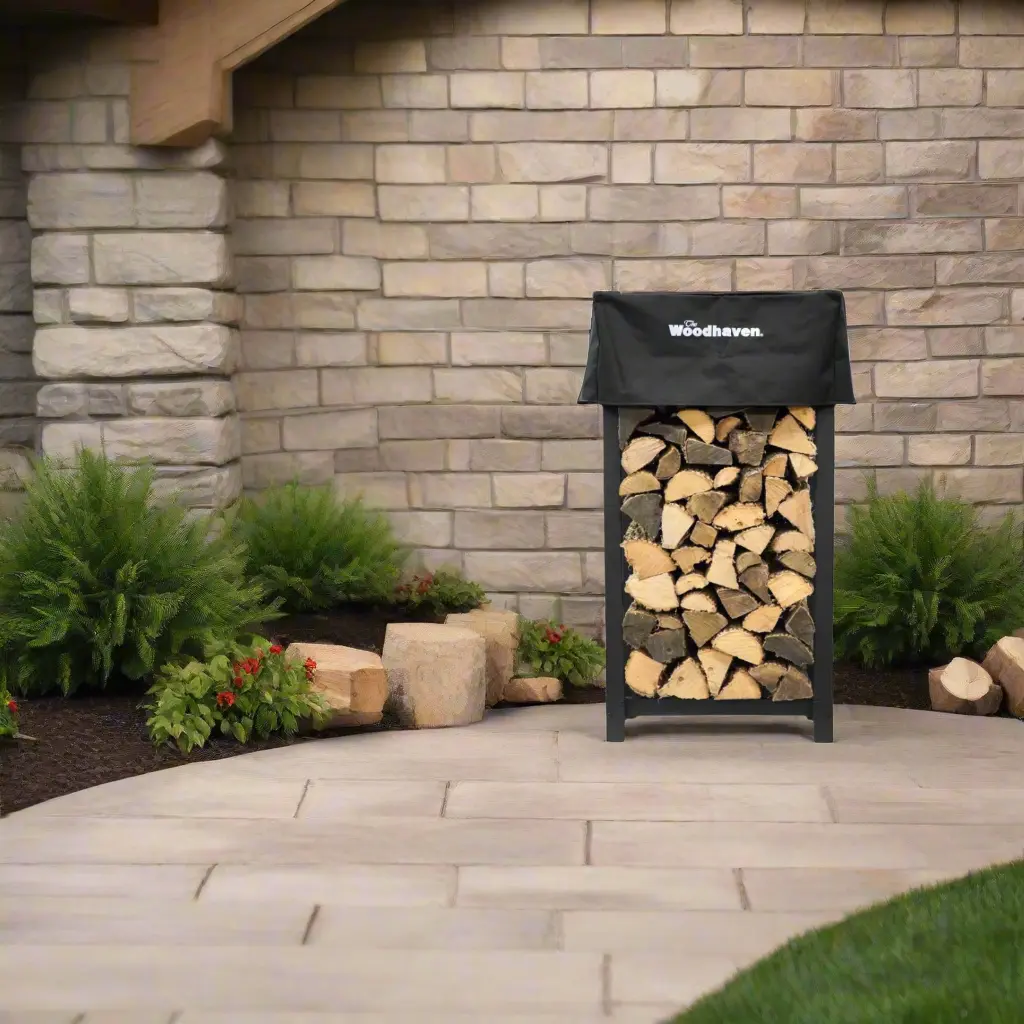
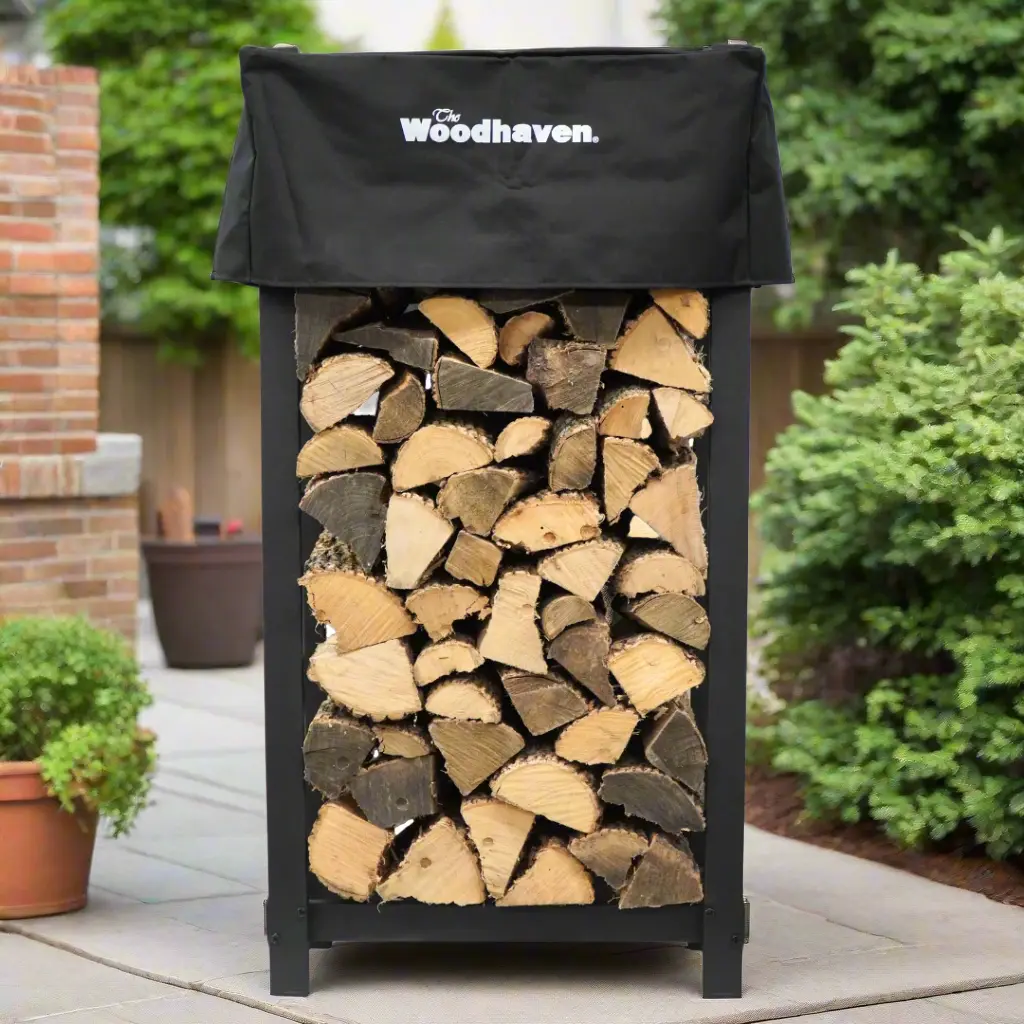
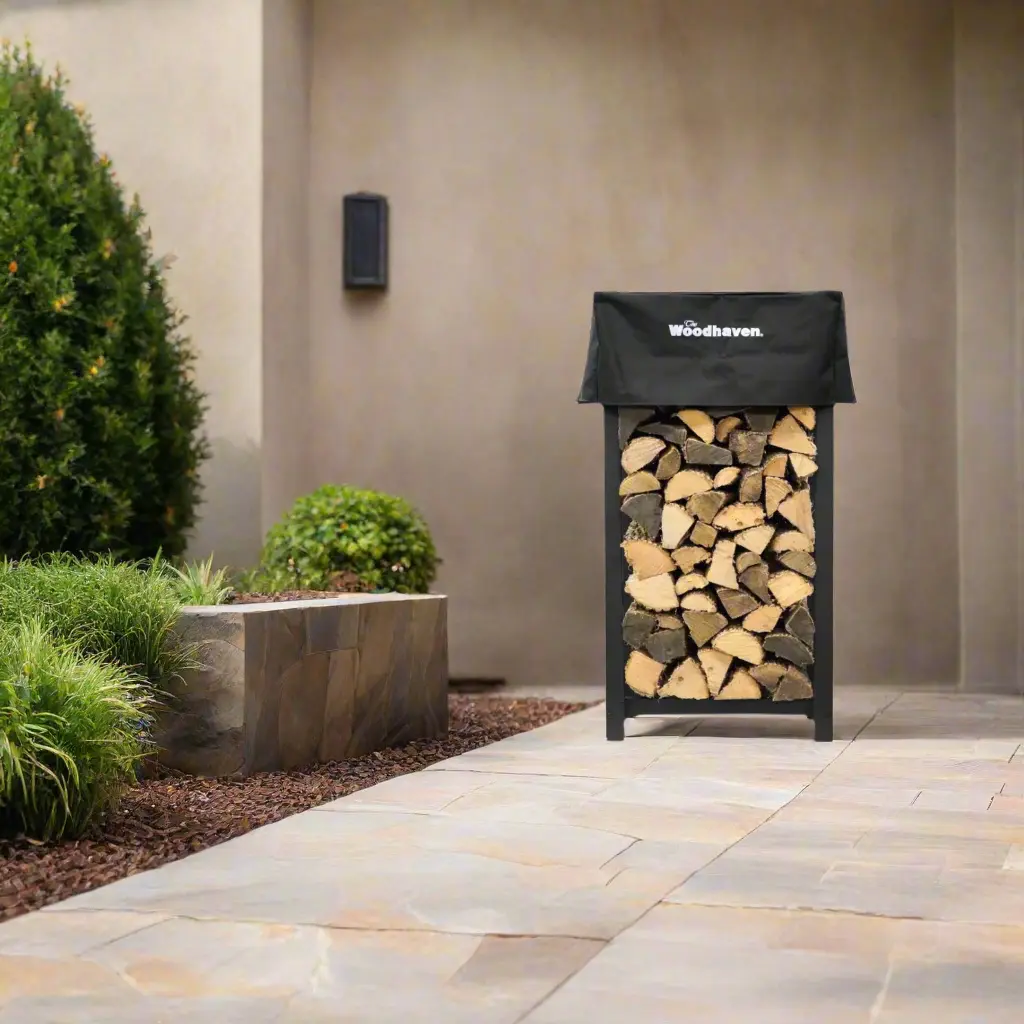
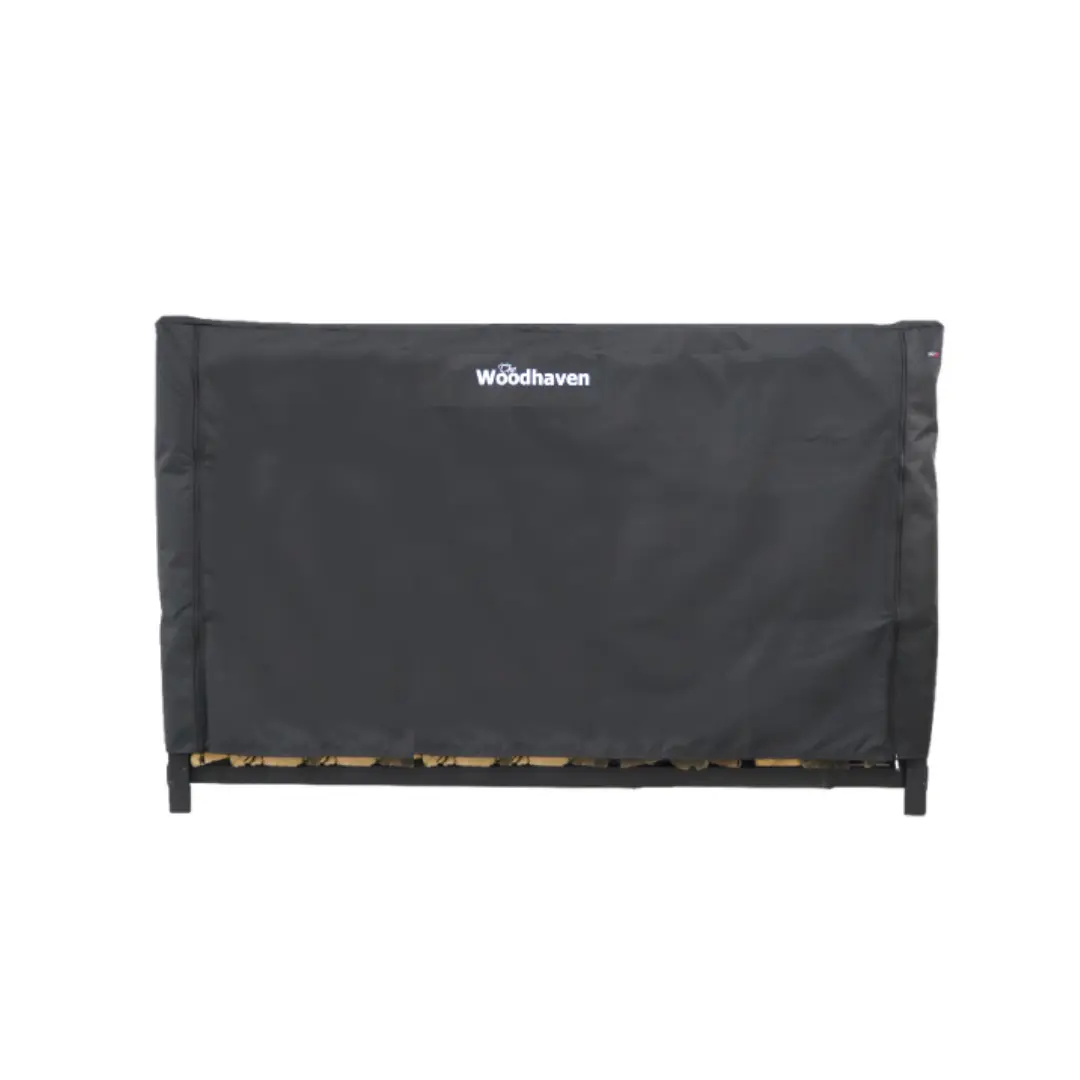
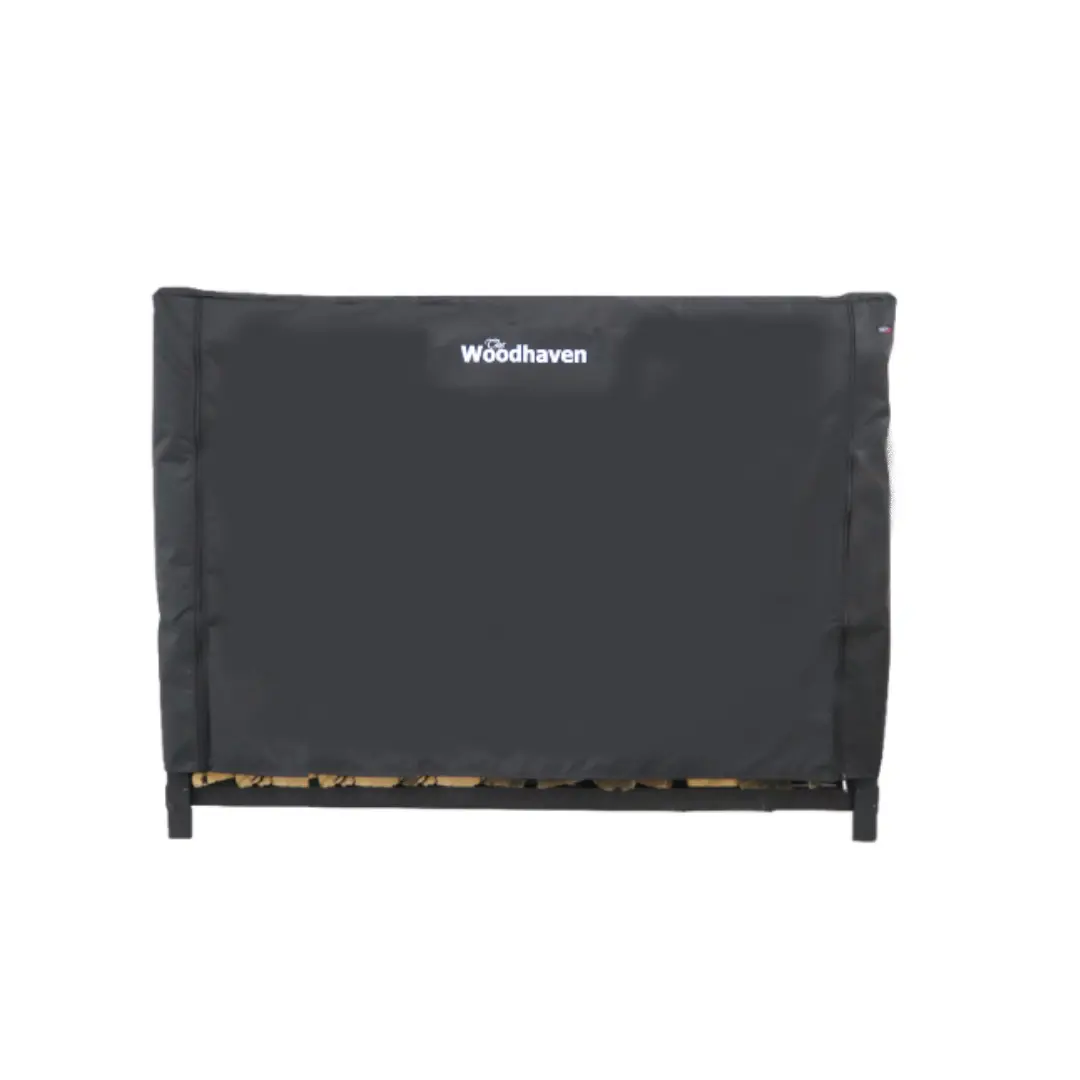
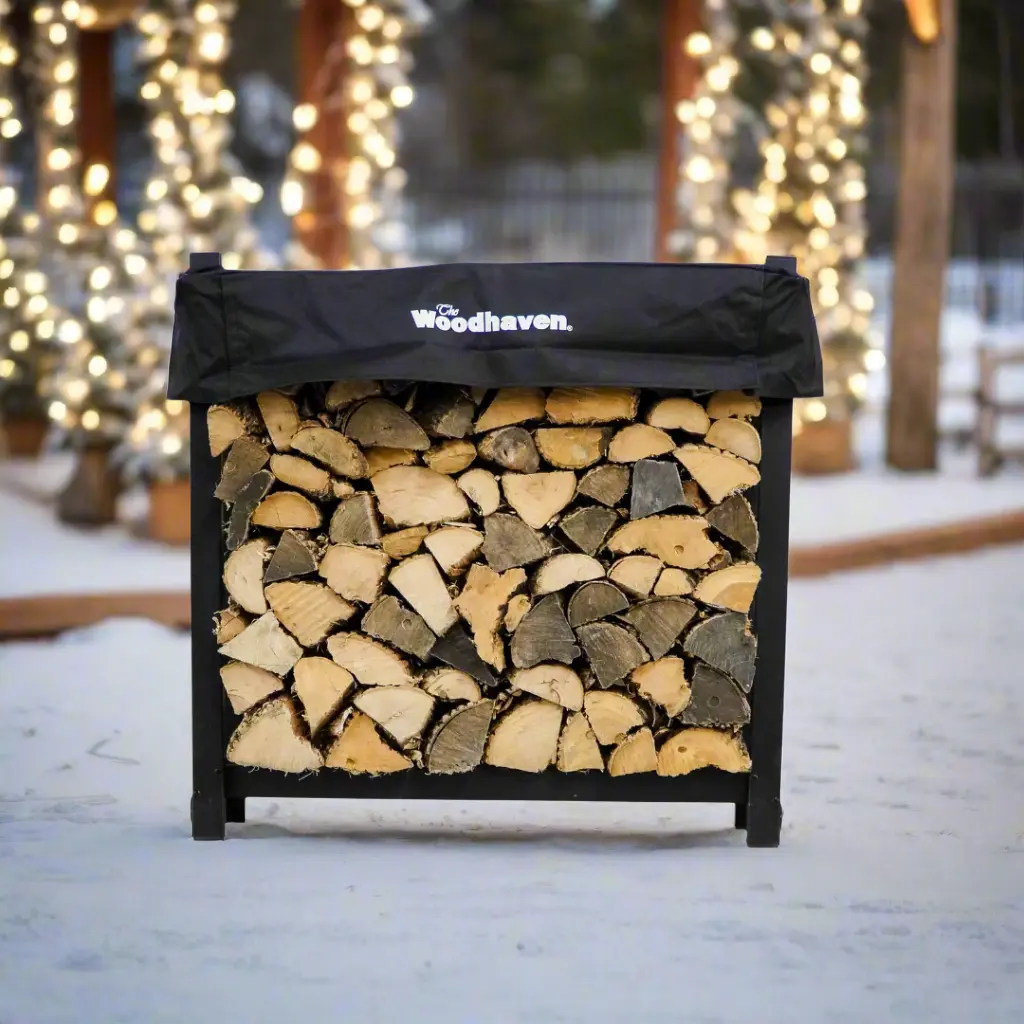
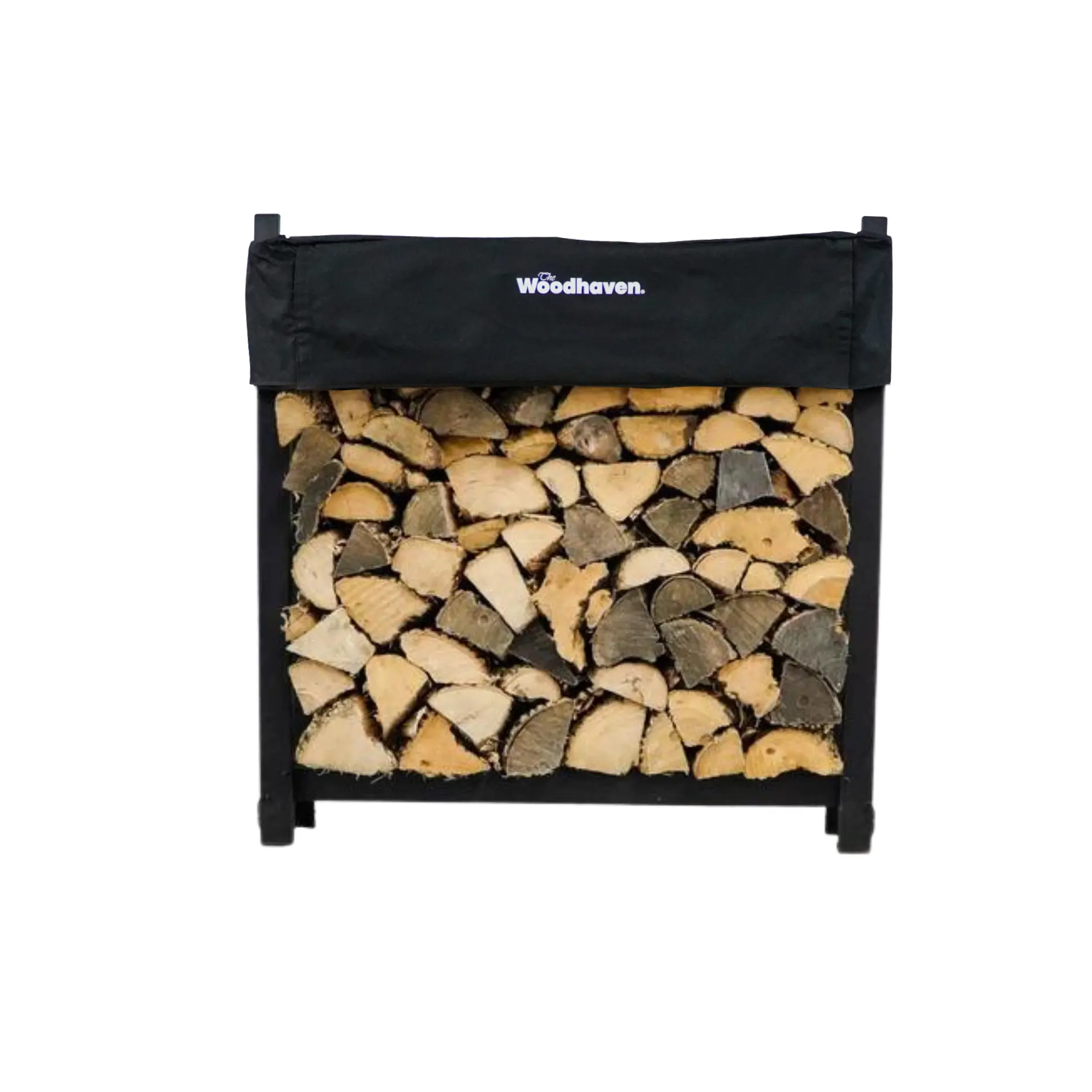
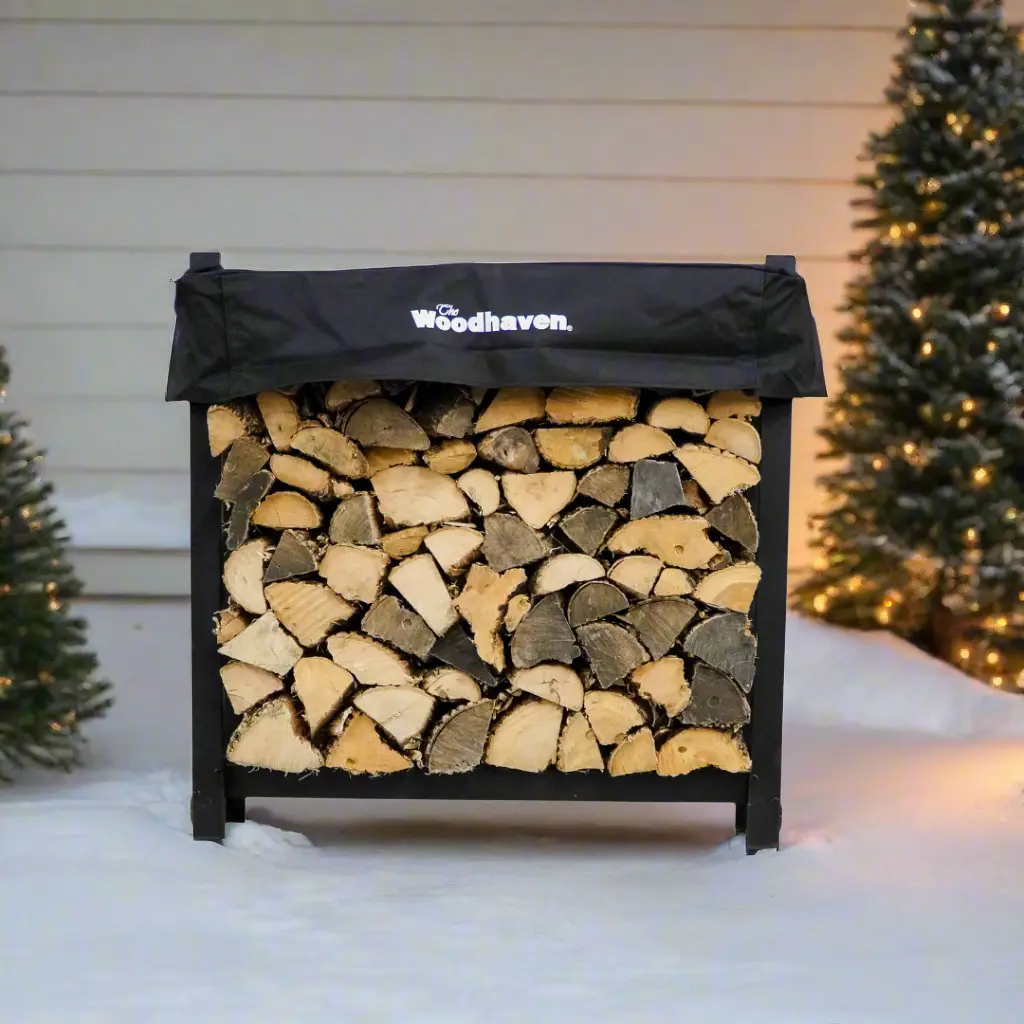
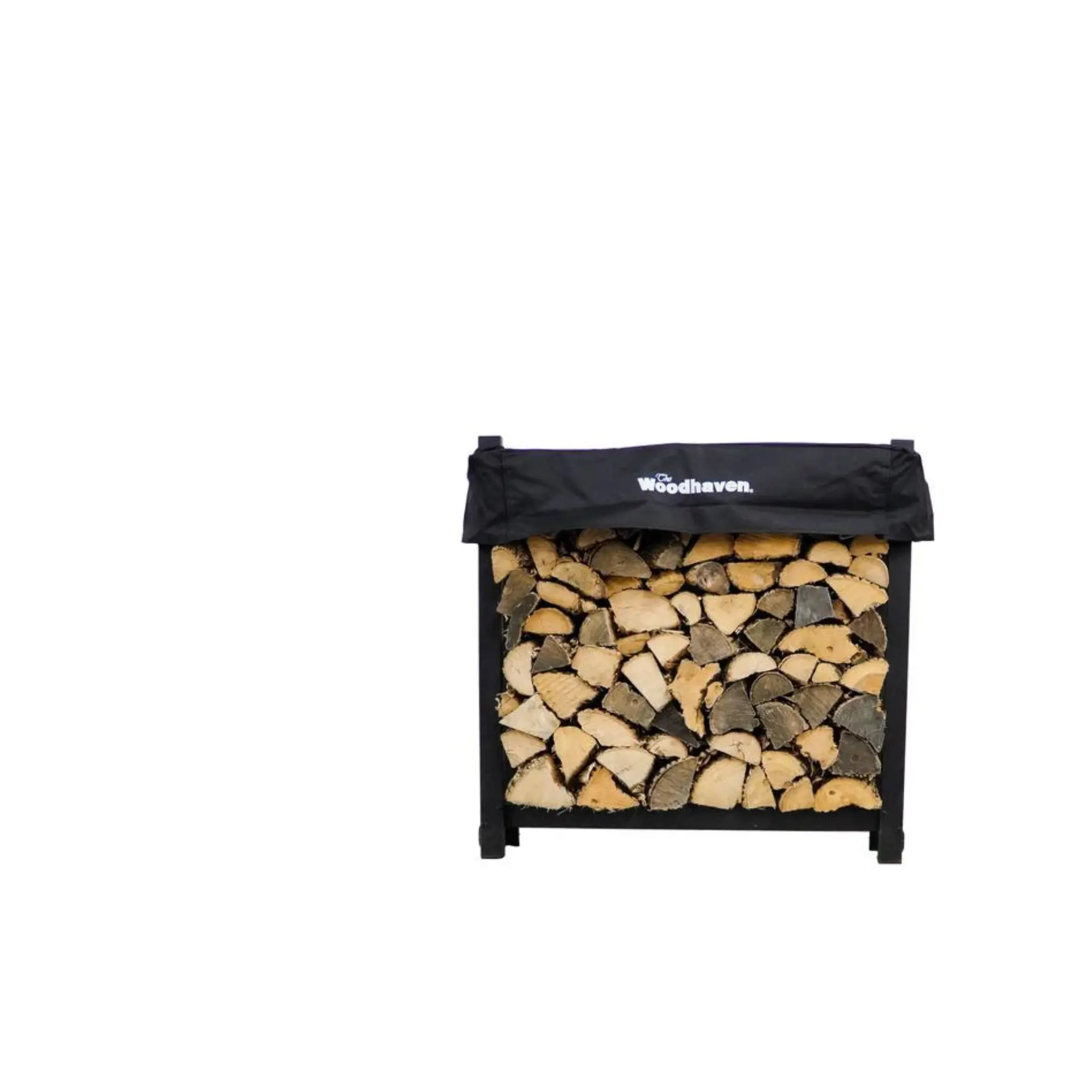
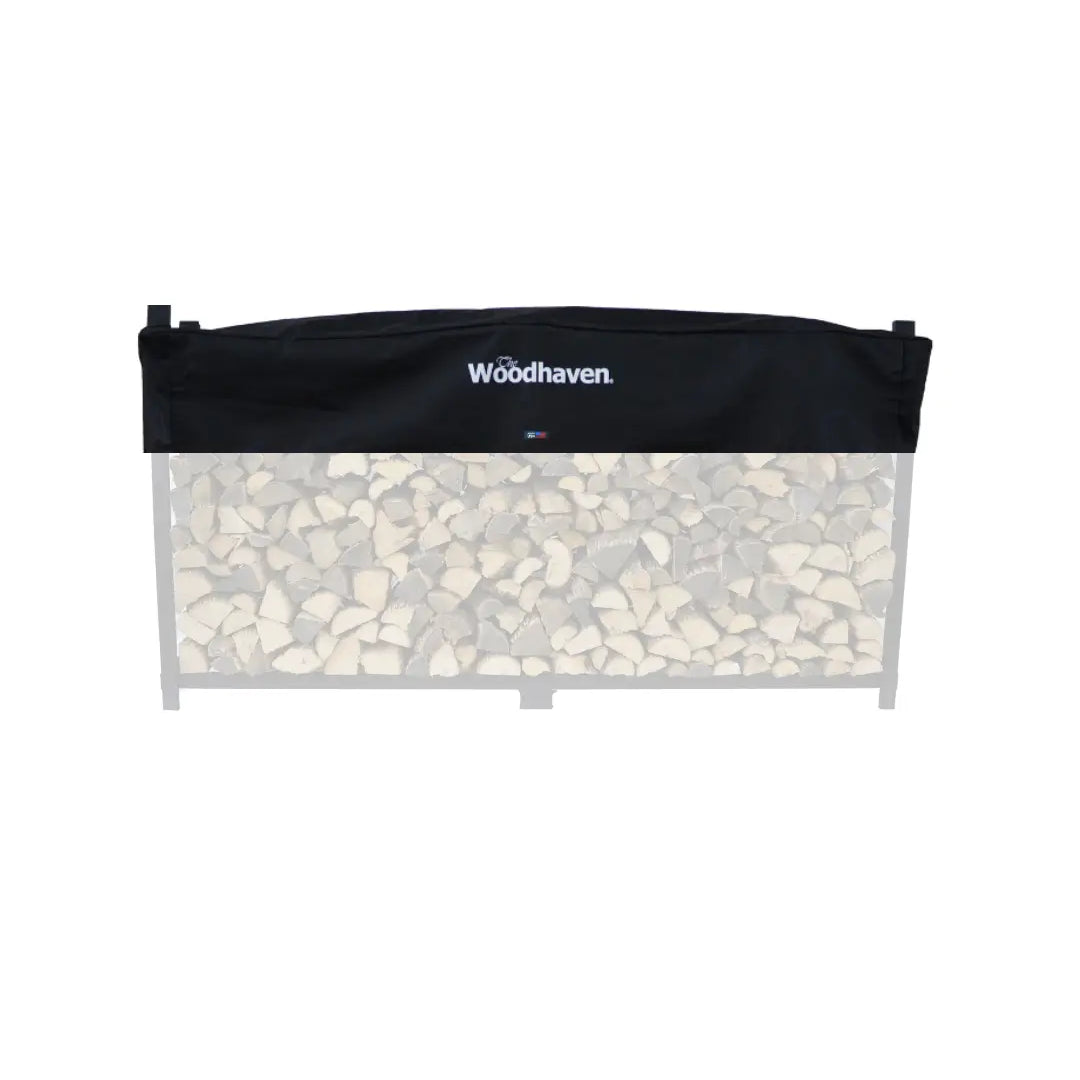
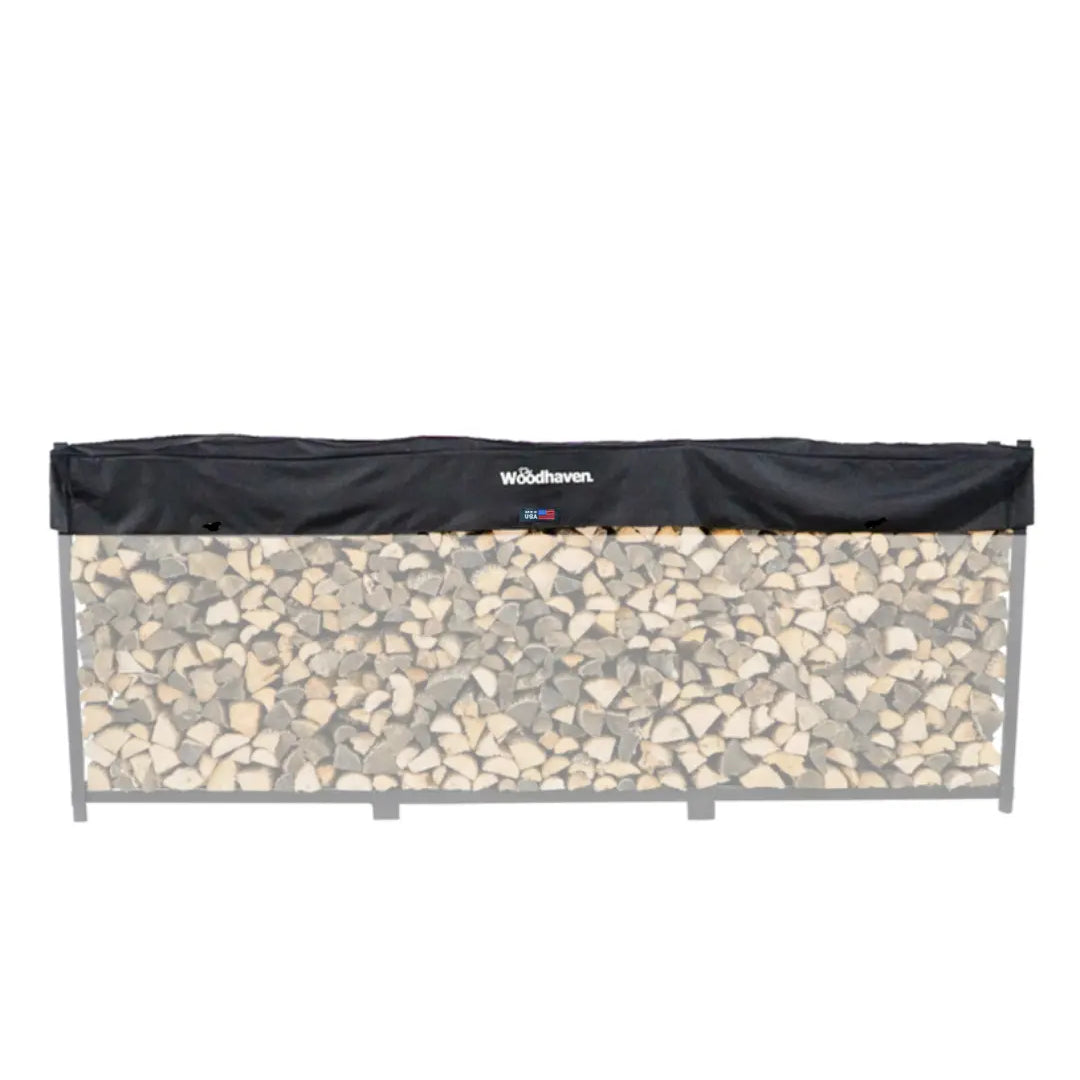
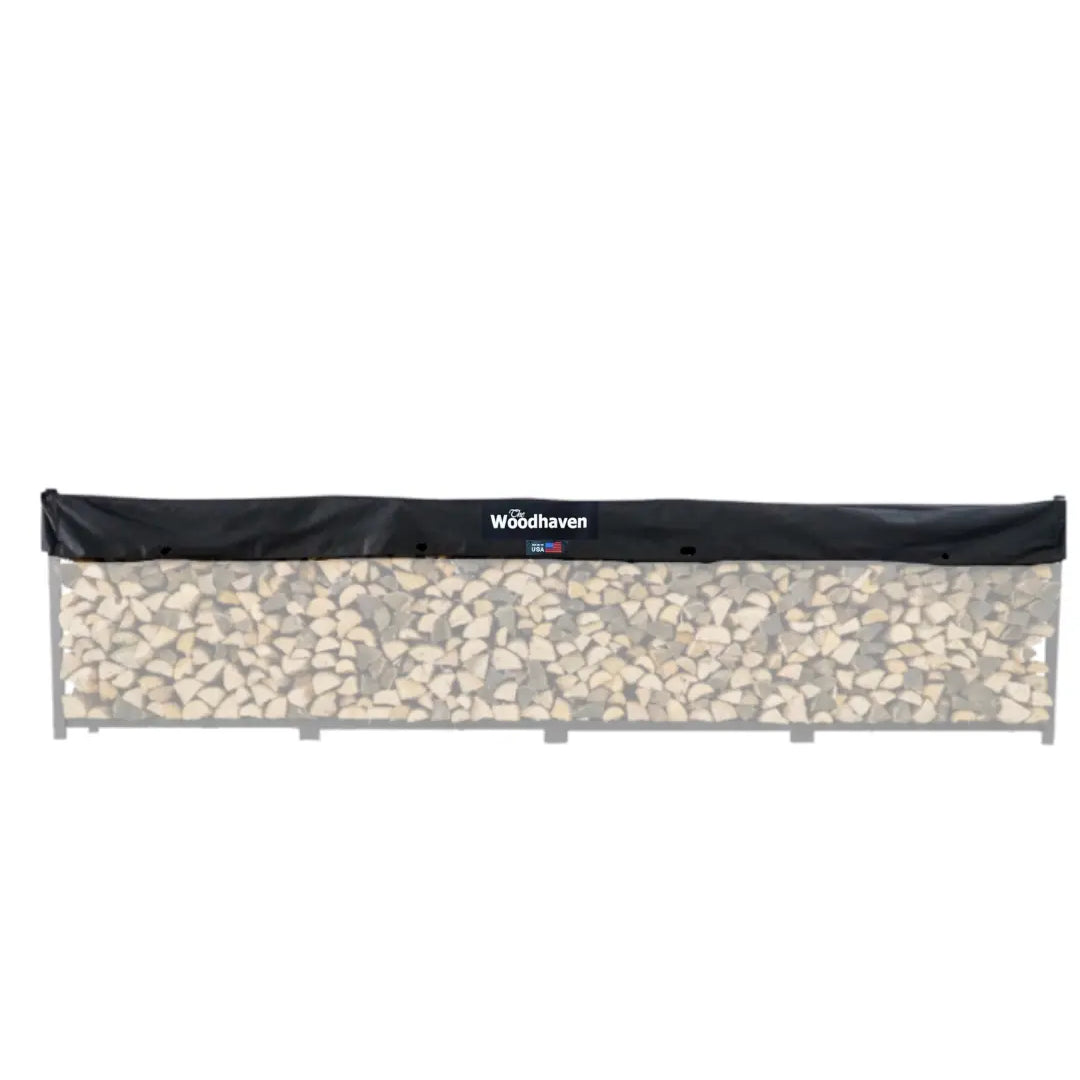
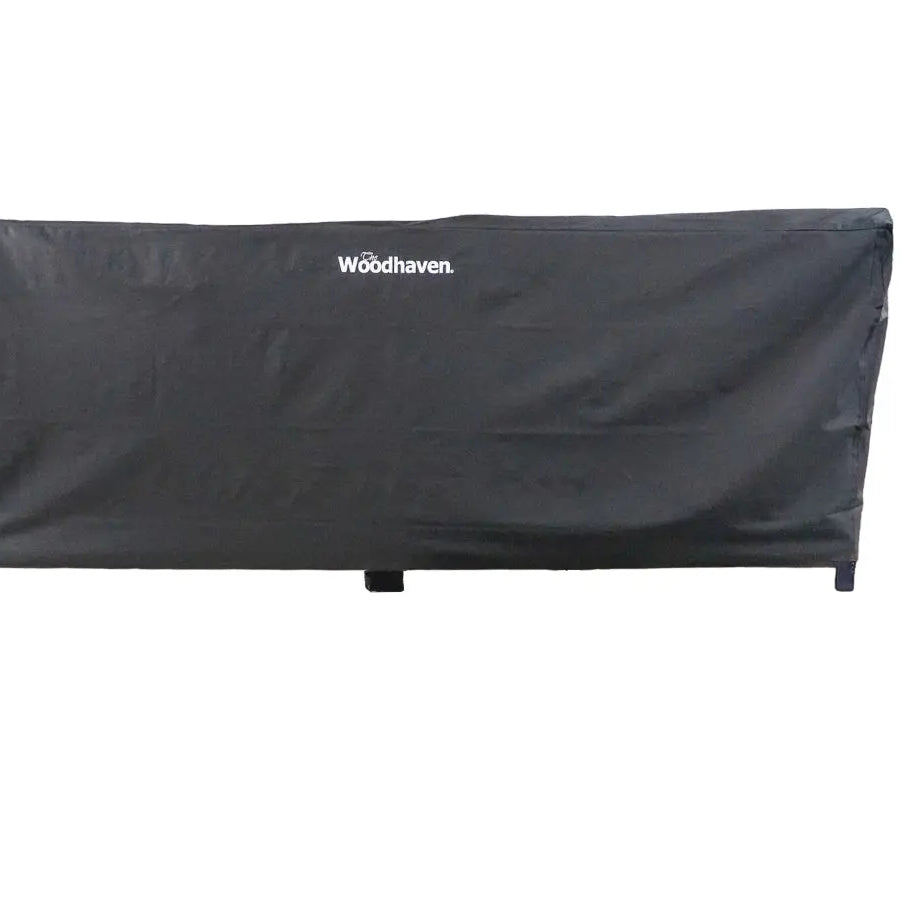
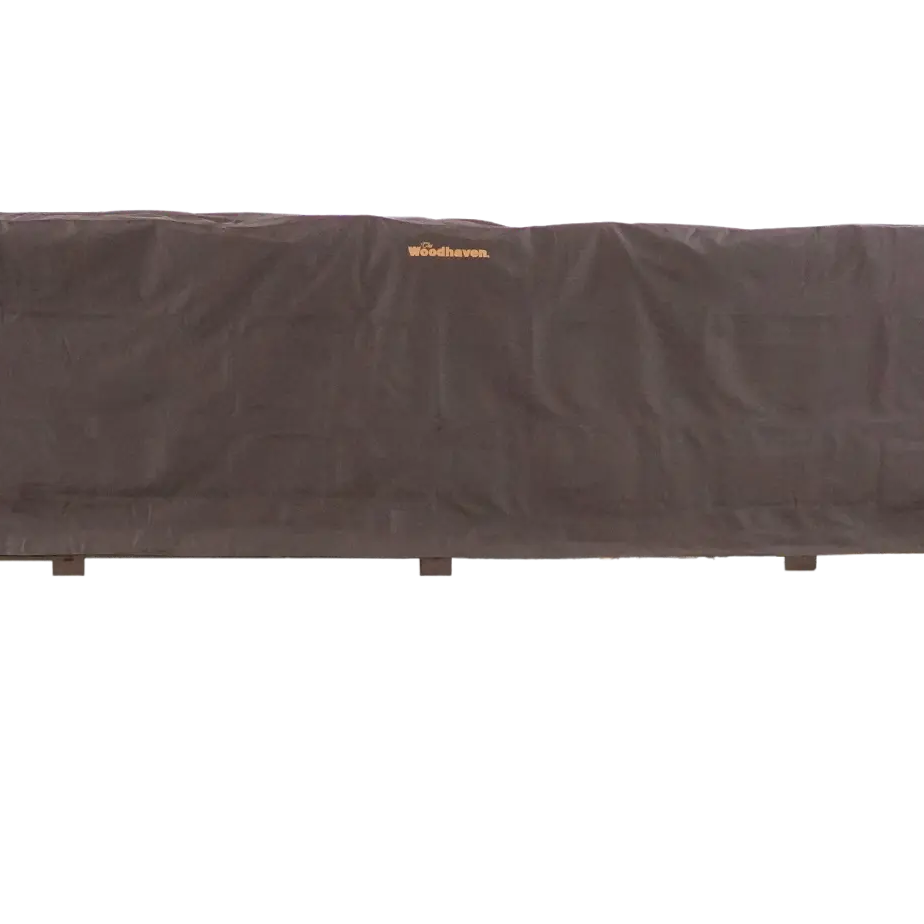
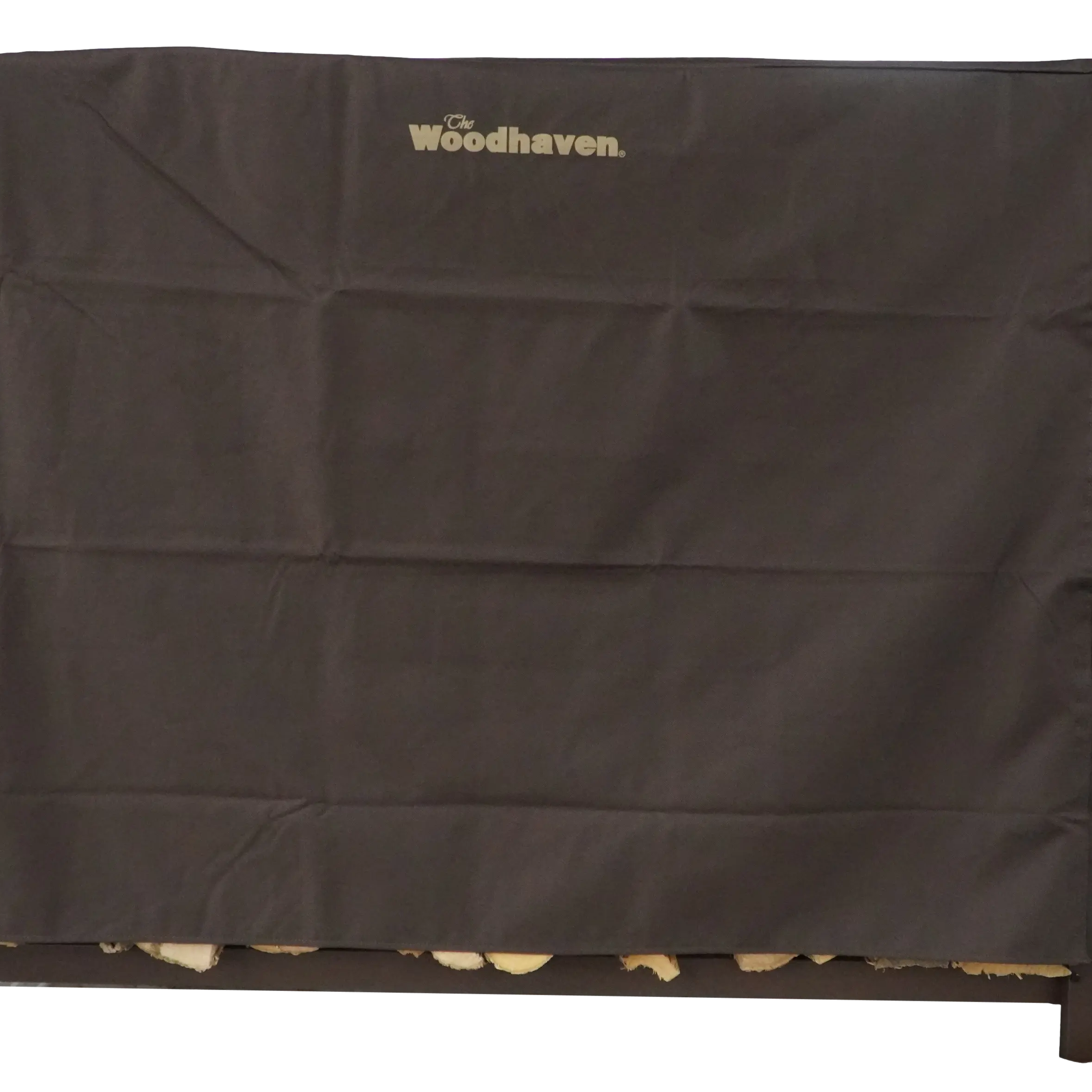
| Flat rack cover | A close fit and secure fastenings help limit lifting. | Support or slope the top to avoid pooling. | Depends on side coverage; keep ventilation openings clear. | Depends on the design; lift a panel or remove the cover. | Varies by fabric, seams, and weather exposure. | Straight, rectangular firewood racks. |
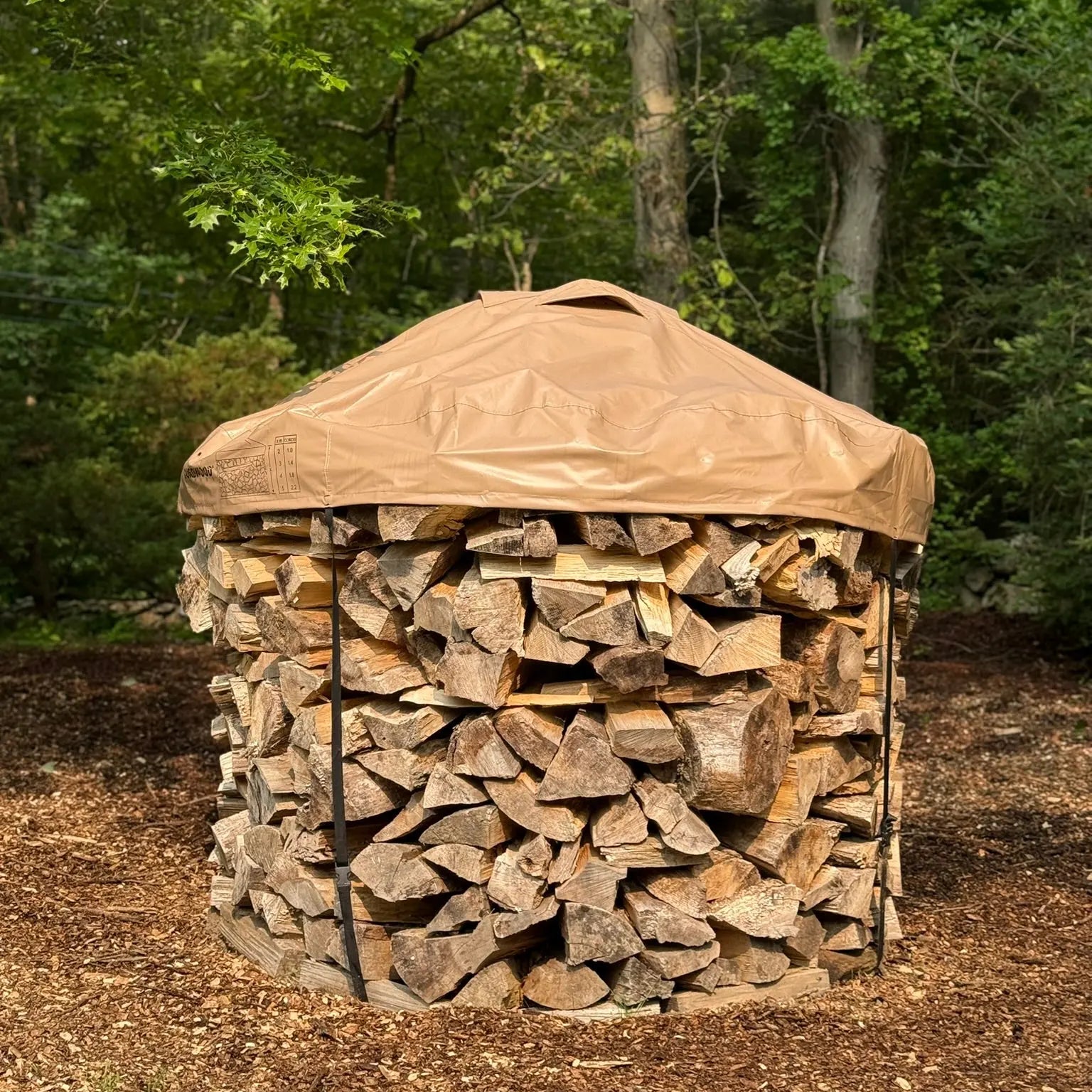
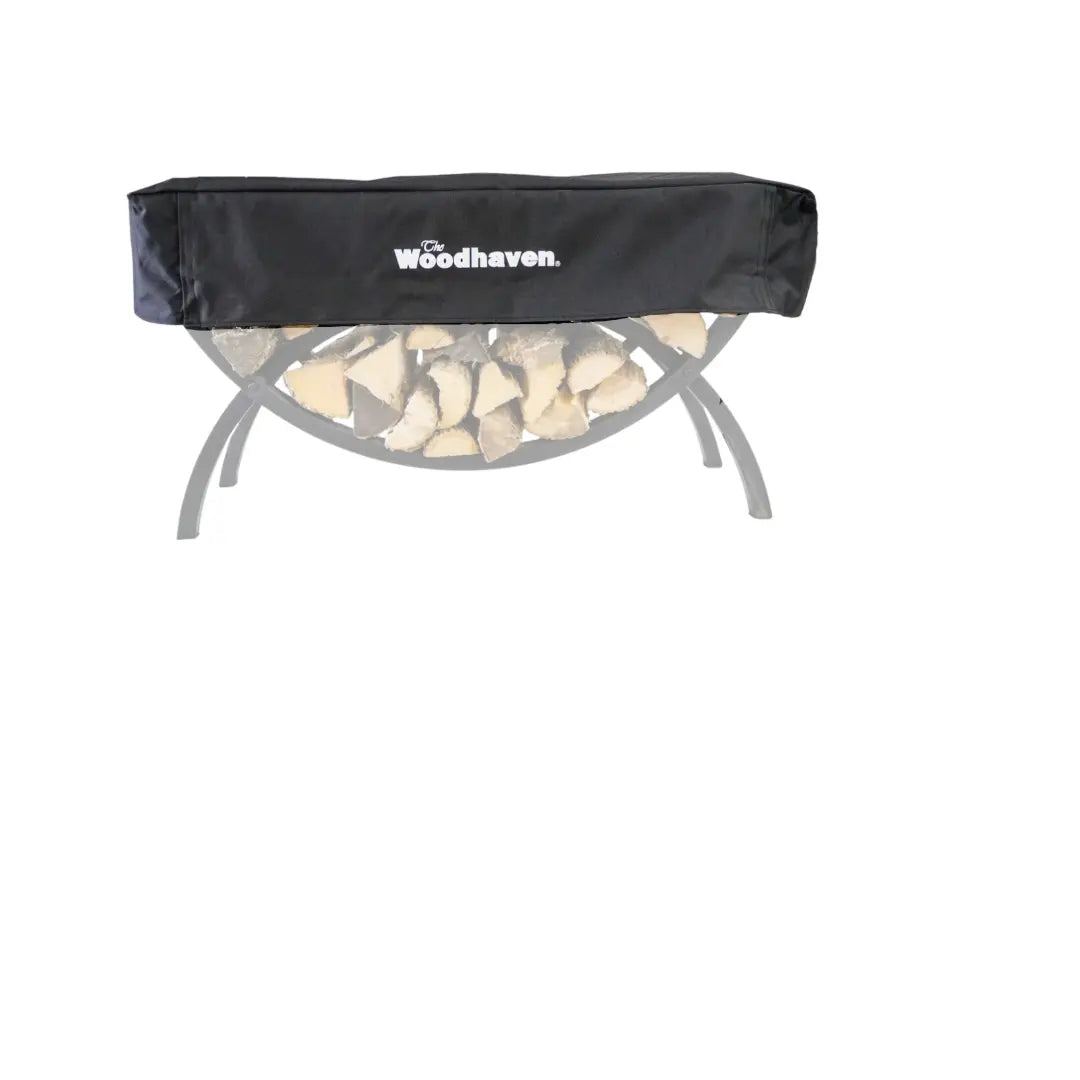
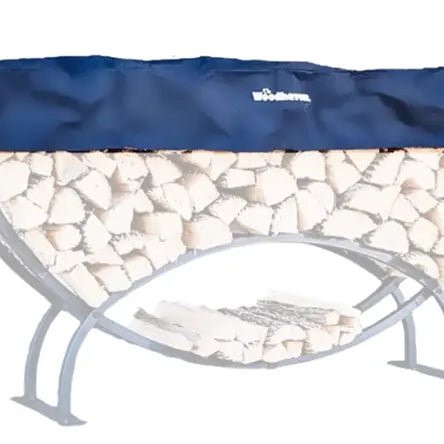
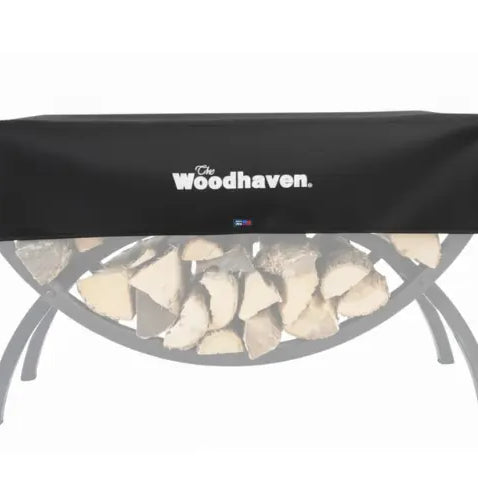
| Vented round cover | Secure straps help hold a fitted cover over a round pile. | A crowned stack helps water run off. | Allow open sides or ventilation gaps below the cover. | Release straps and lift the edge for access. | Look for reinforced, UV-resistant material. | Round Holz Hausen stacks with overhead protection and airflow. |
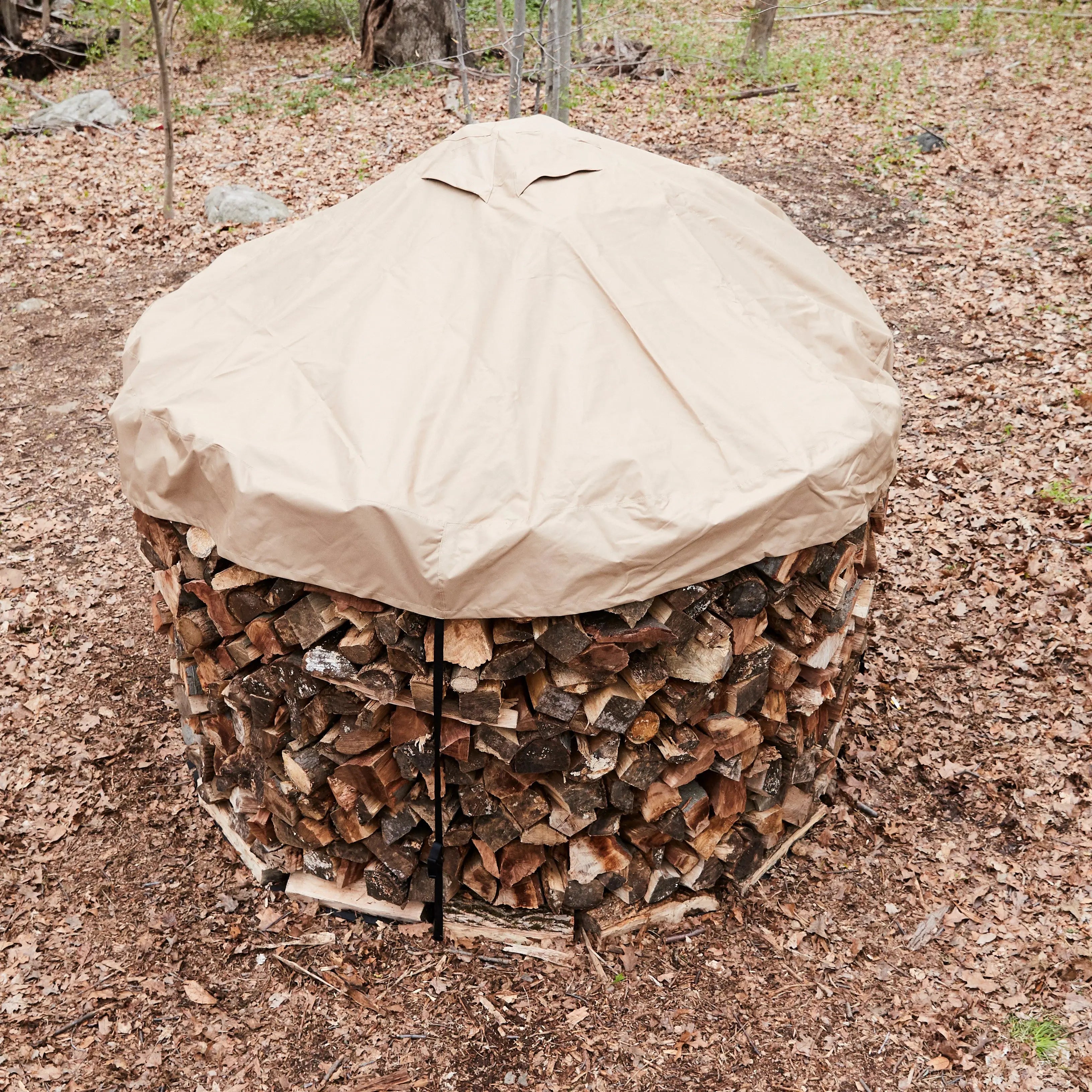
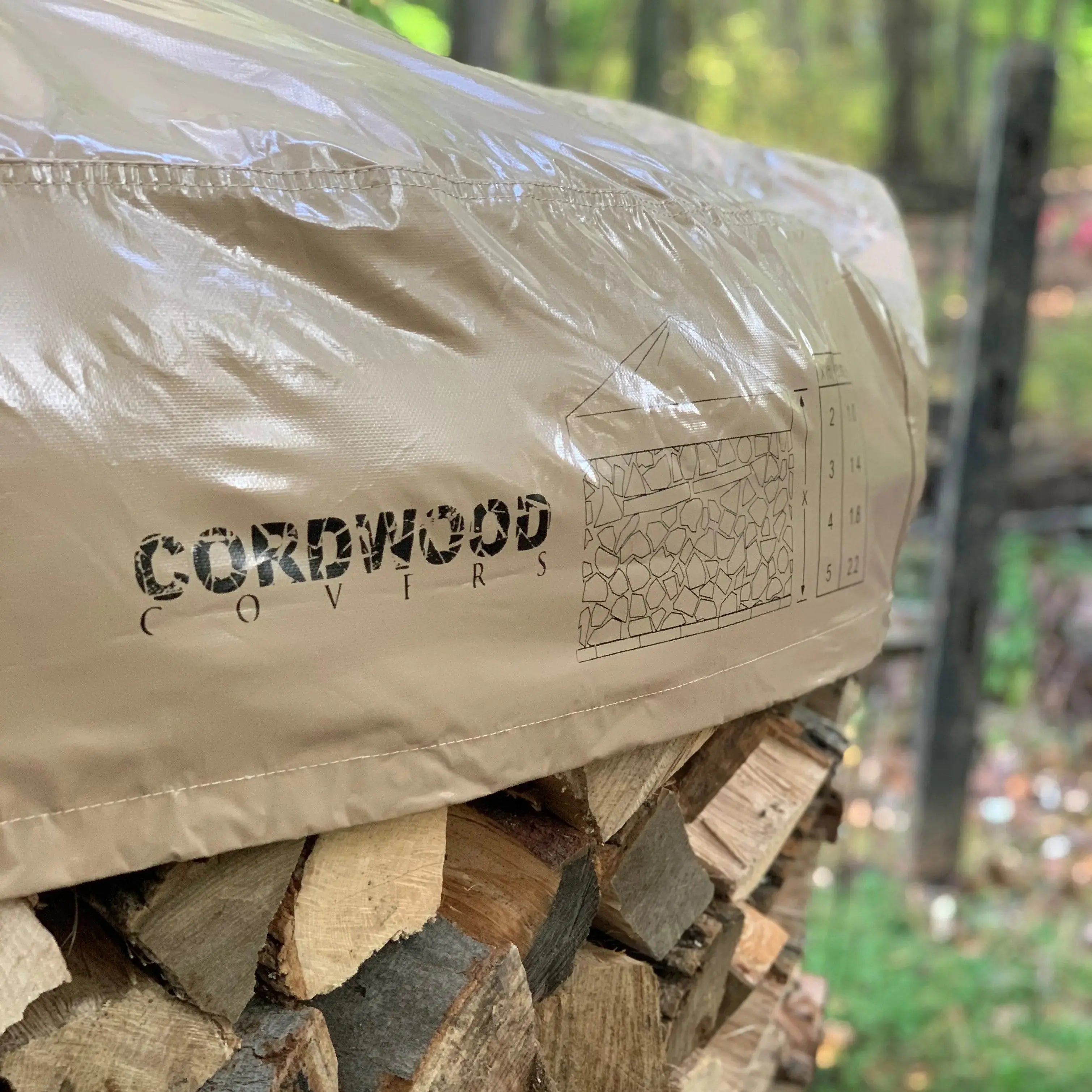
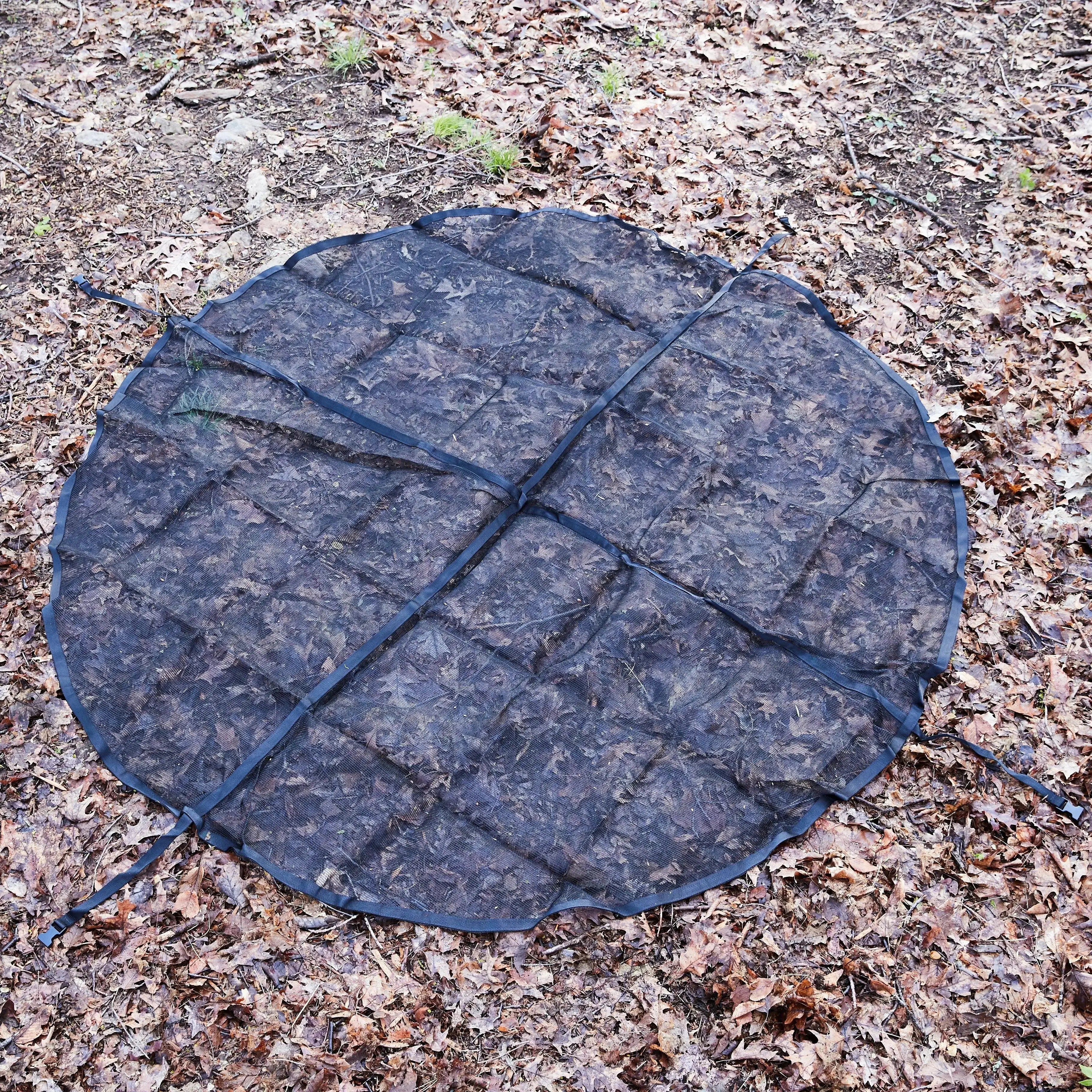
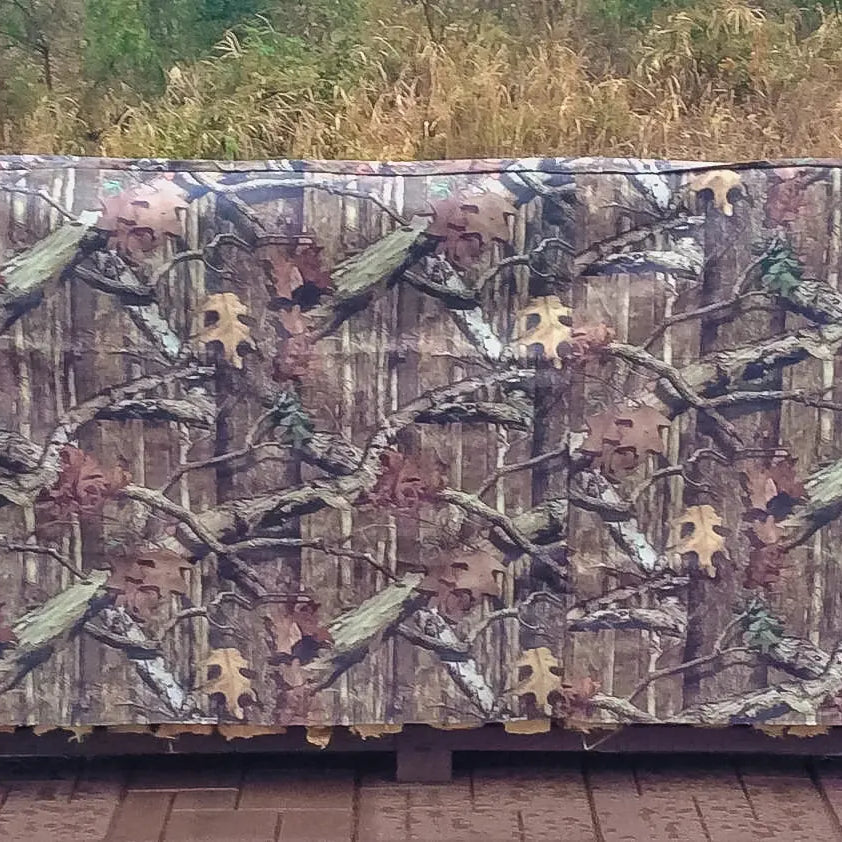
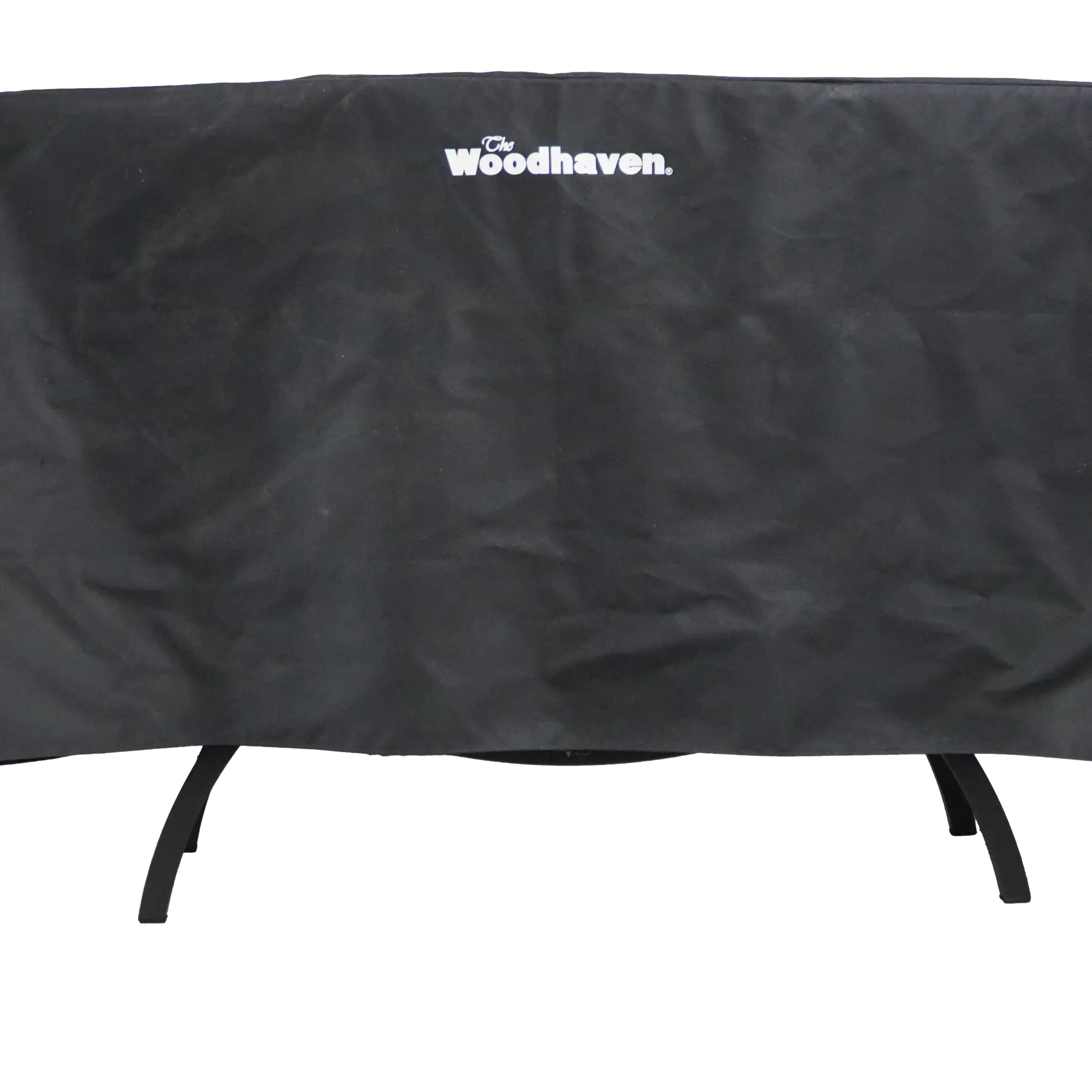
Building a round stack? Shop the 8 Ft Cordwood Cover, with ripstop-reinforced, UV-resistant material and anchoring straps.
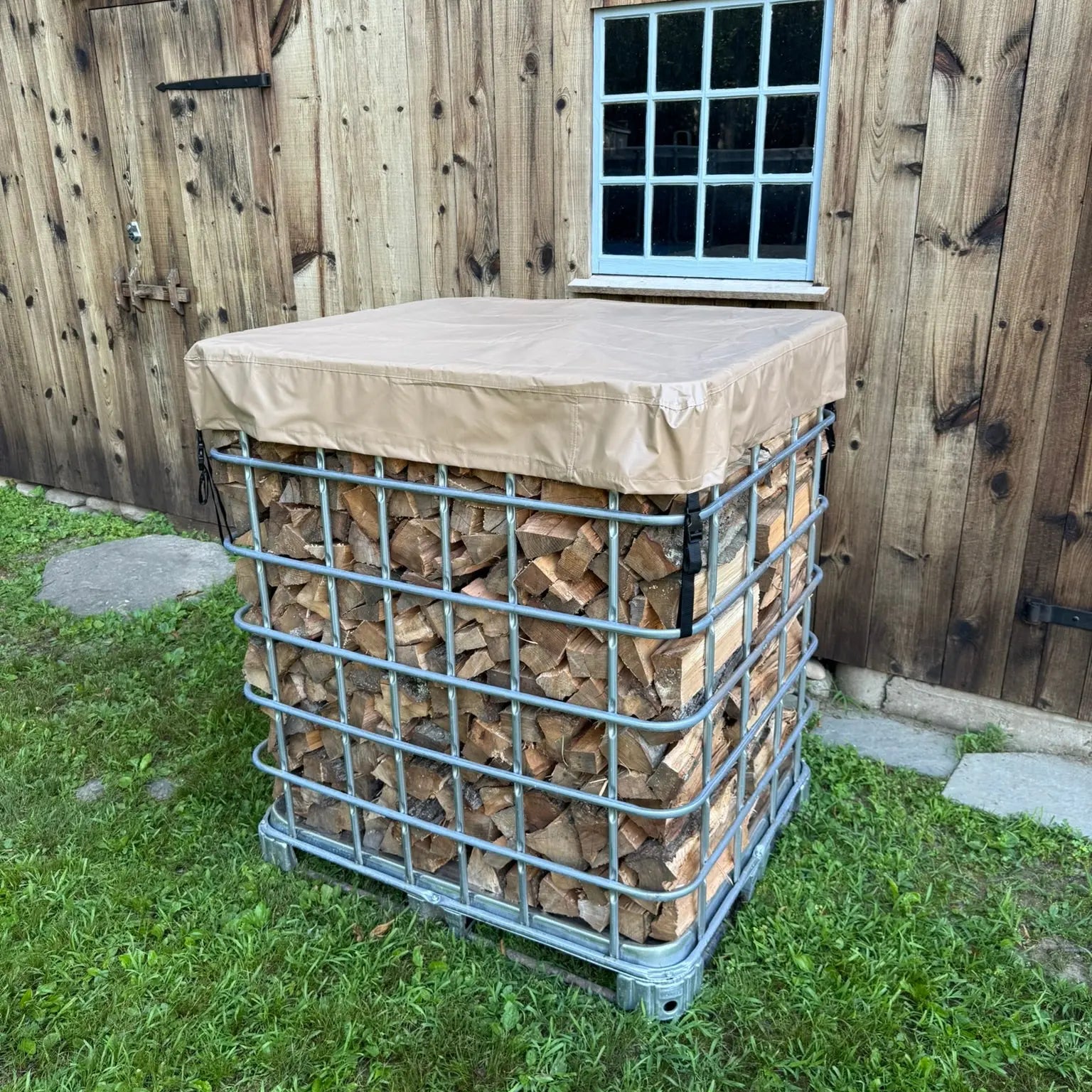
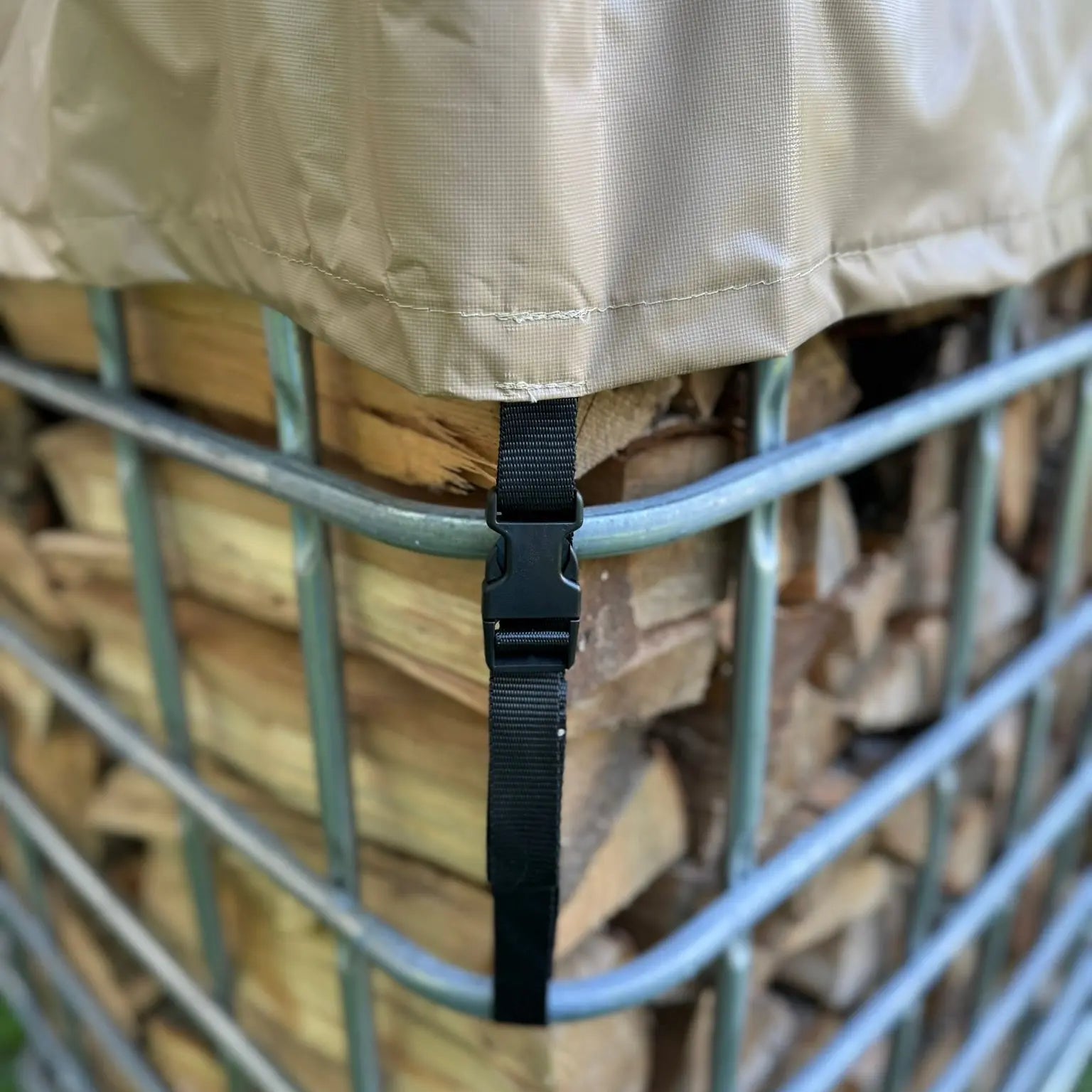
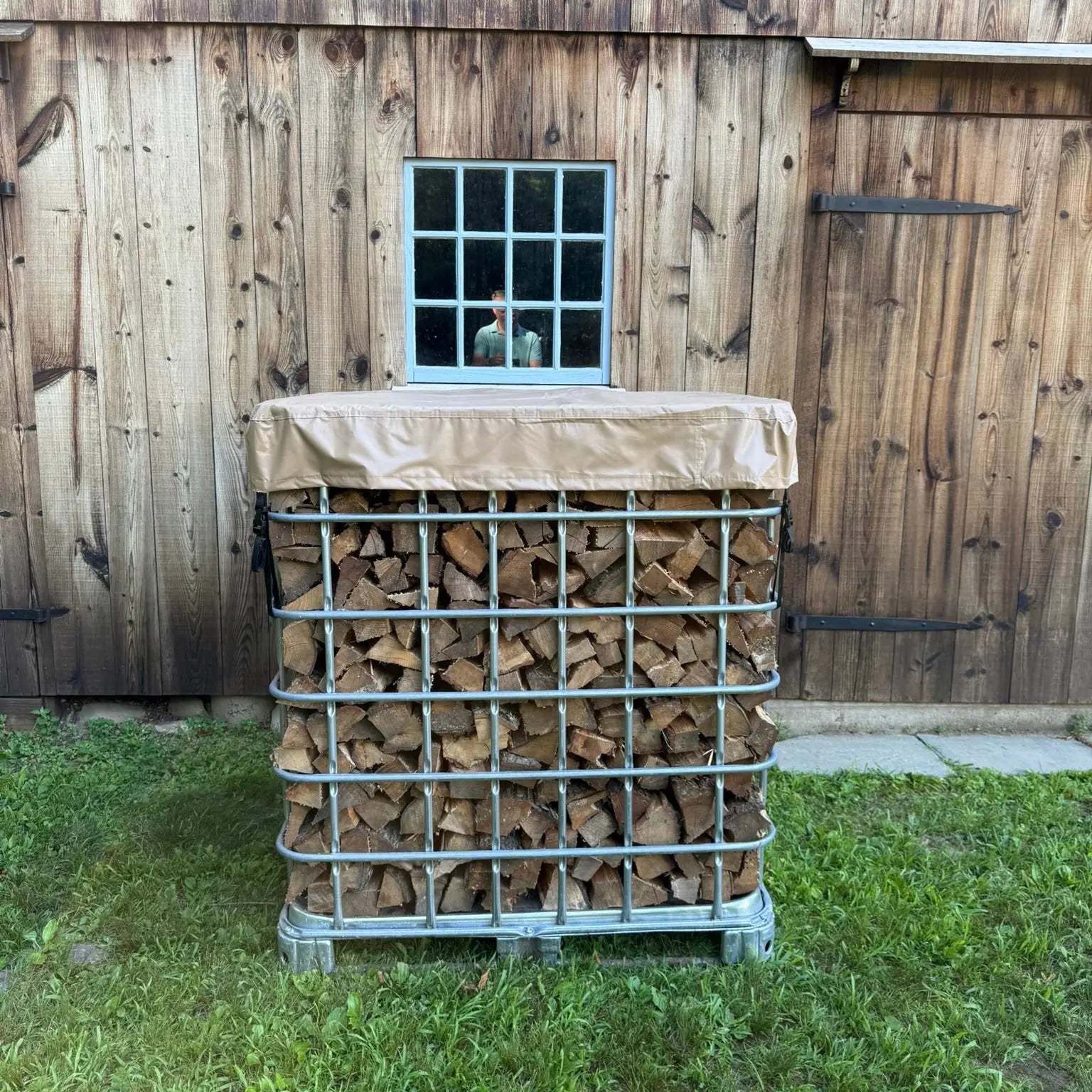
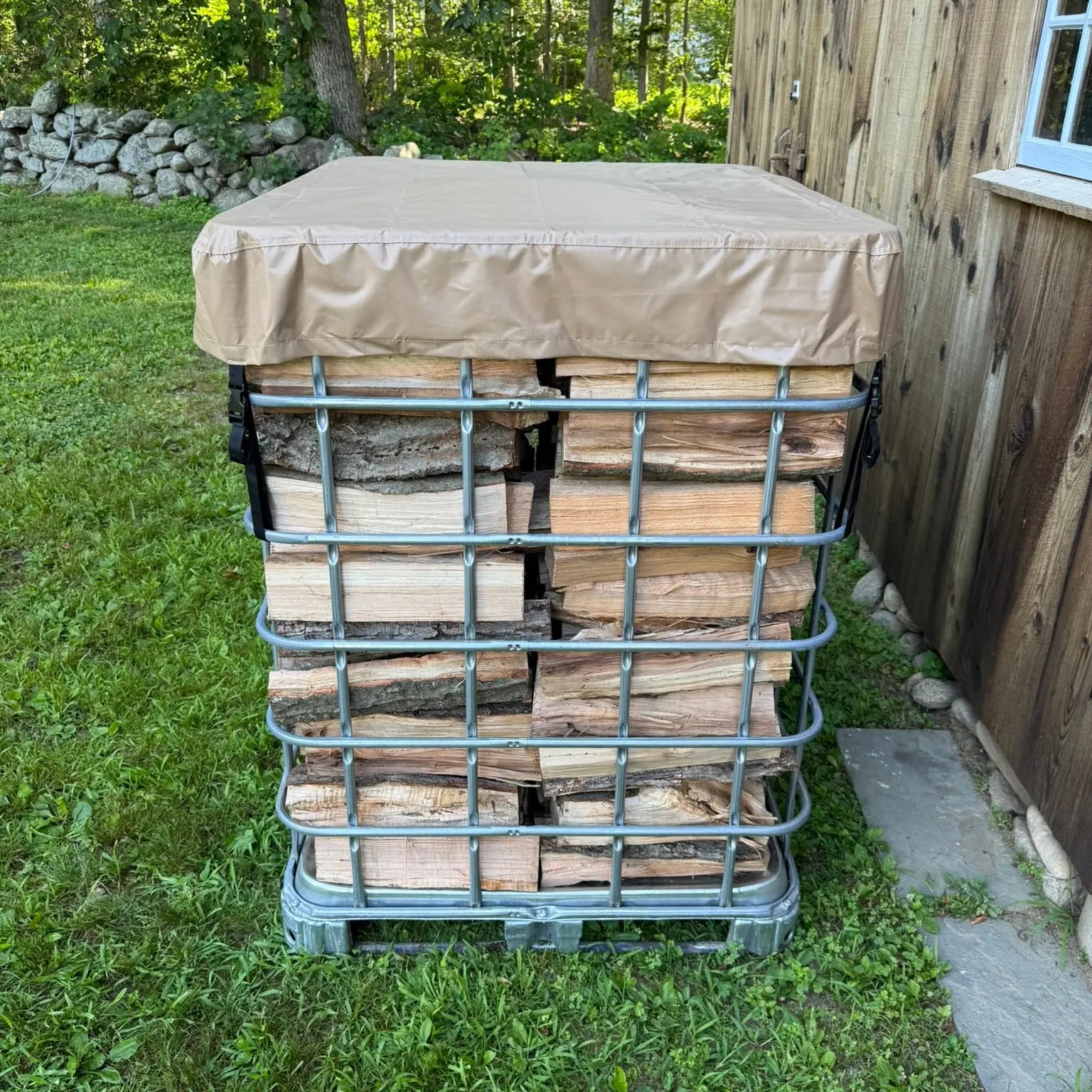
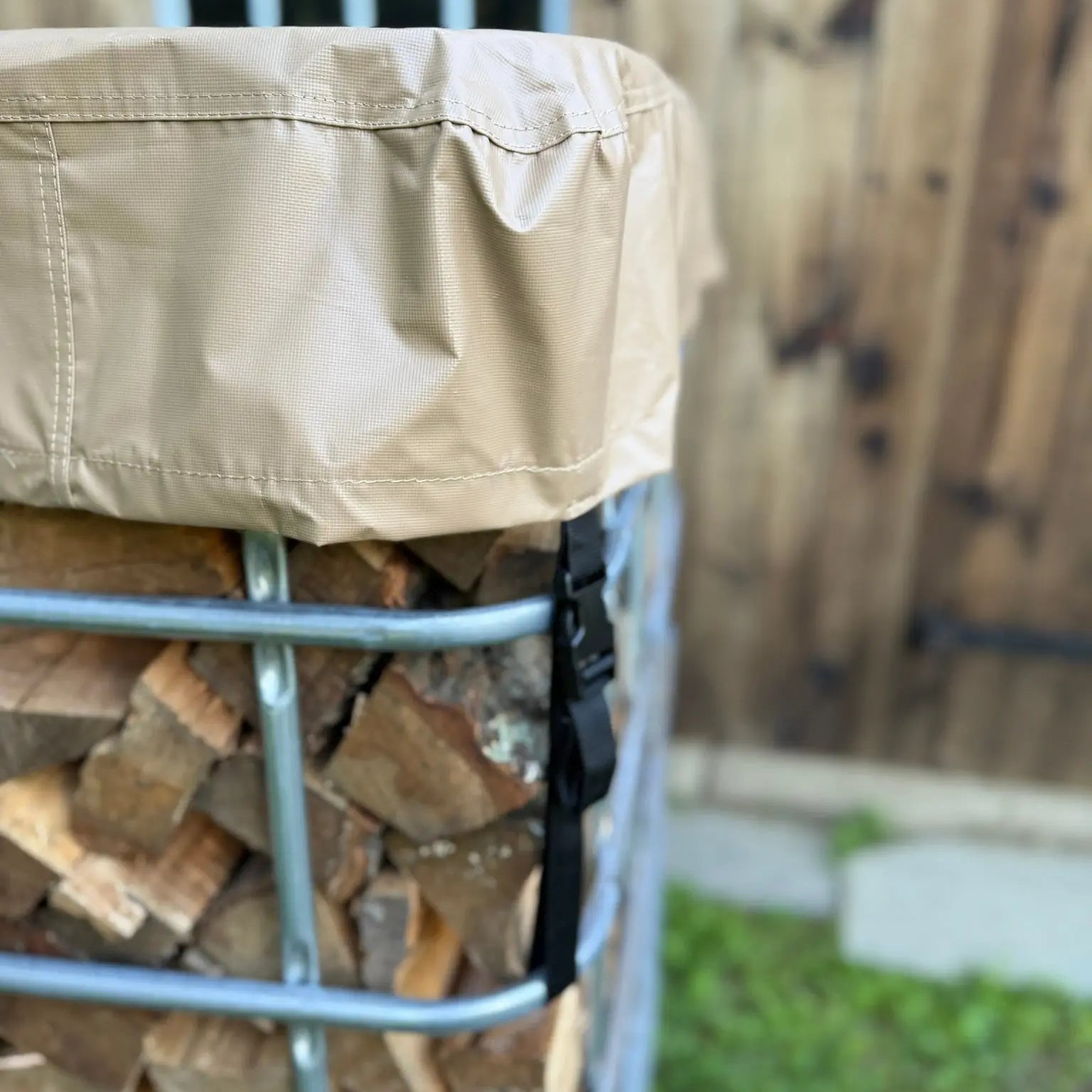
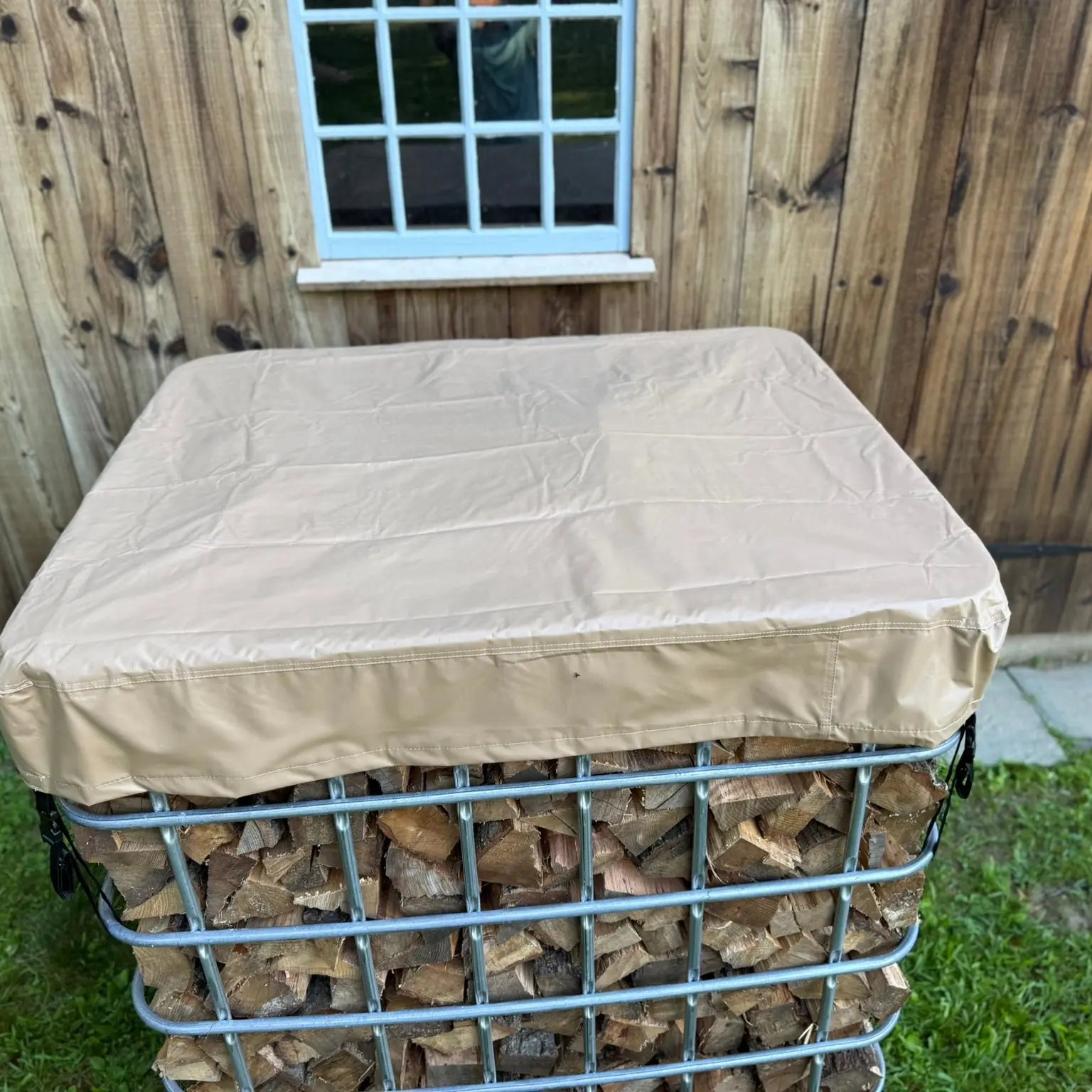
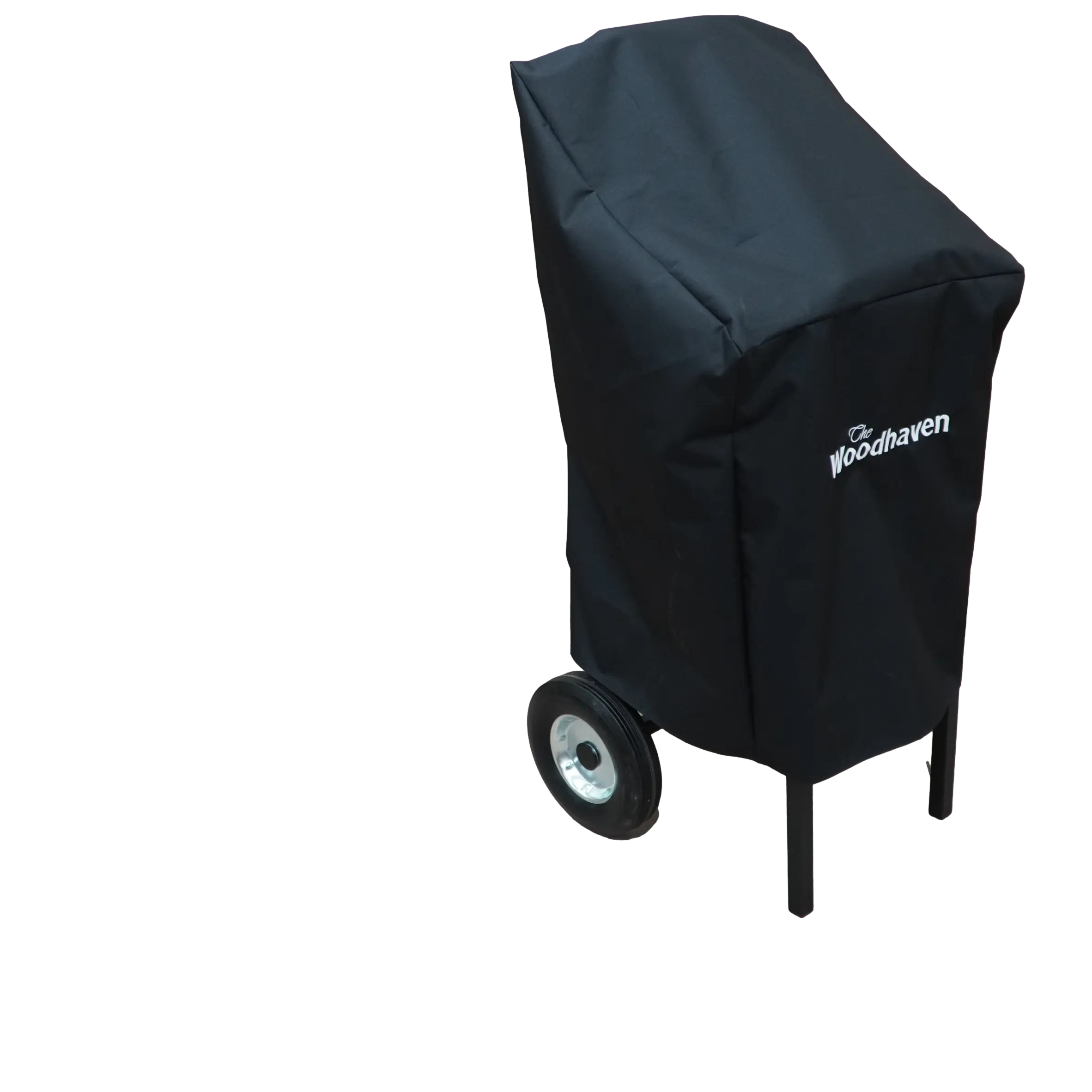
Storing firewood in a IBC tote instead? Shop the IBC Tote Cover, designed for standard 275- and 300-gallon IBC totes with quick-release corner buckles for access.
Tarp and Bungies
A tarp and bungee wood cover is the least expensive and most accessible firewood cover to build. This type of firewood cover can be put together in minutes with just a few supplies from your local hardware store. A tarp will protect your wood from the rain and snow, while bungies will keep it tightly secured.
Pros:
- Cheap and easy to assemble
- Firewood stays dry on all sides
Cons:
- Limited durability—expect one to two seasons in mild climates or damage from severe storms
- visually tends to look unkept and unorganized.
Firewood Cover Frame
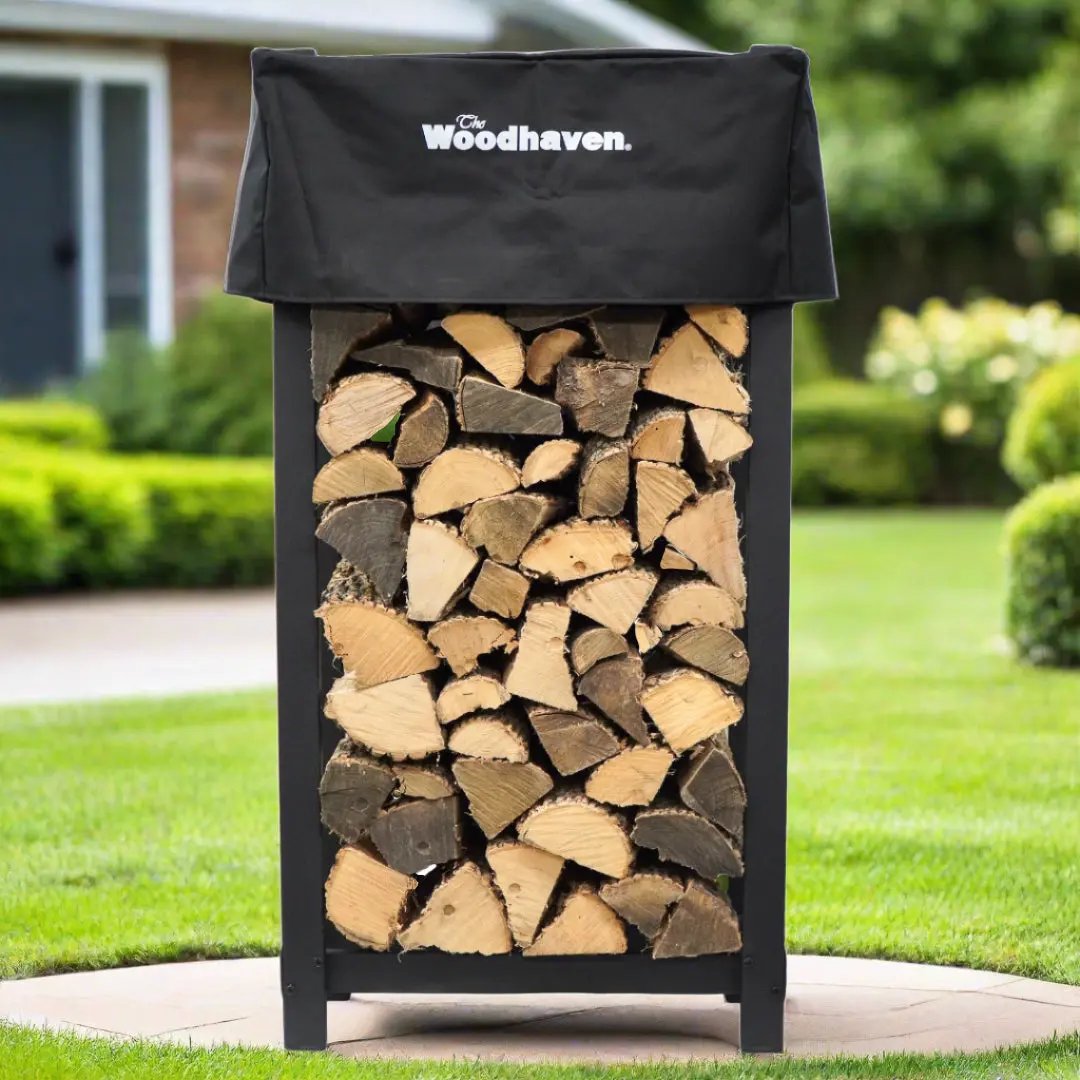
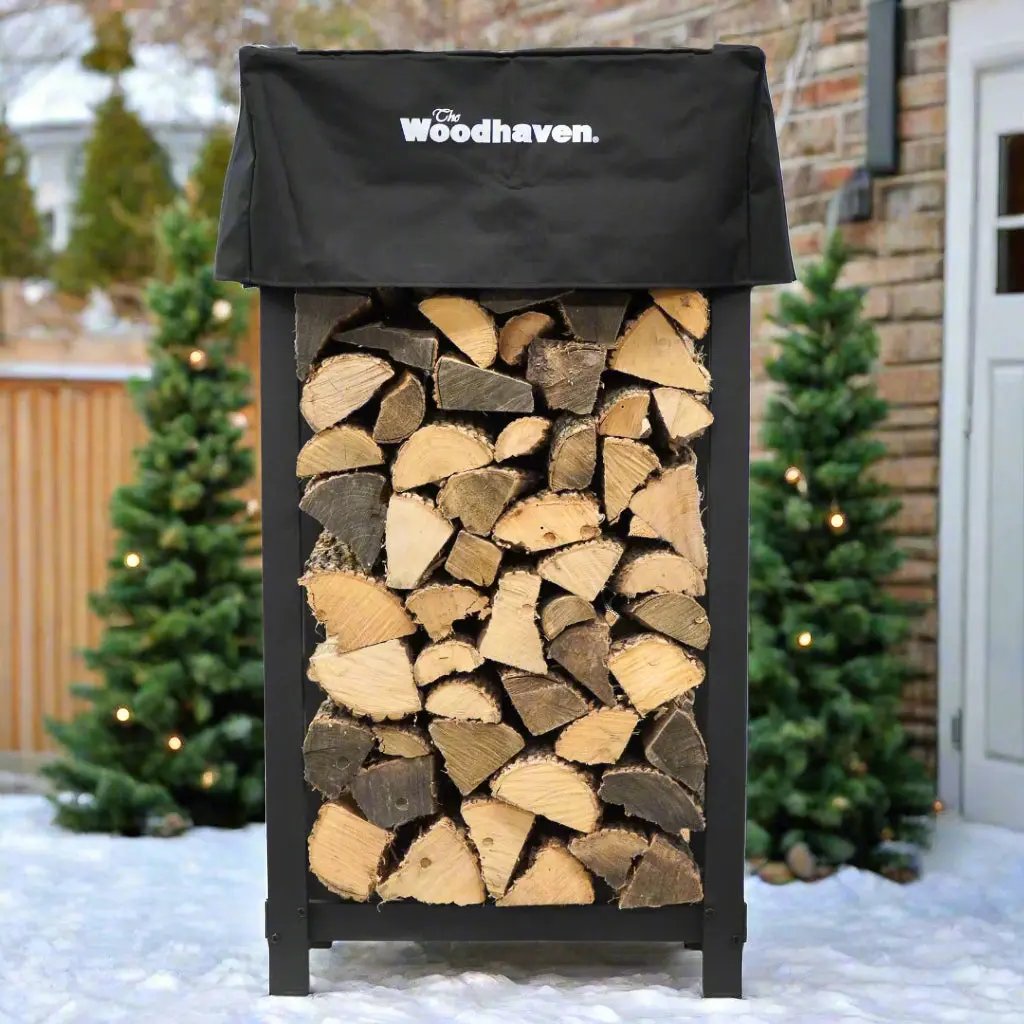
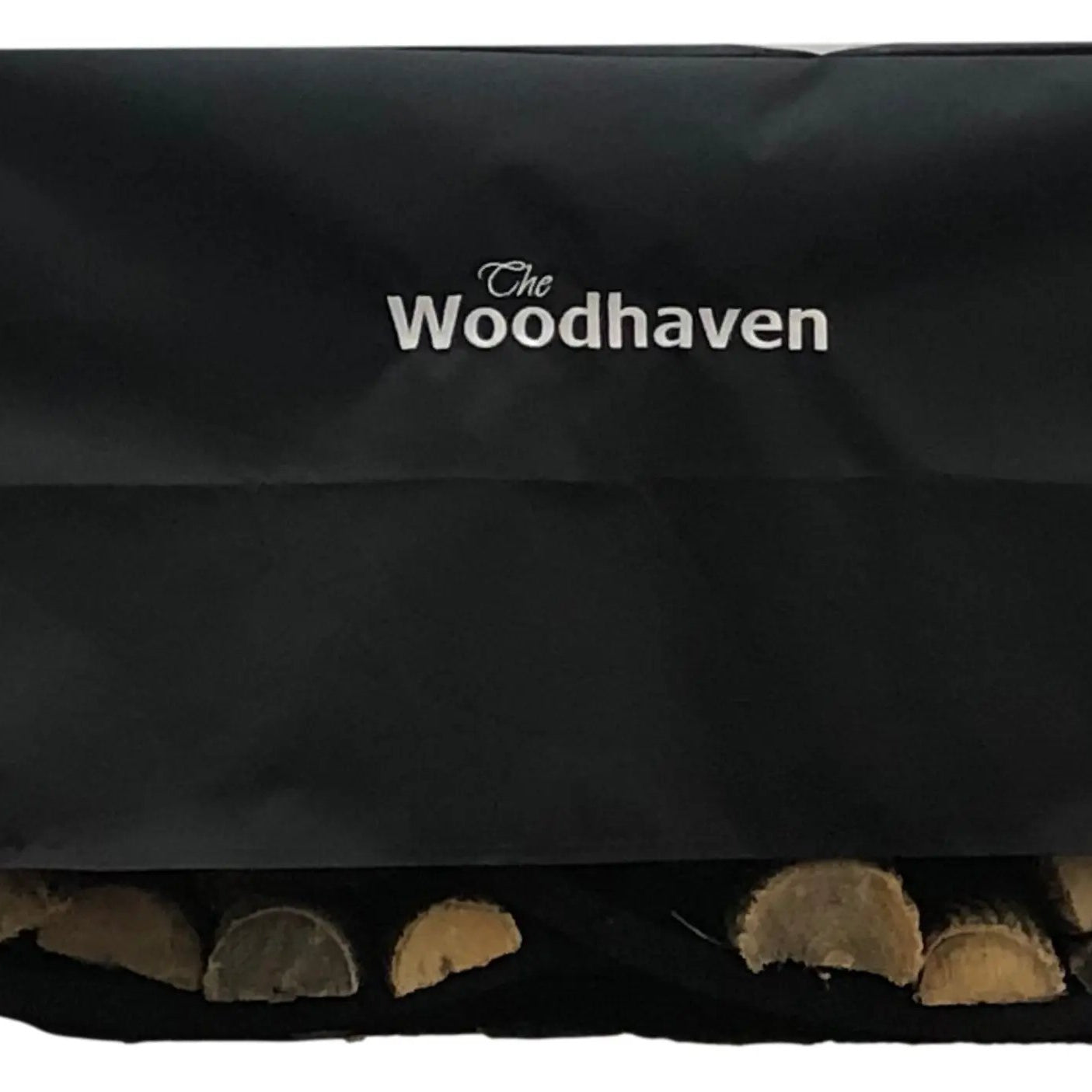
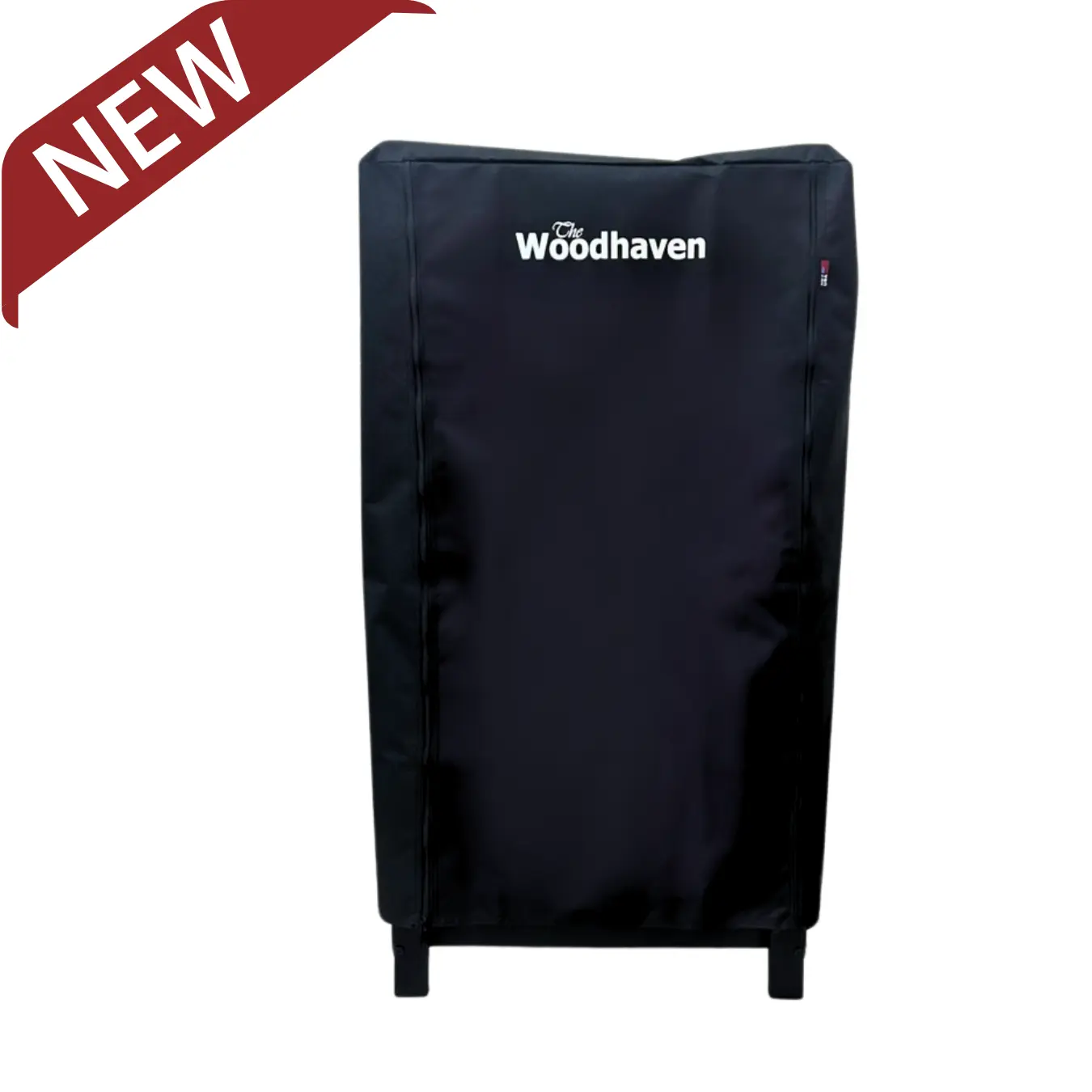
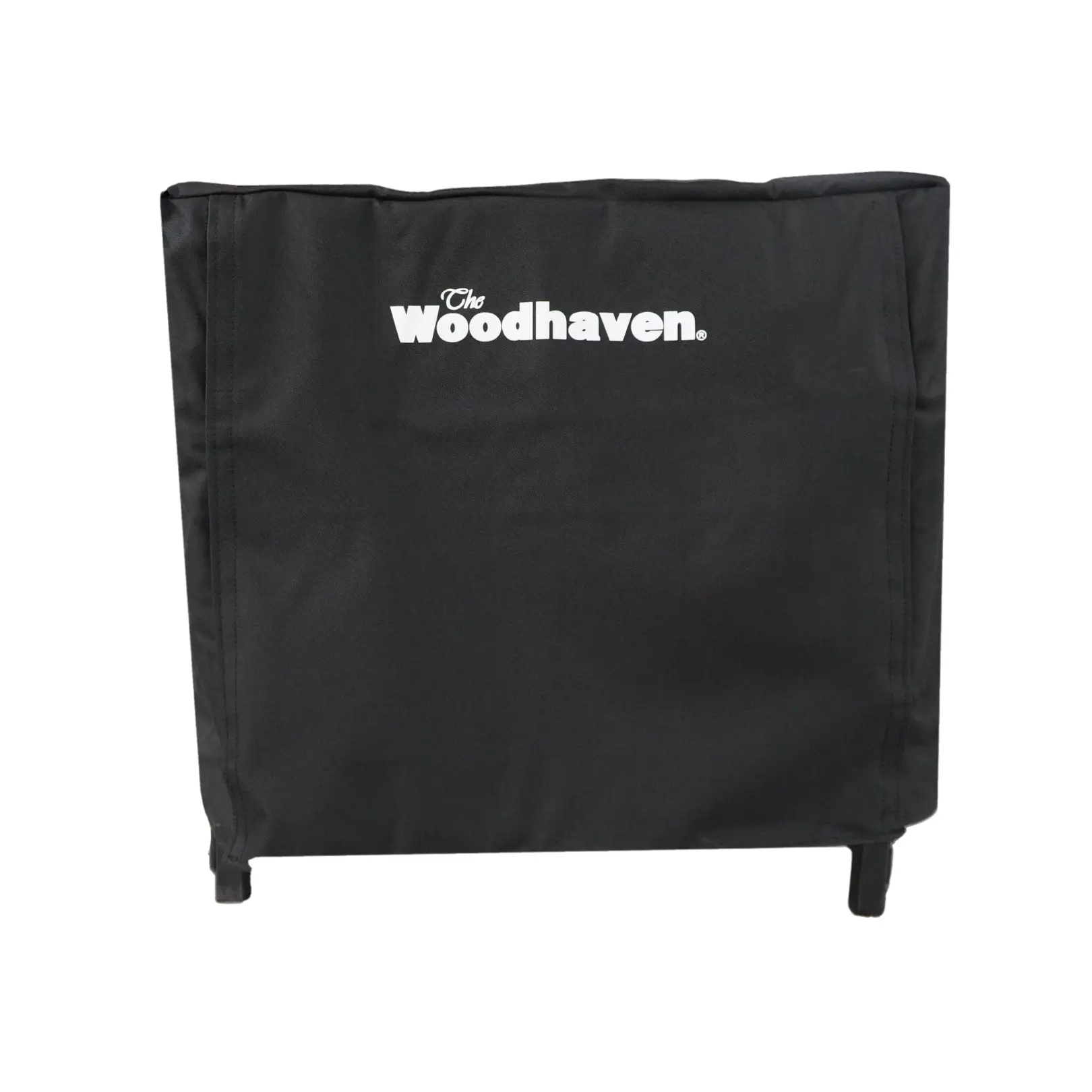
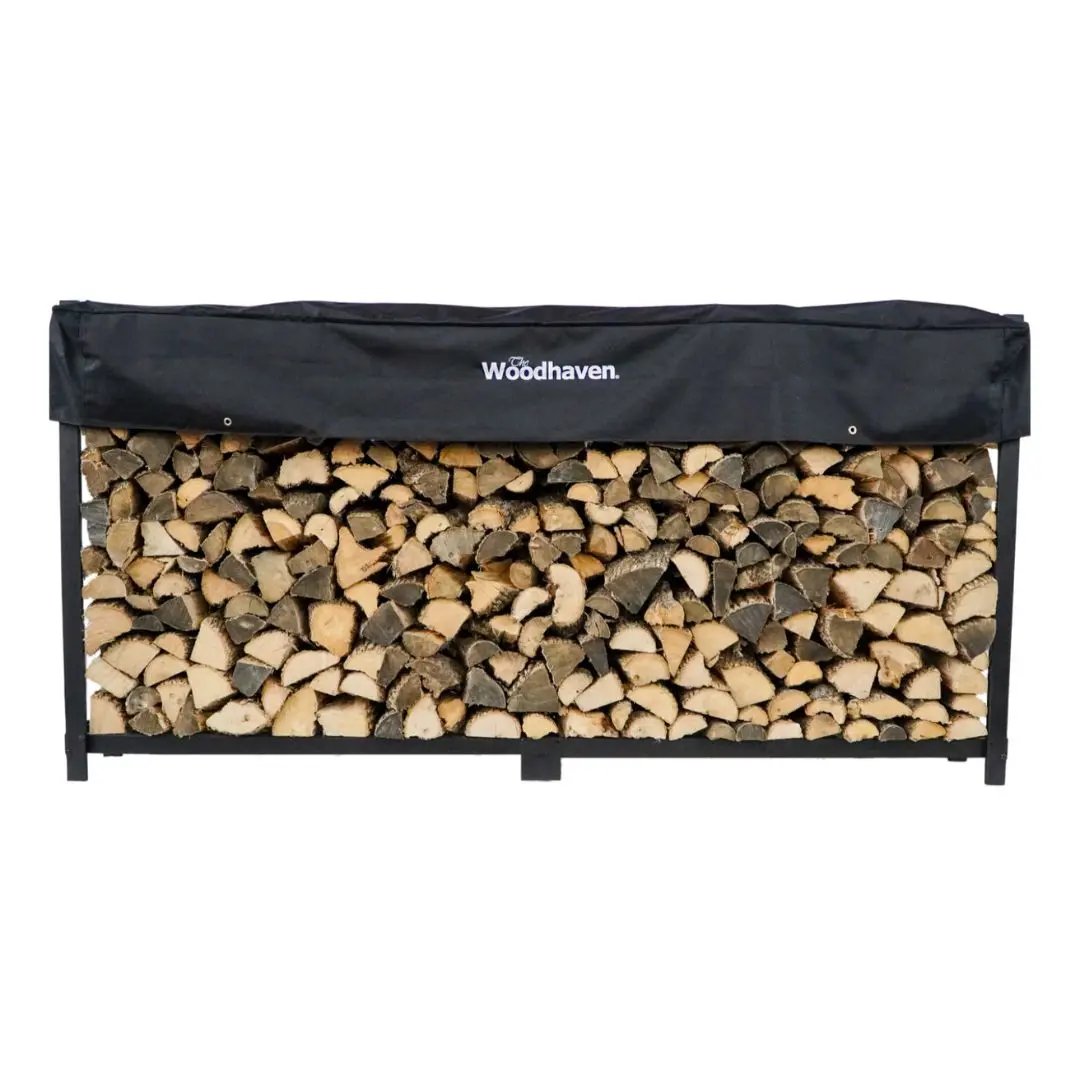
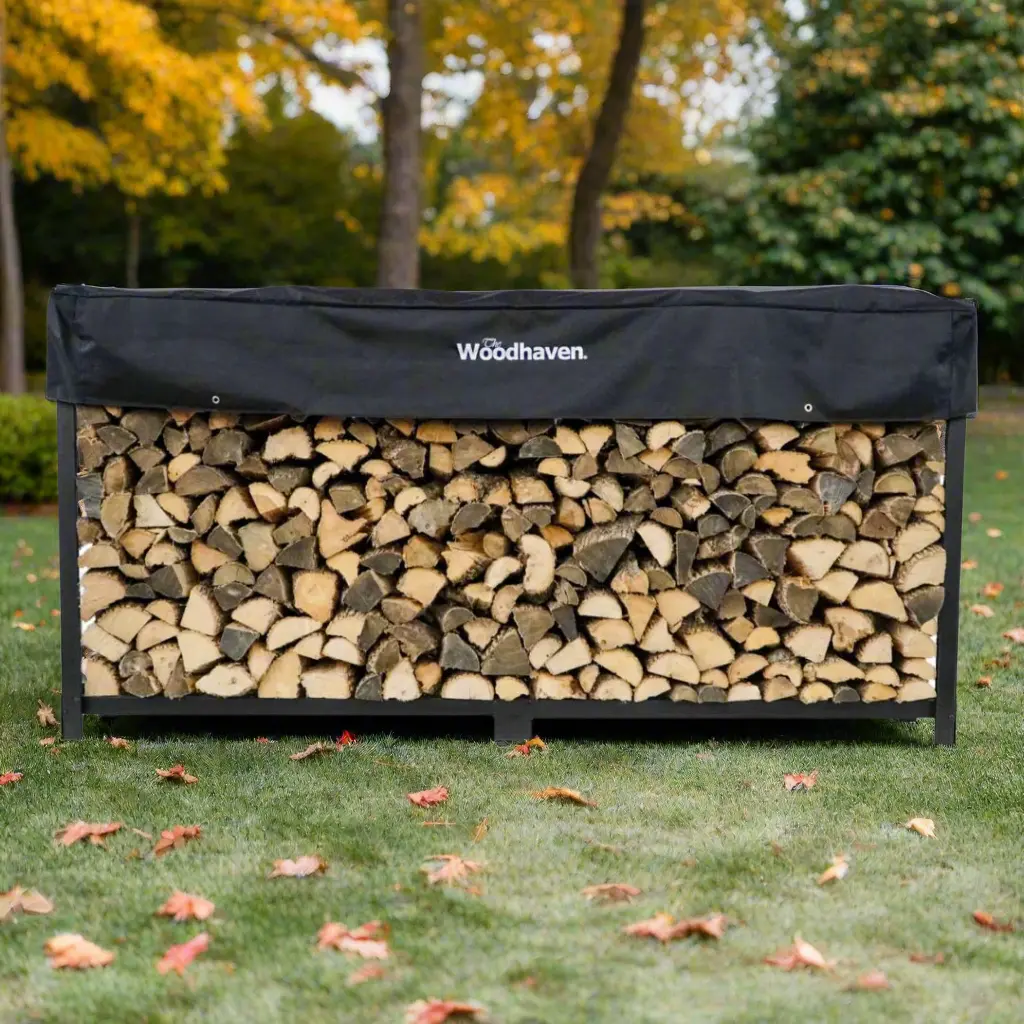
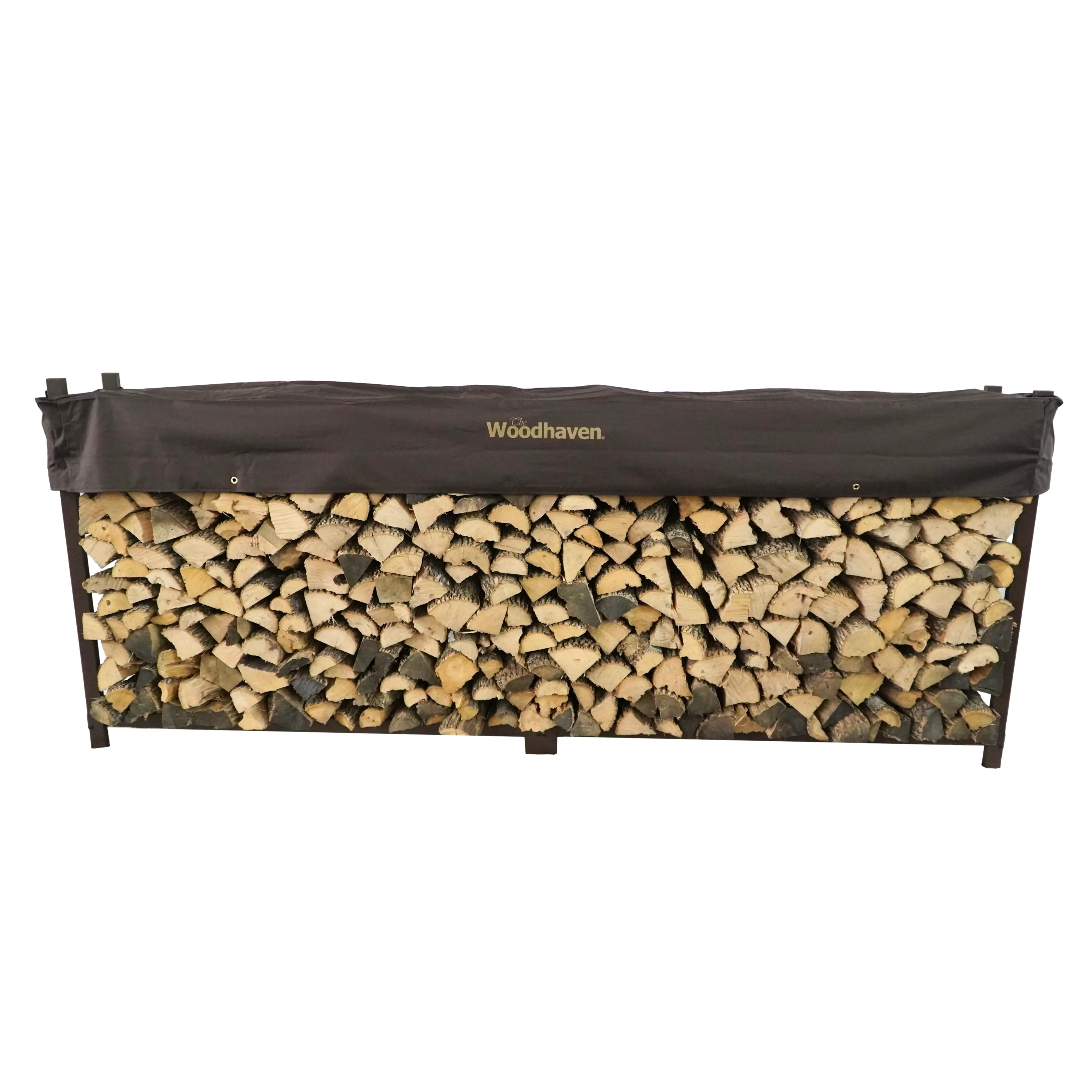
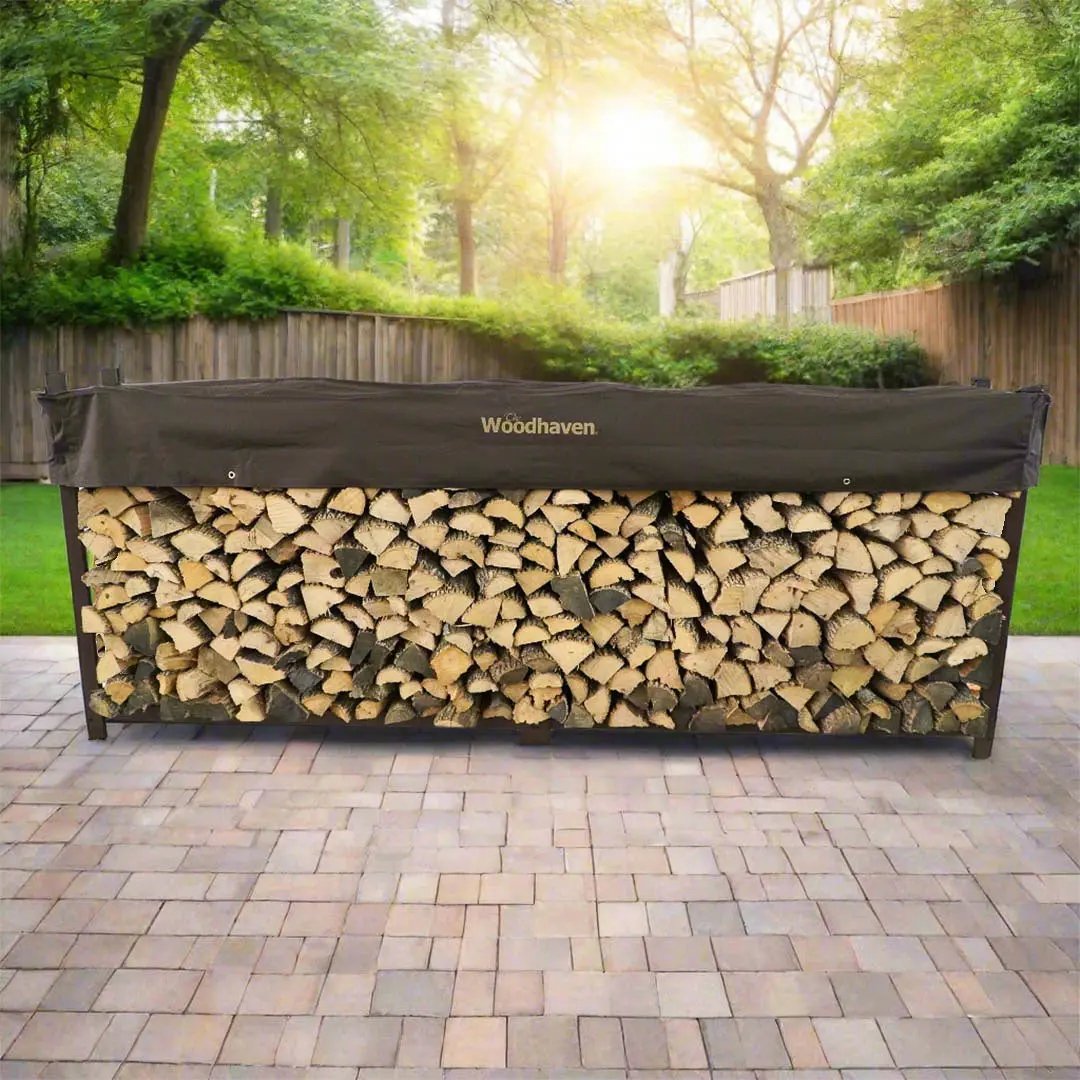
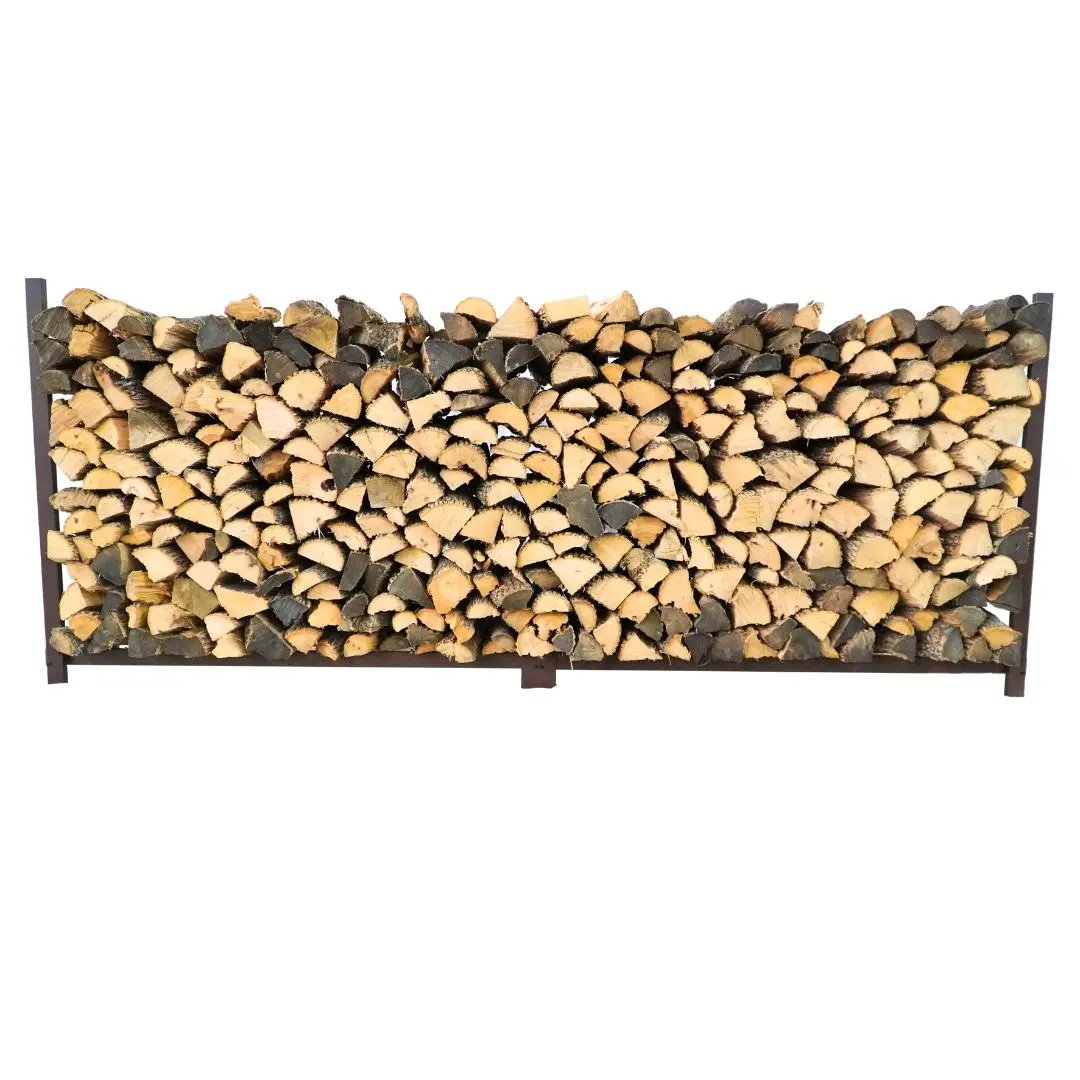
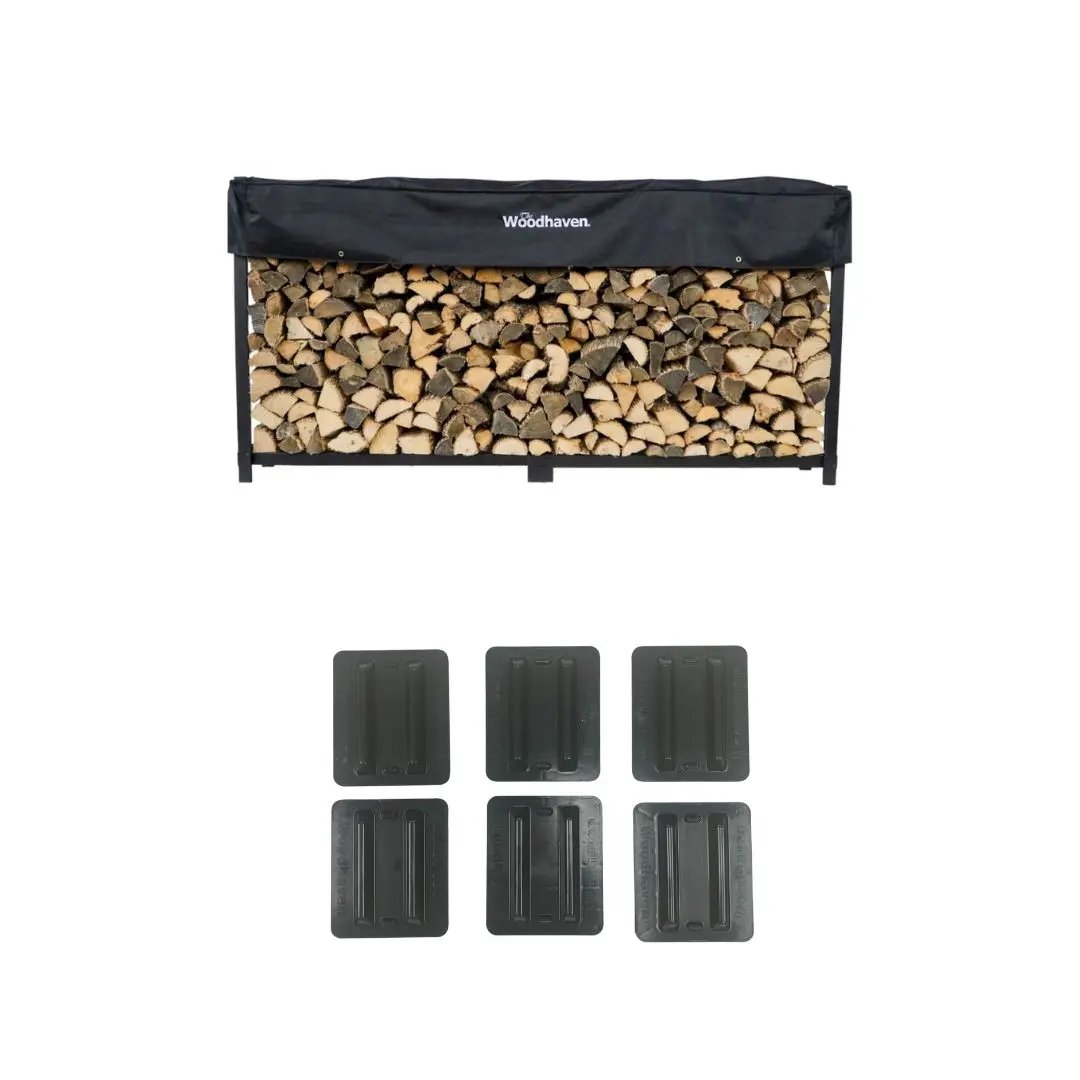
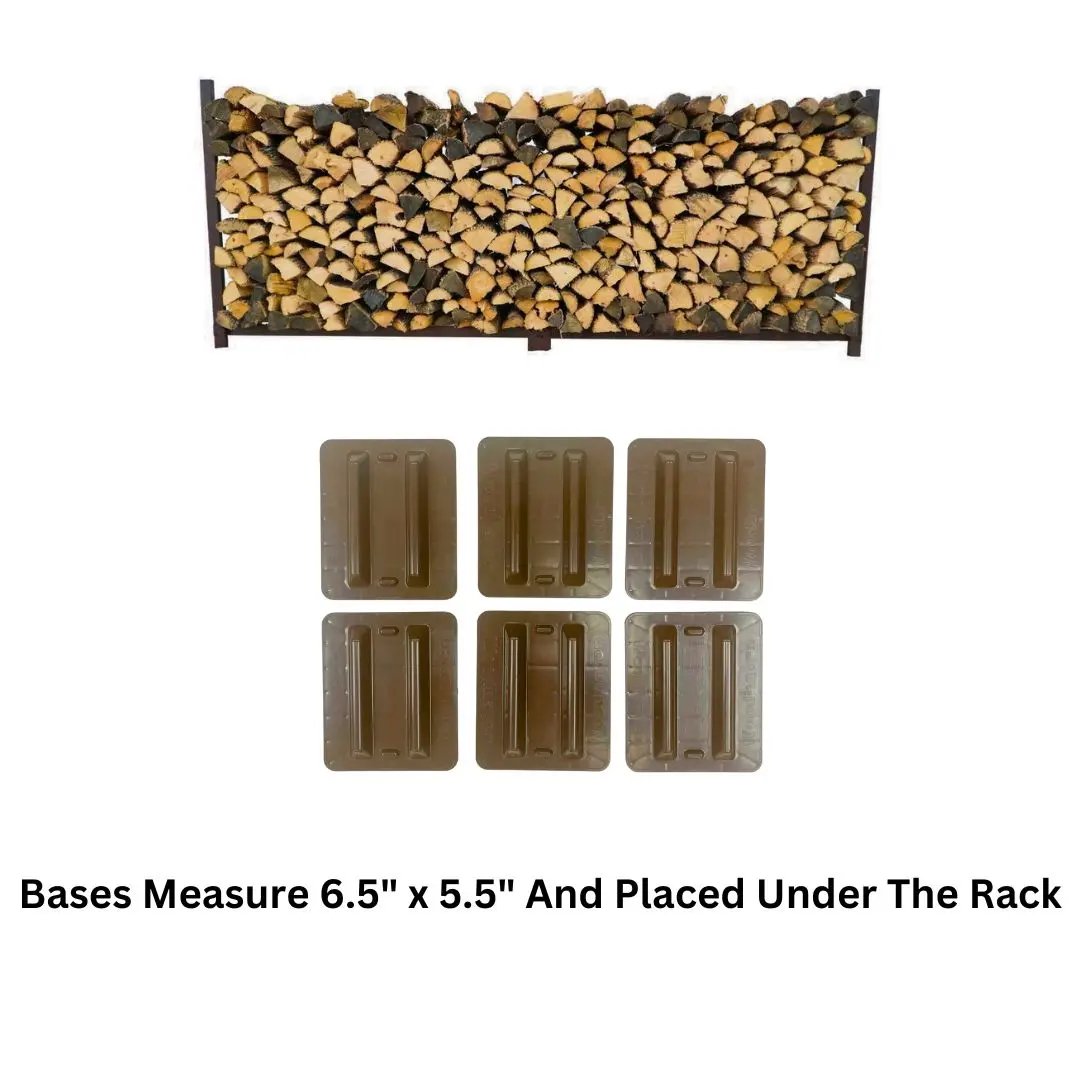
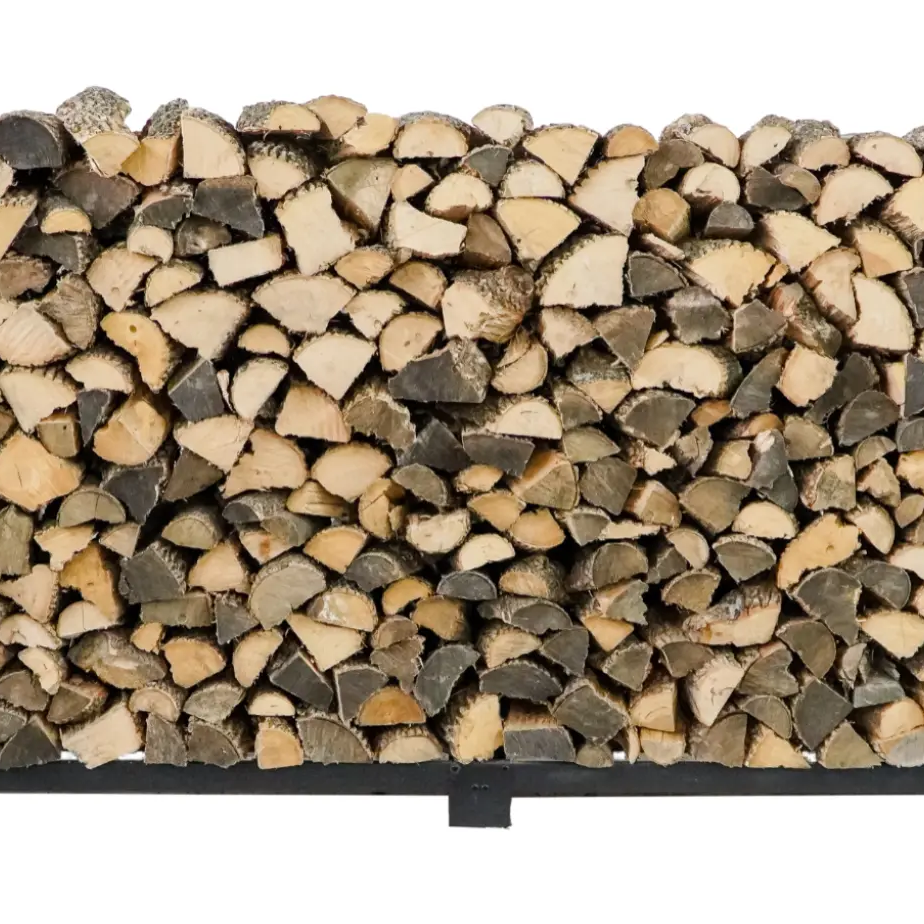
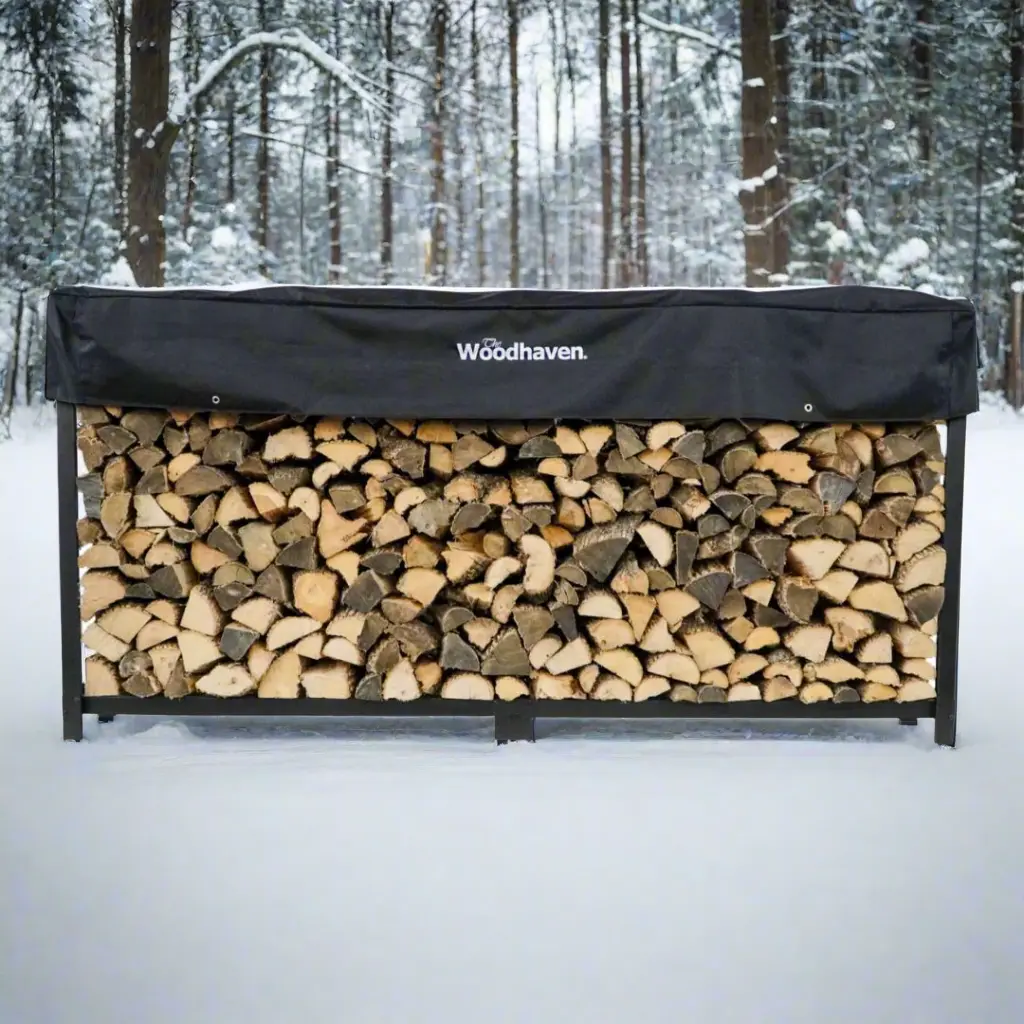
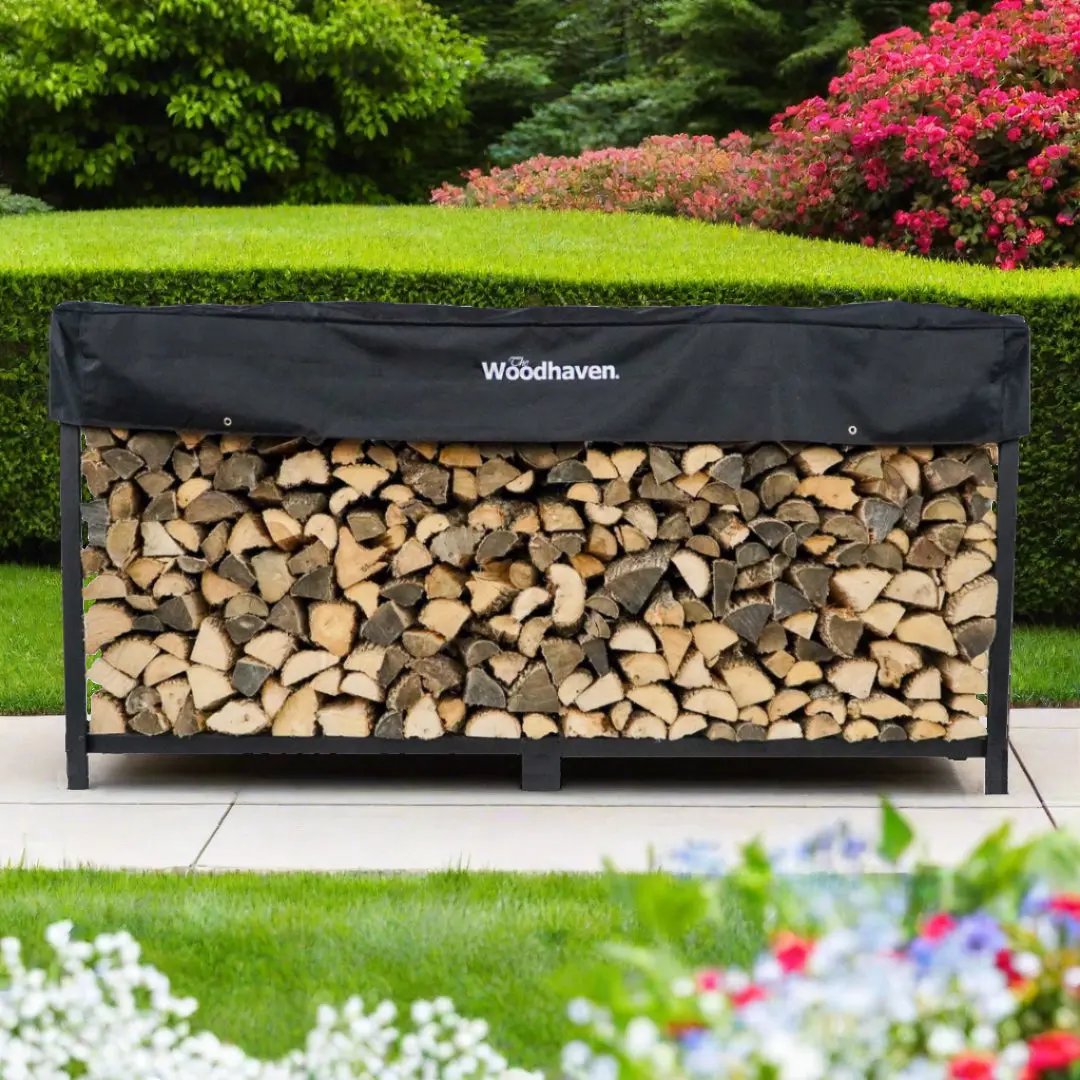
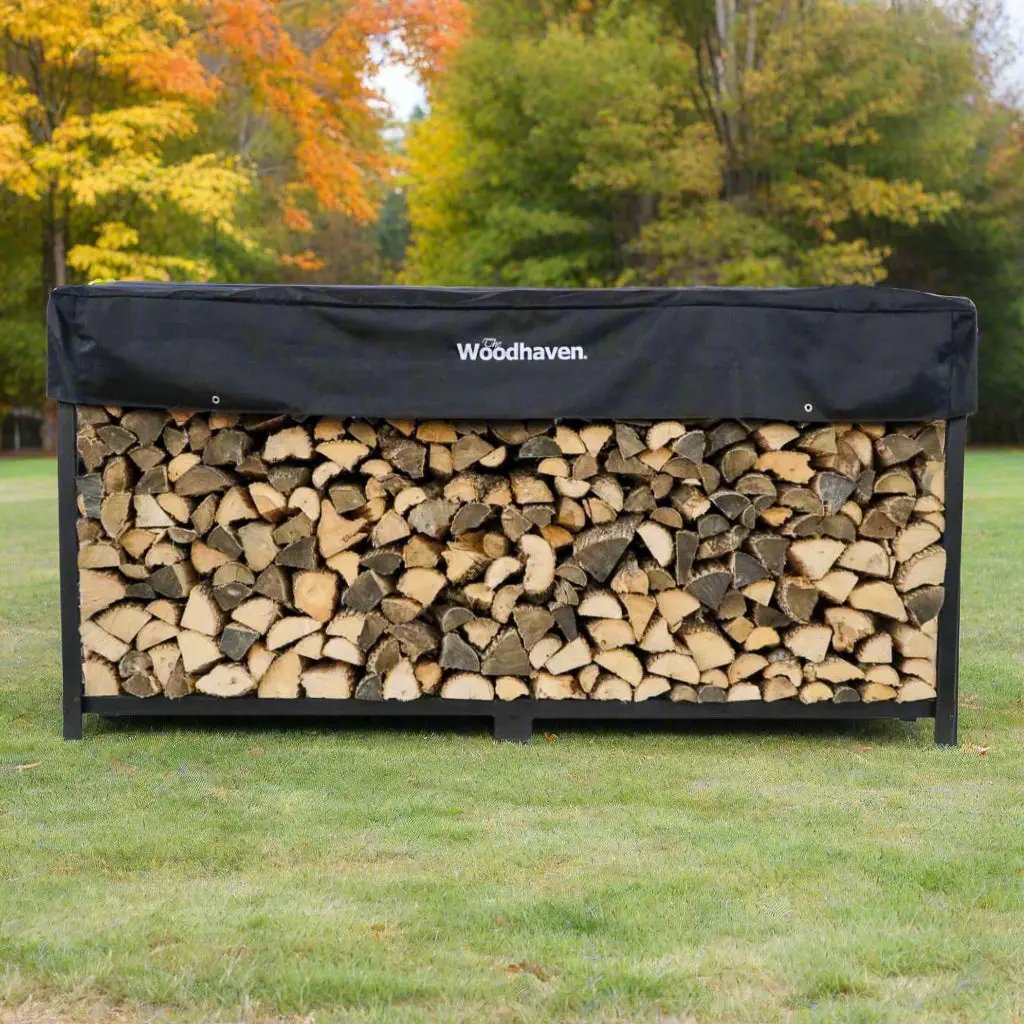
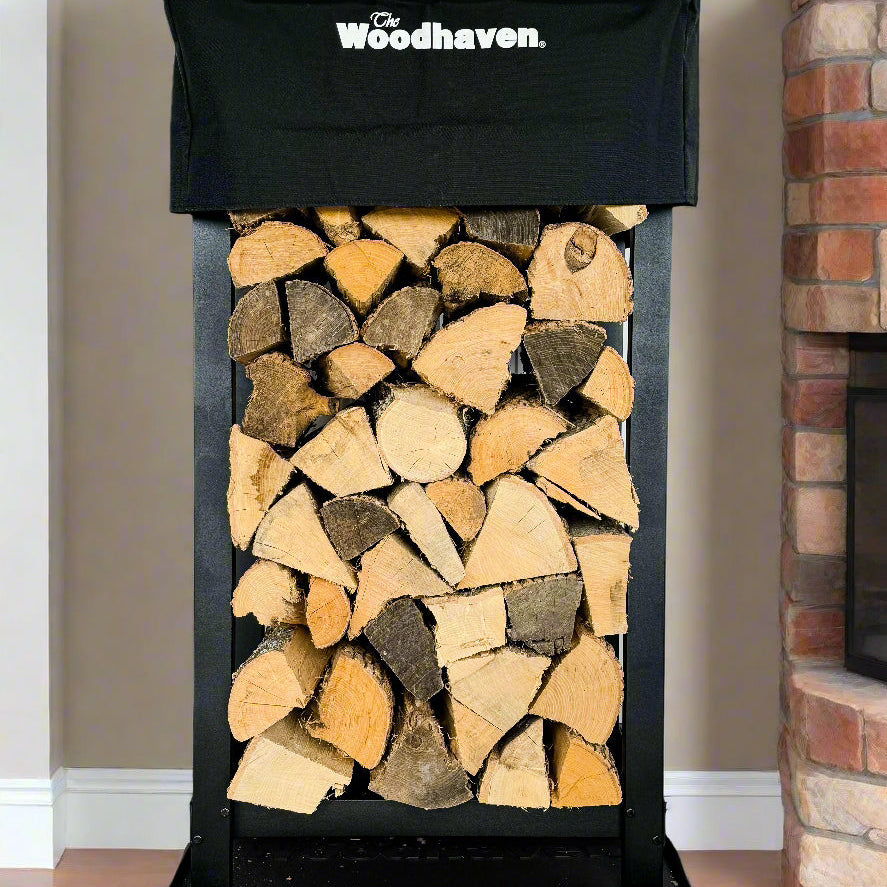
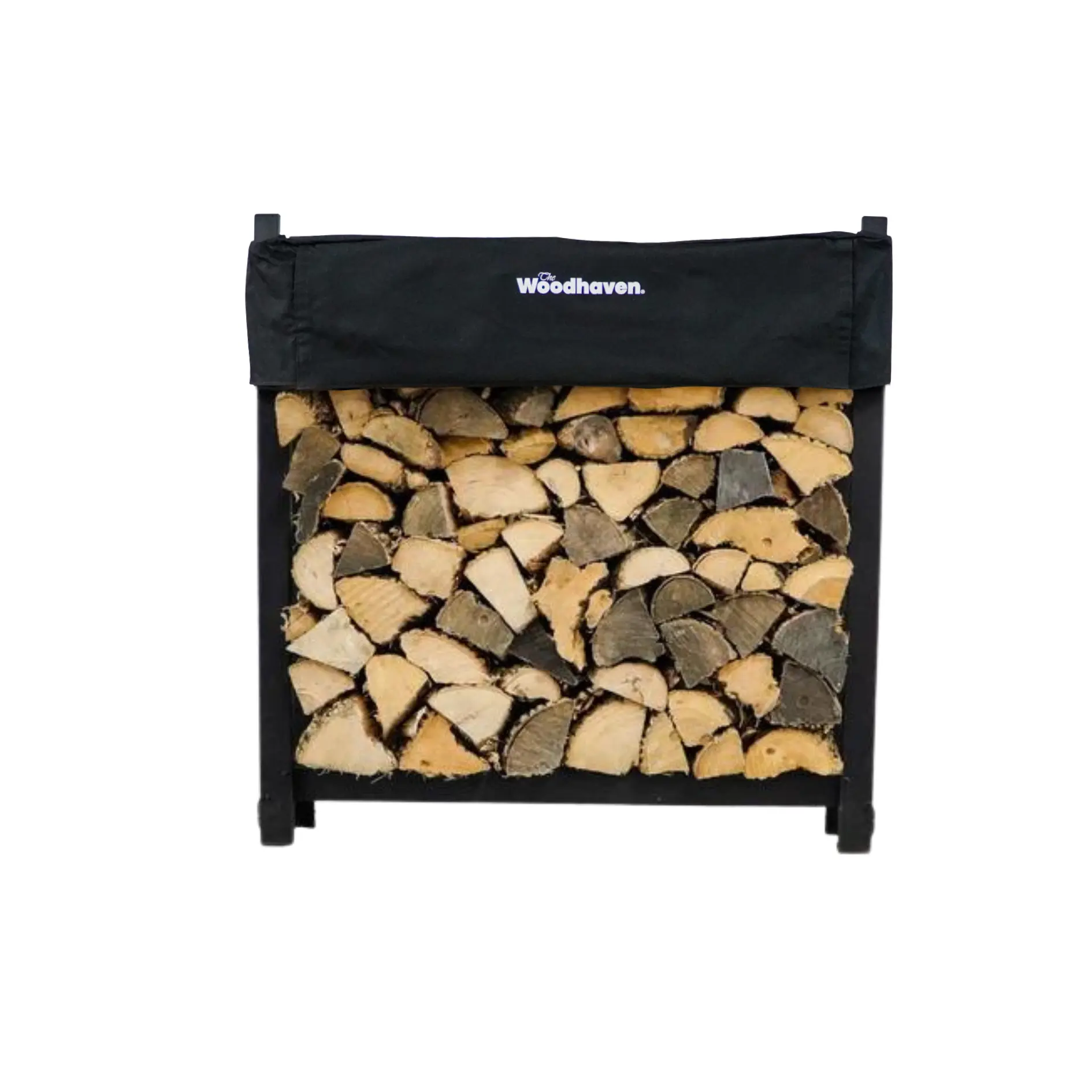
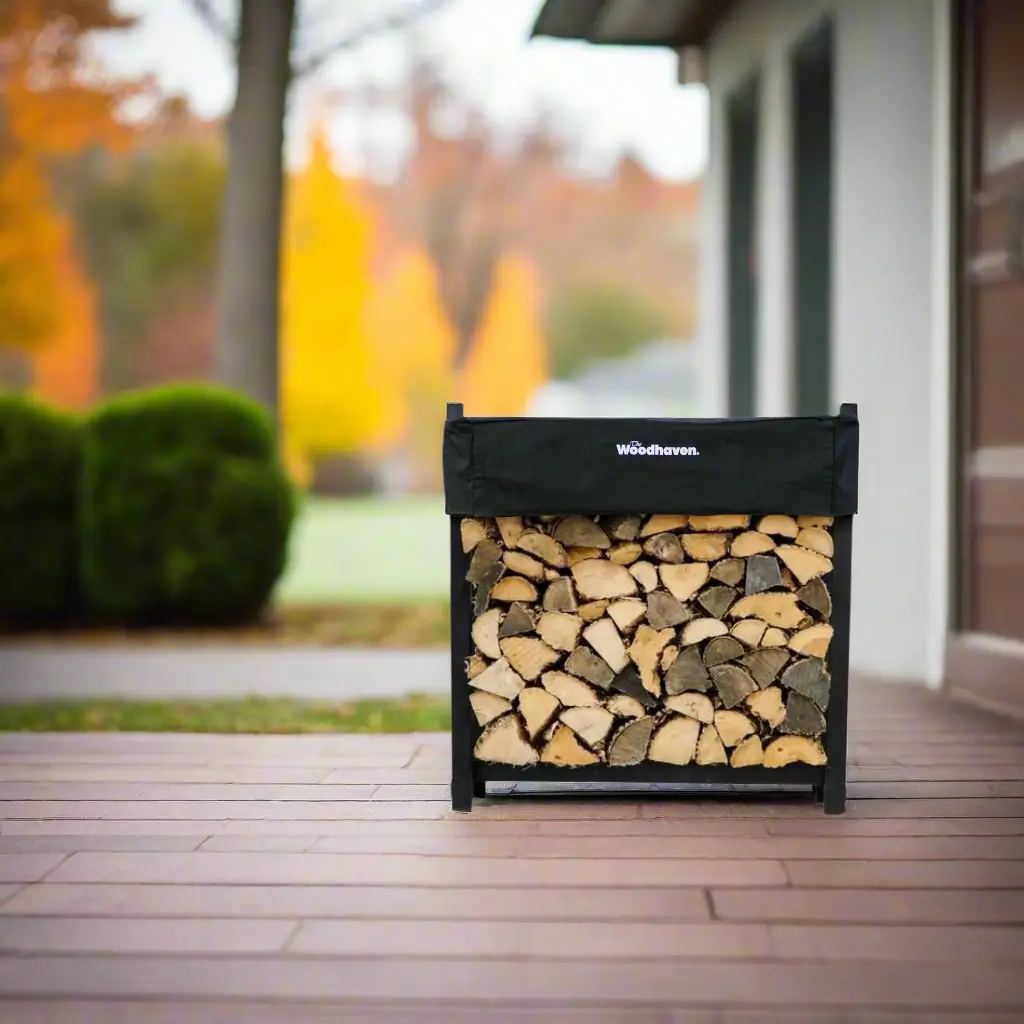
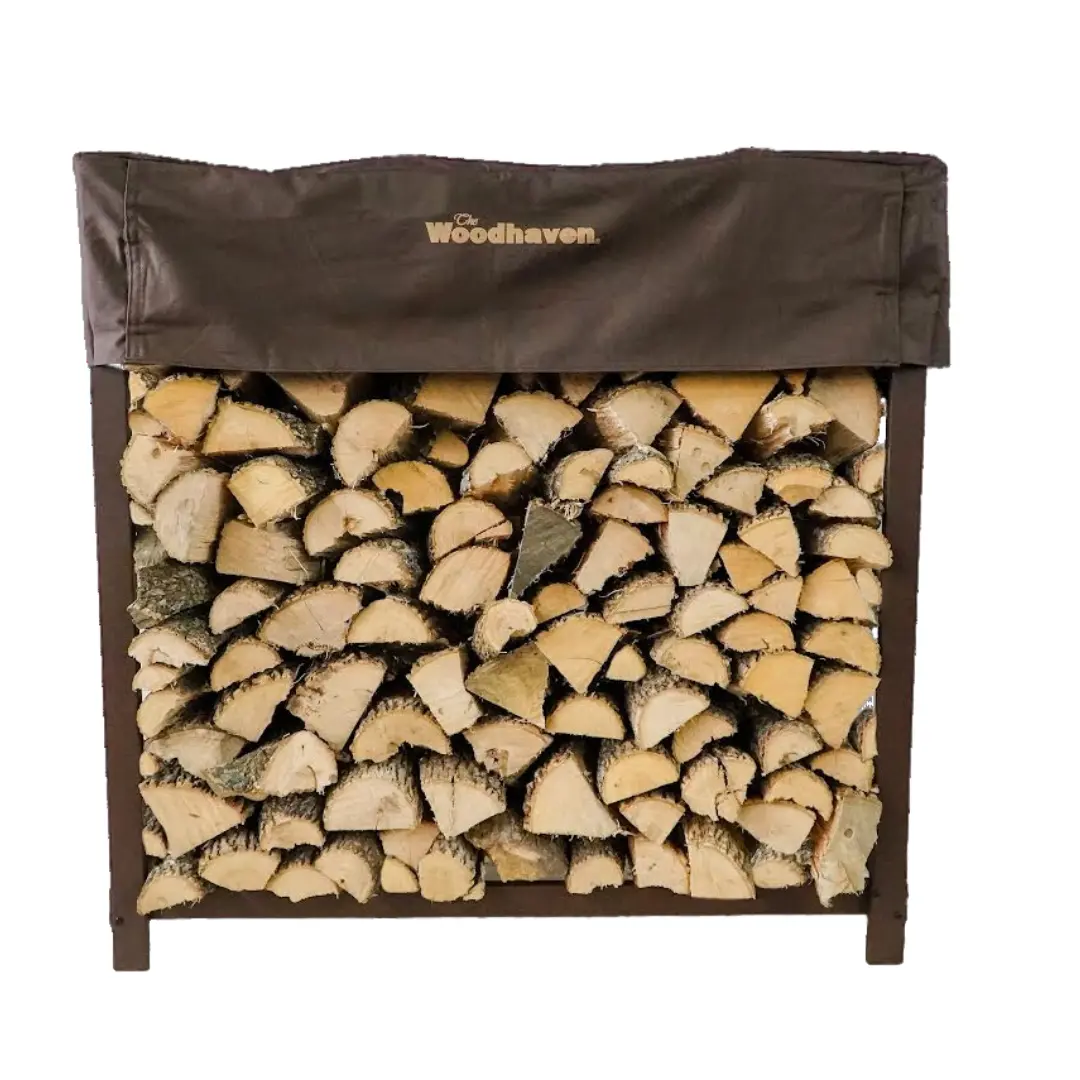
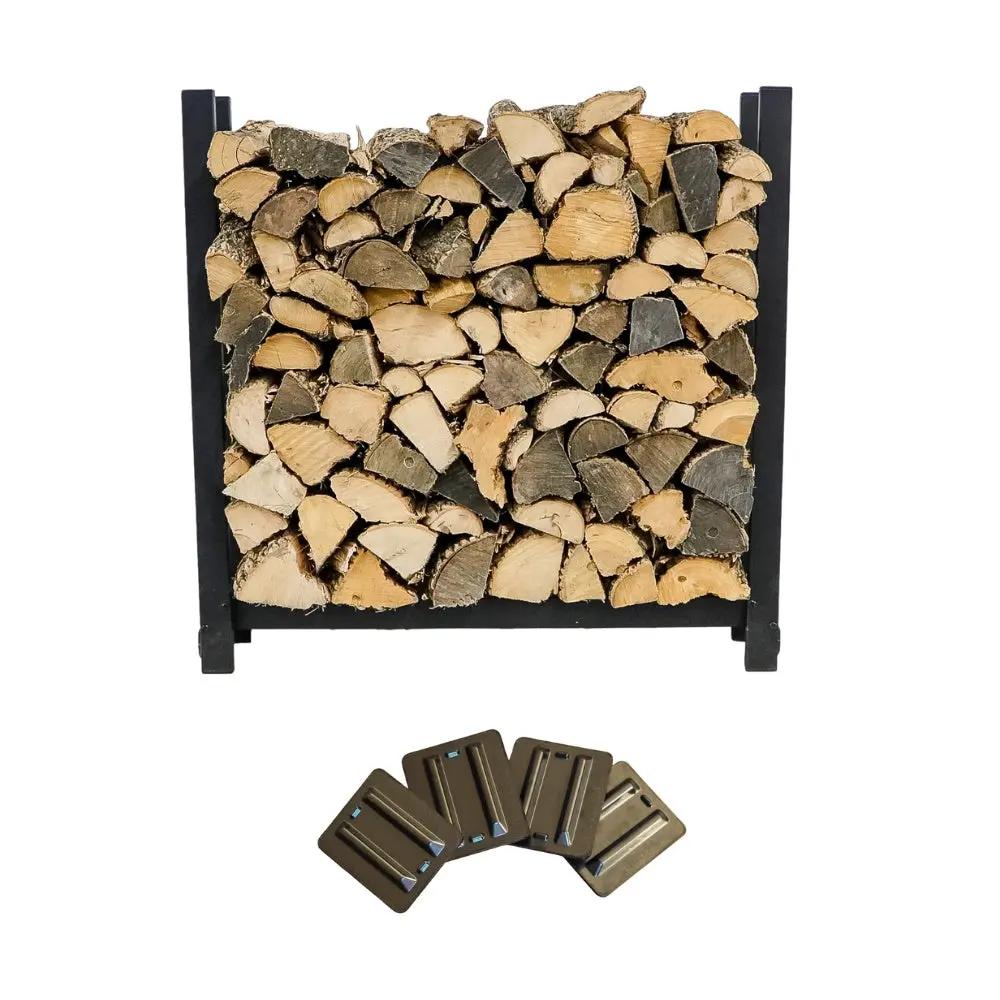
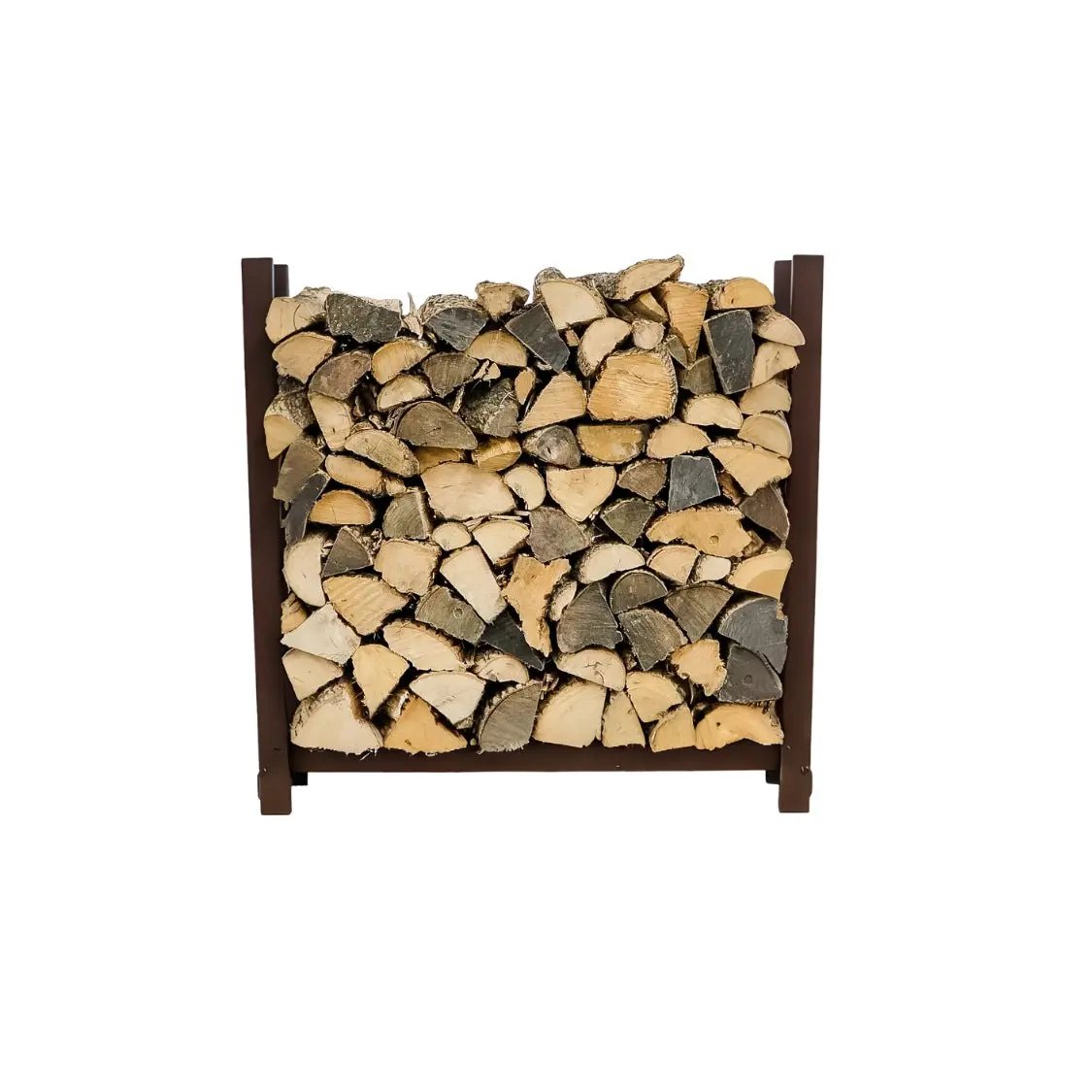
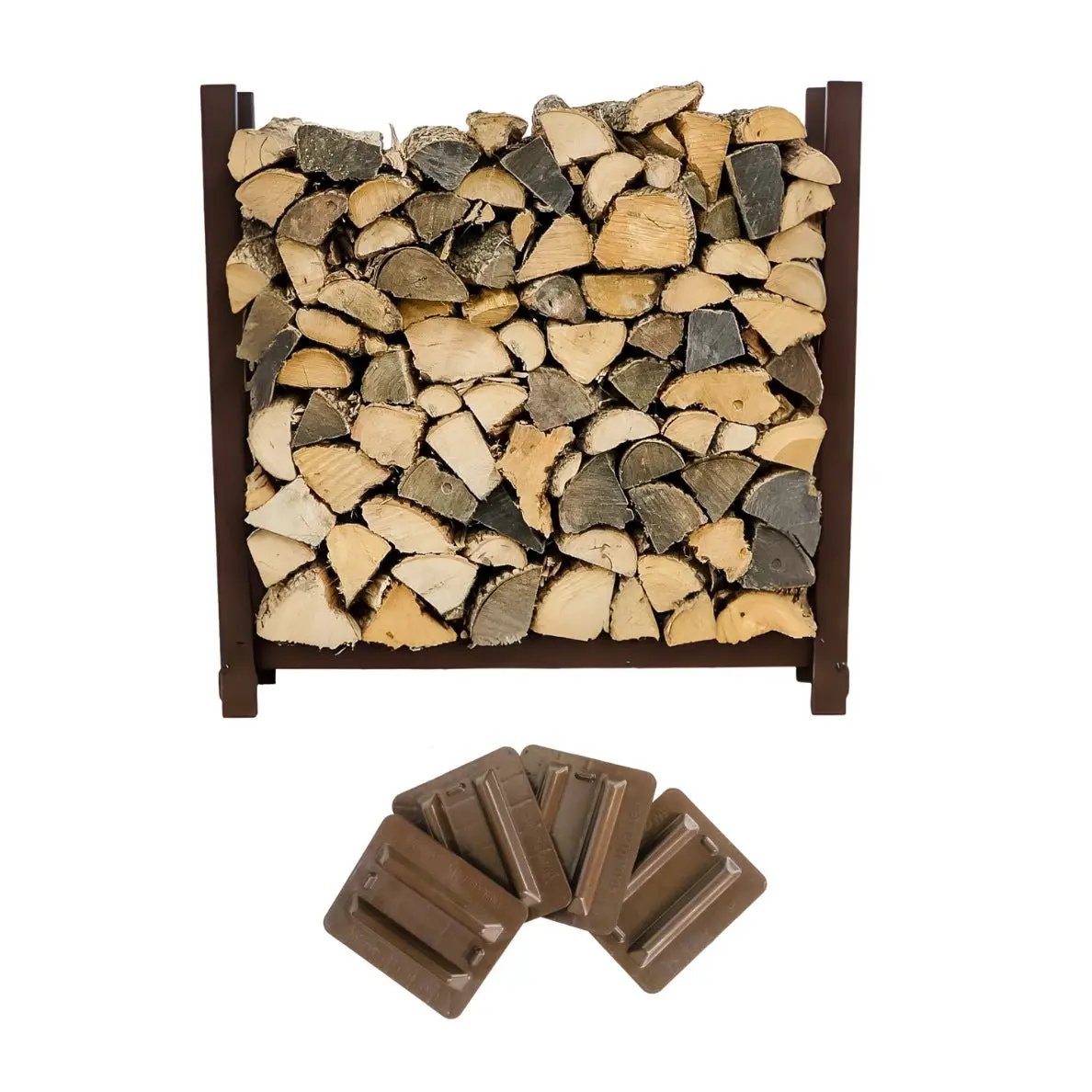
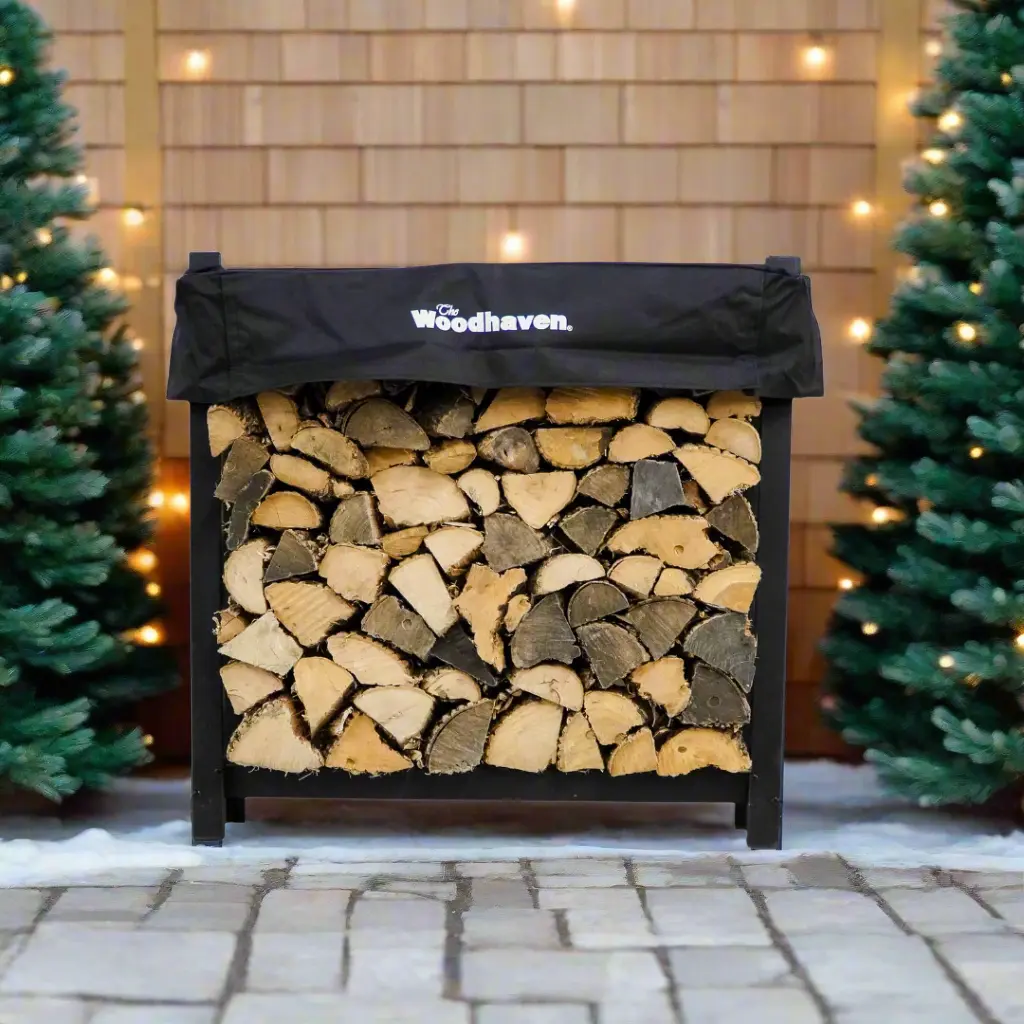
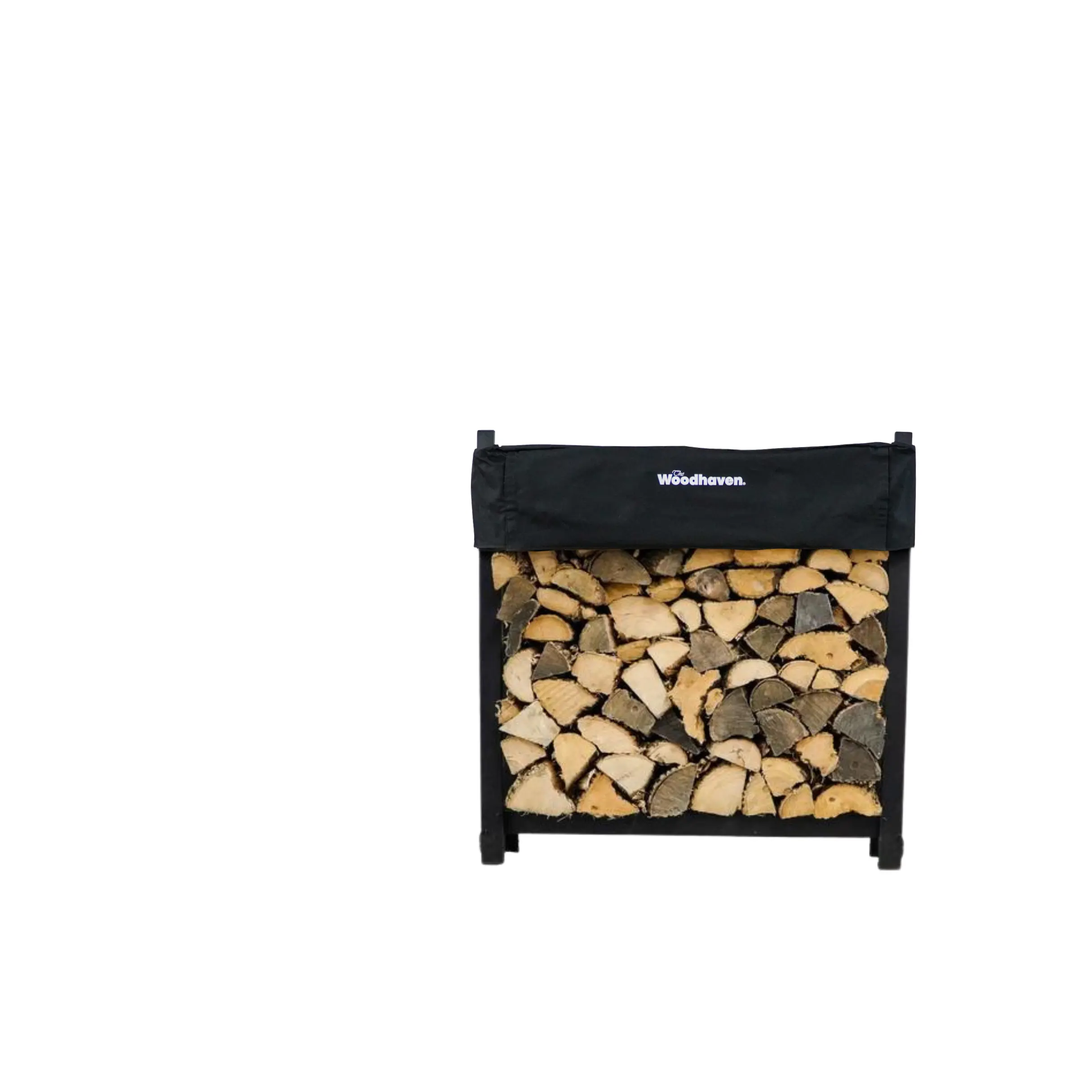
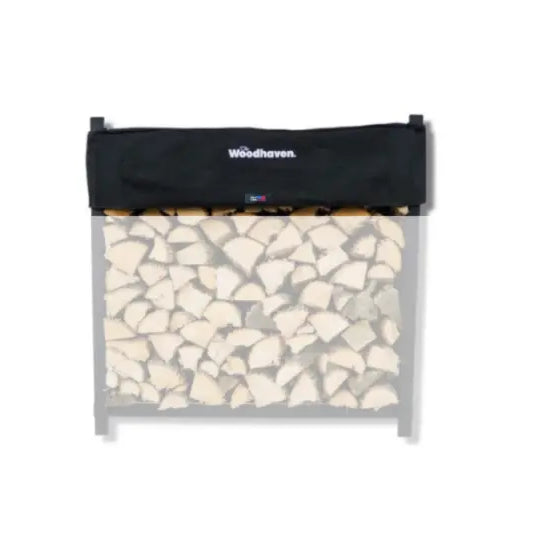
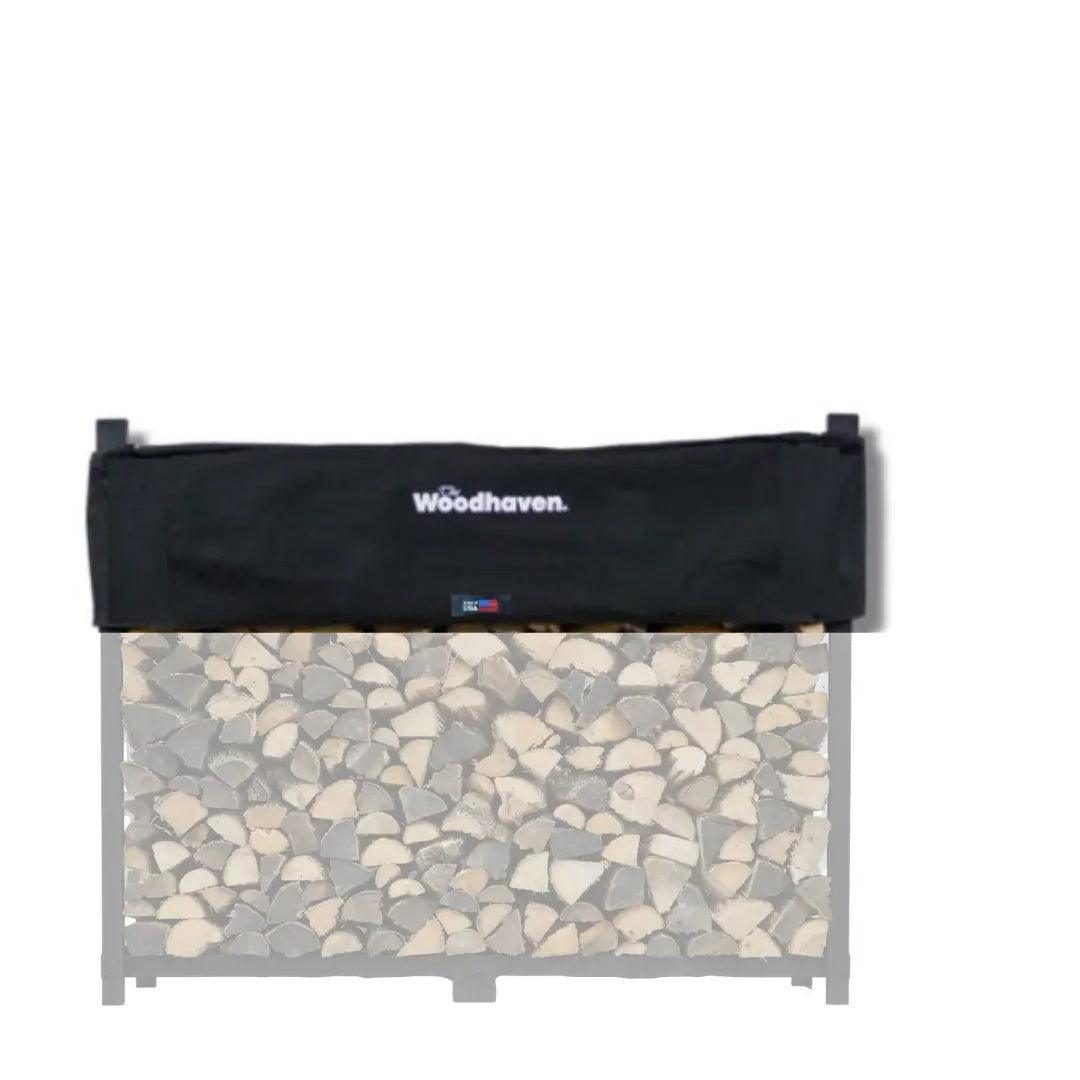
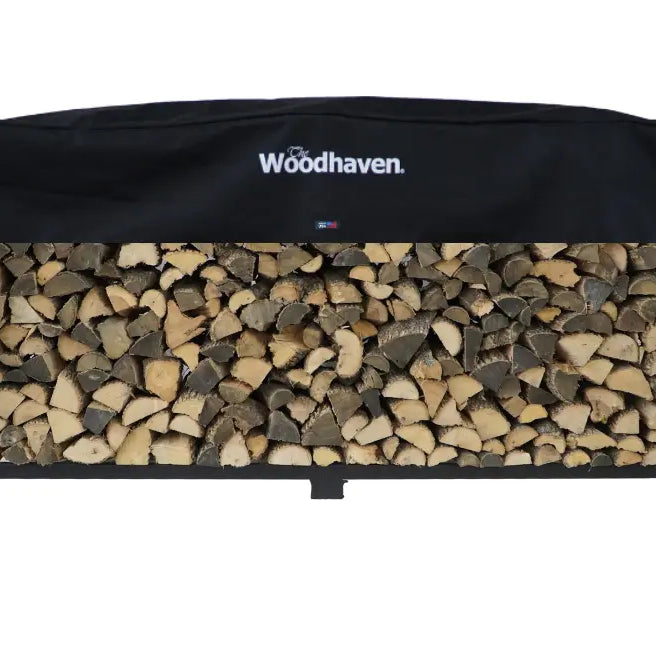
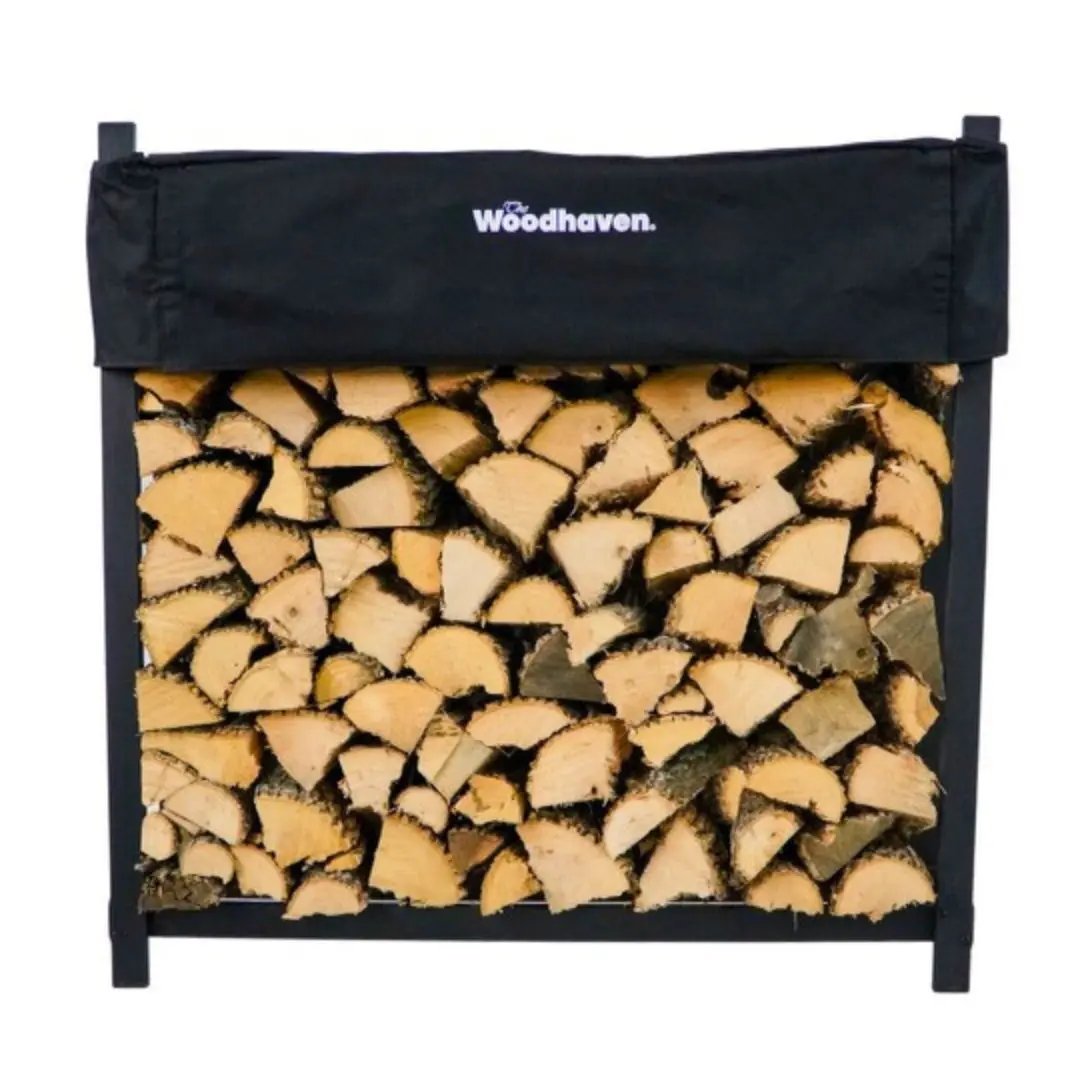
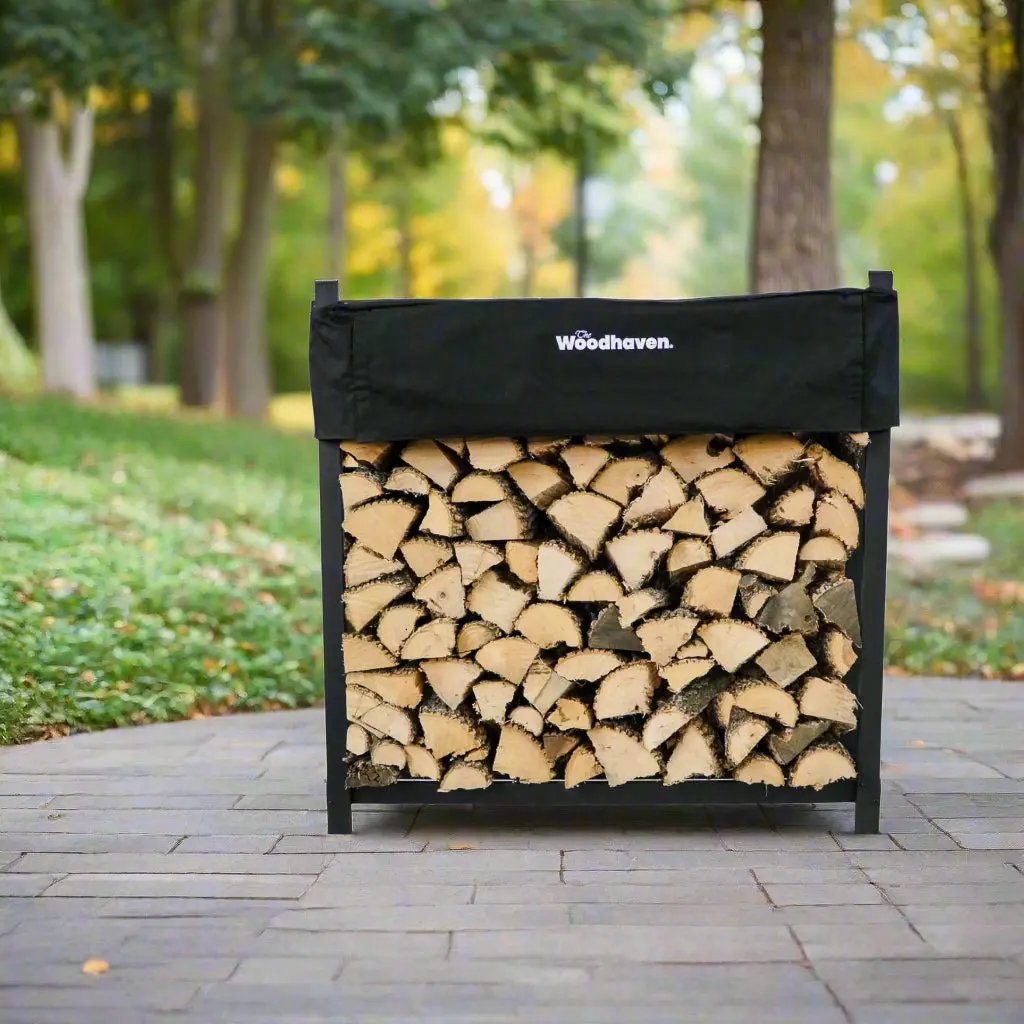
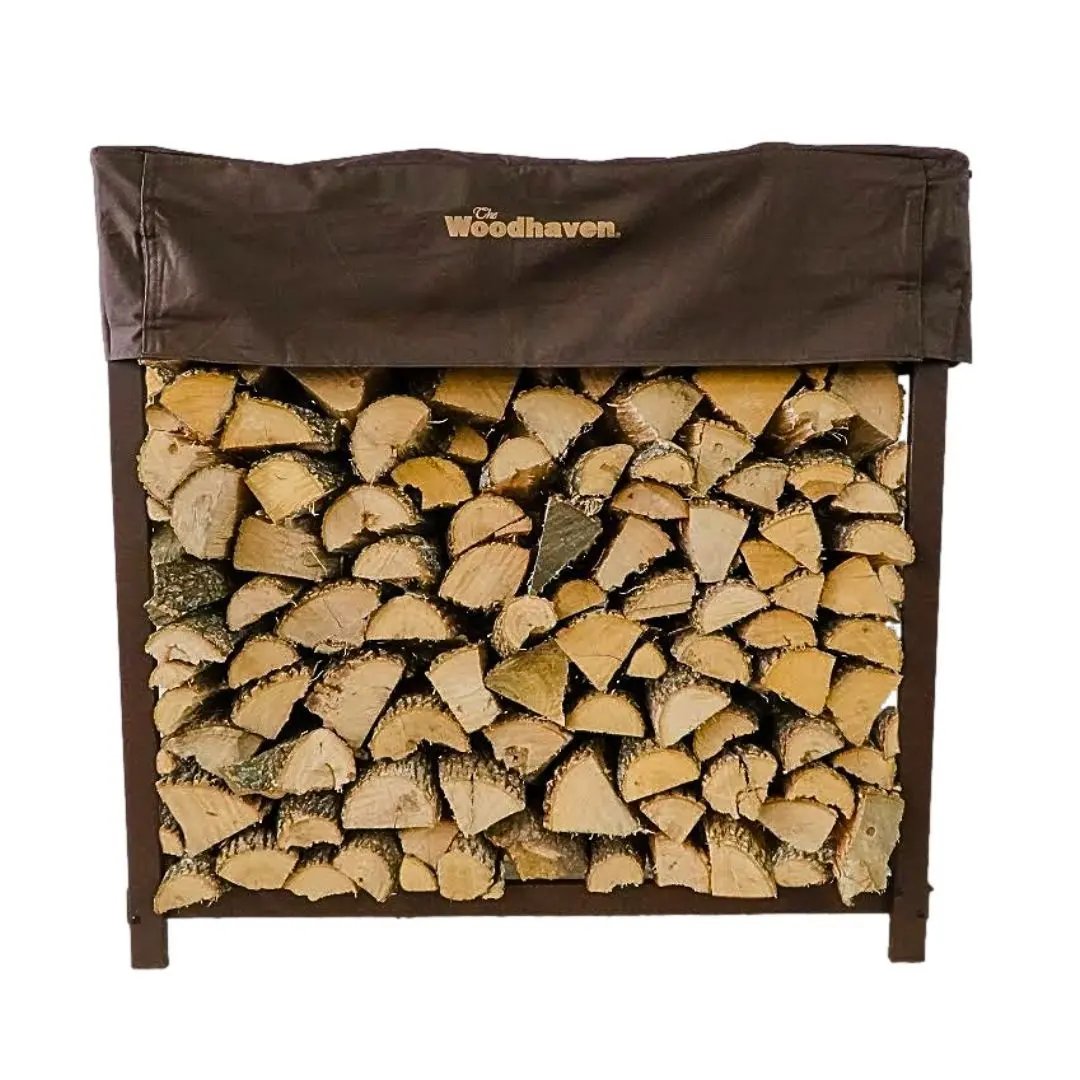
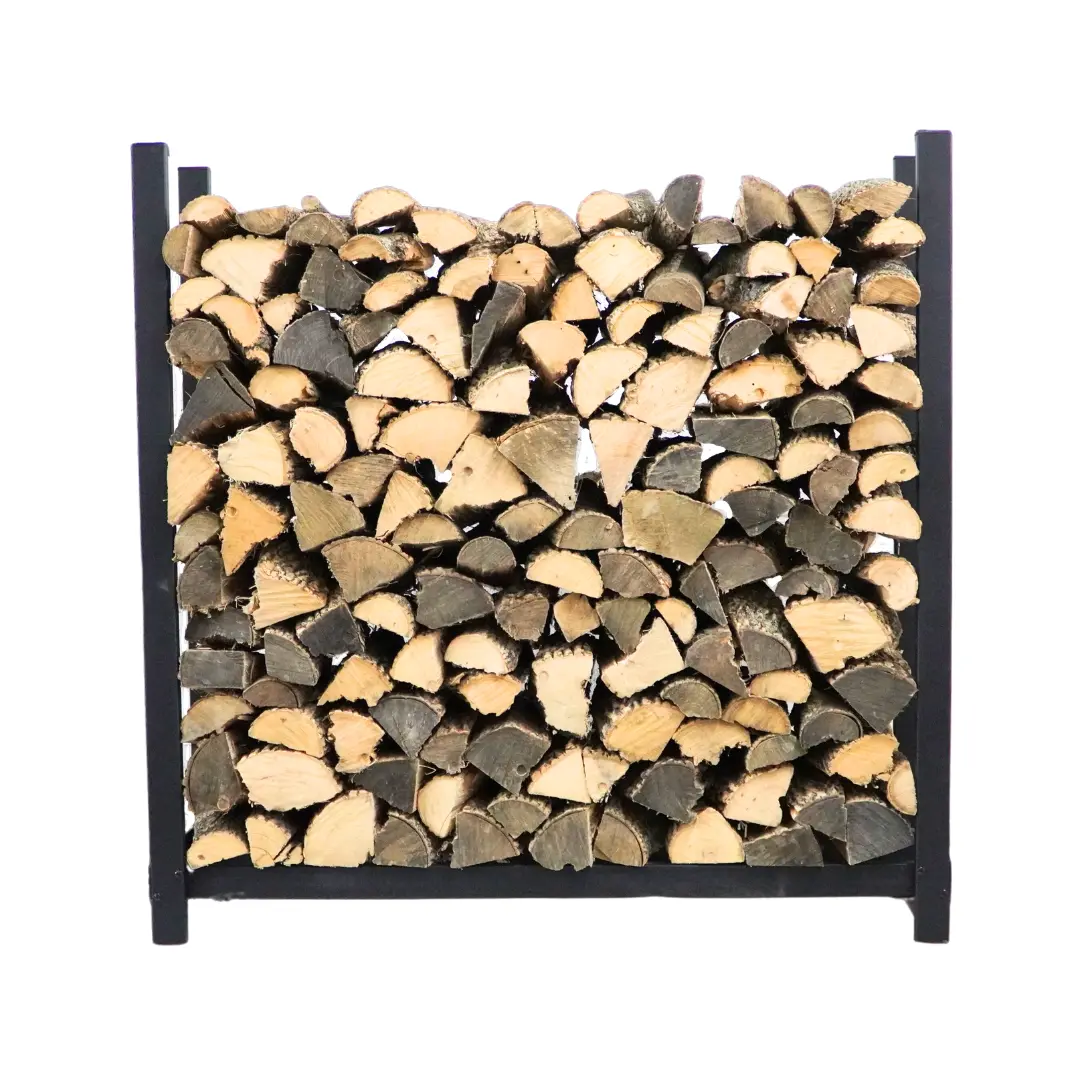
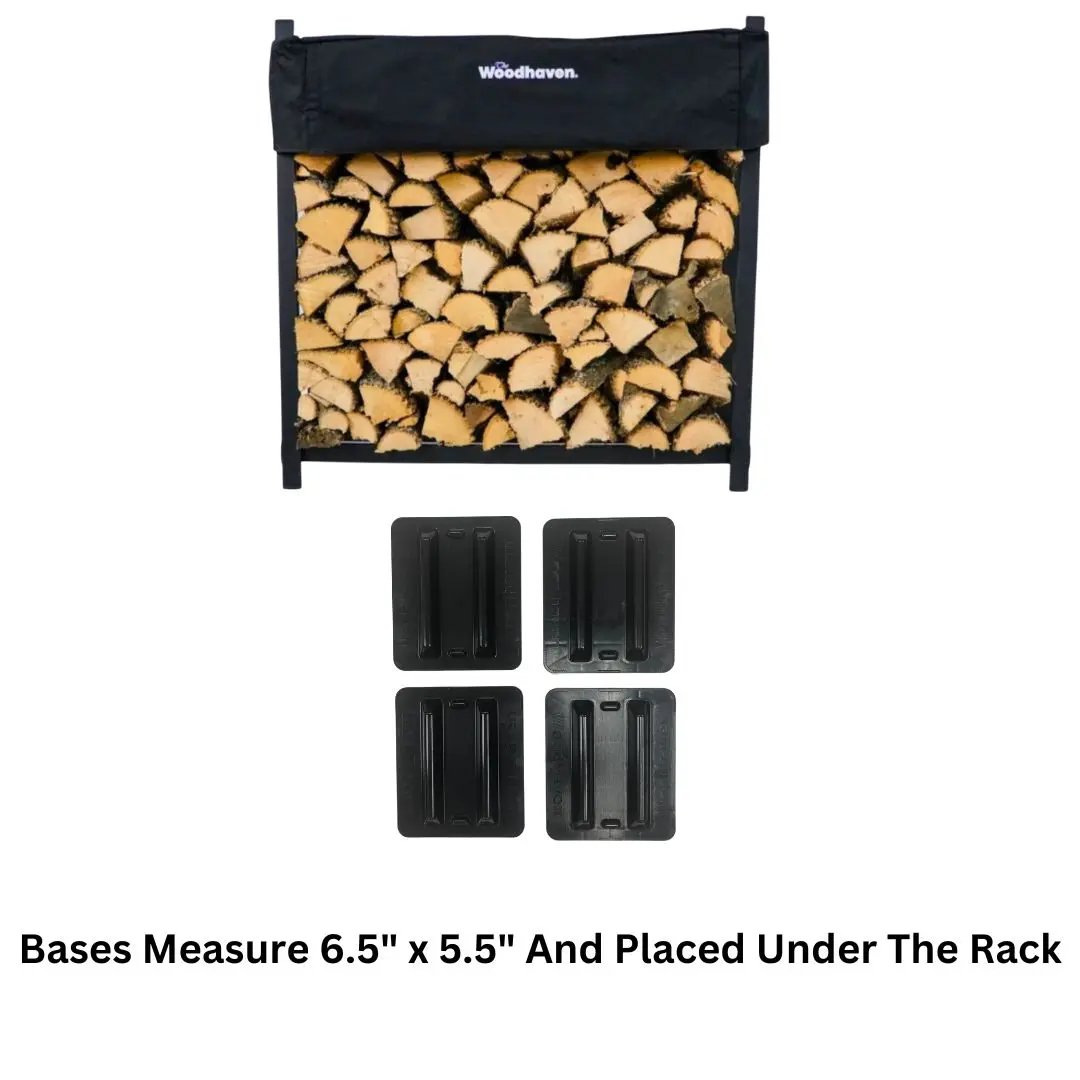
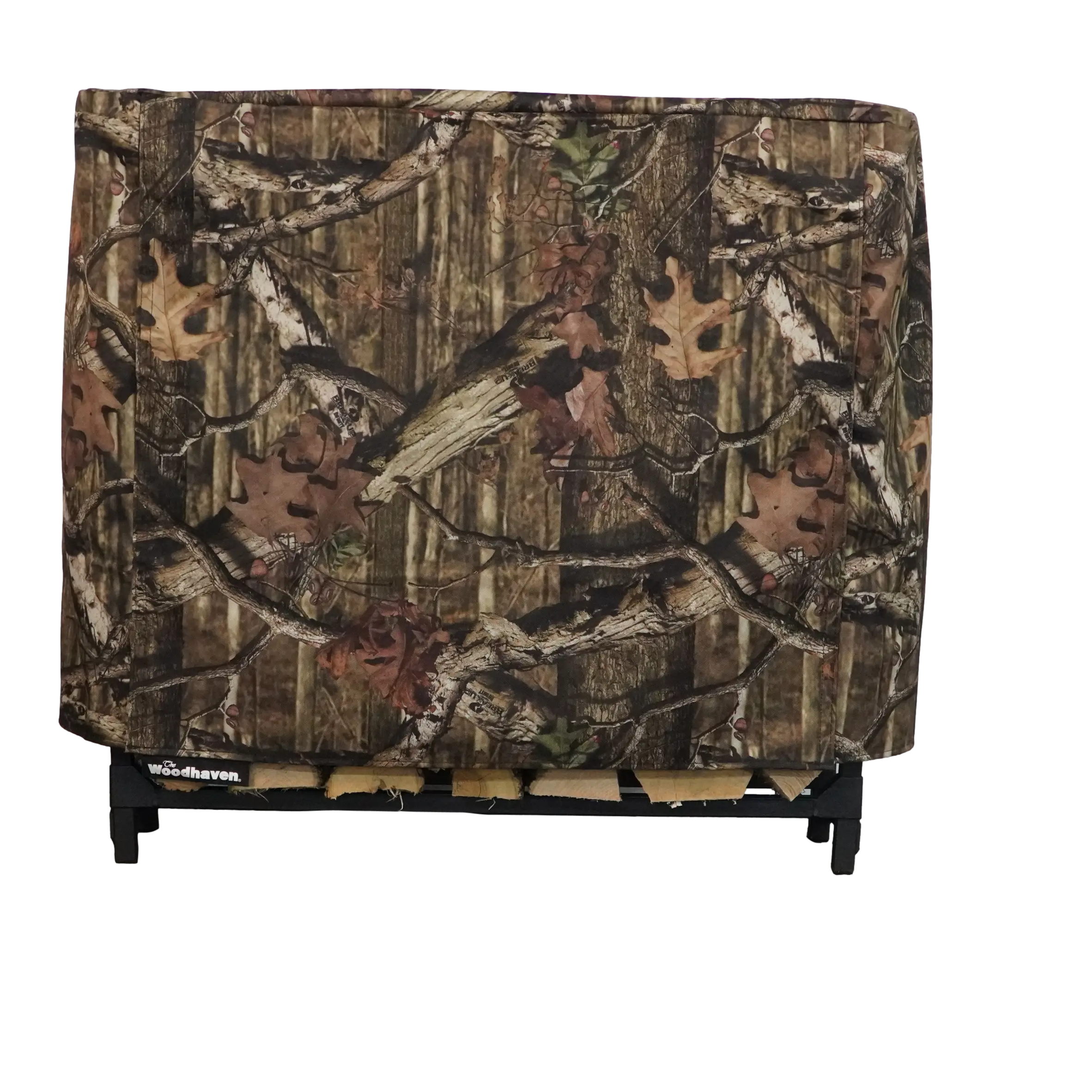
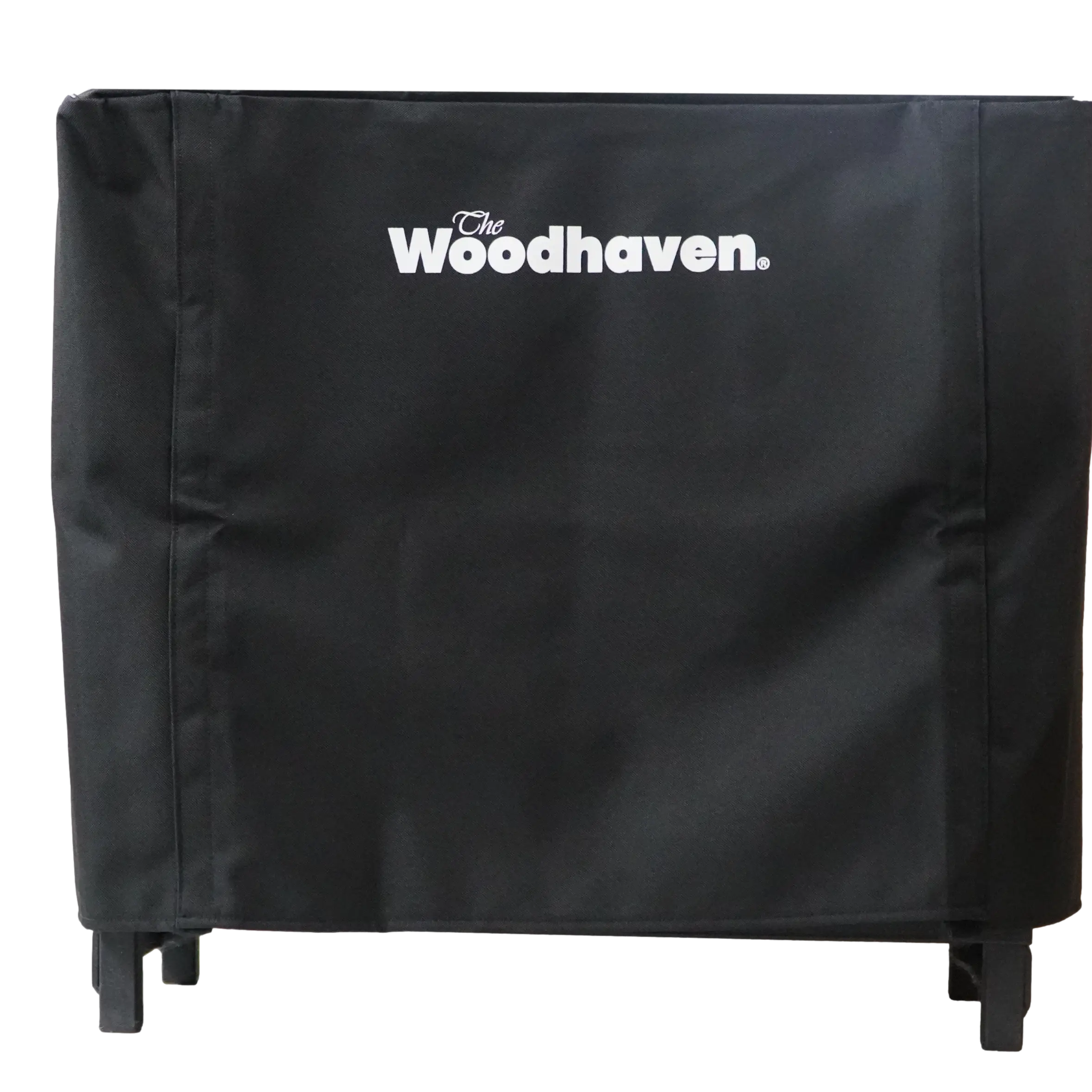
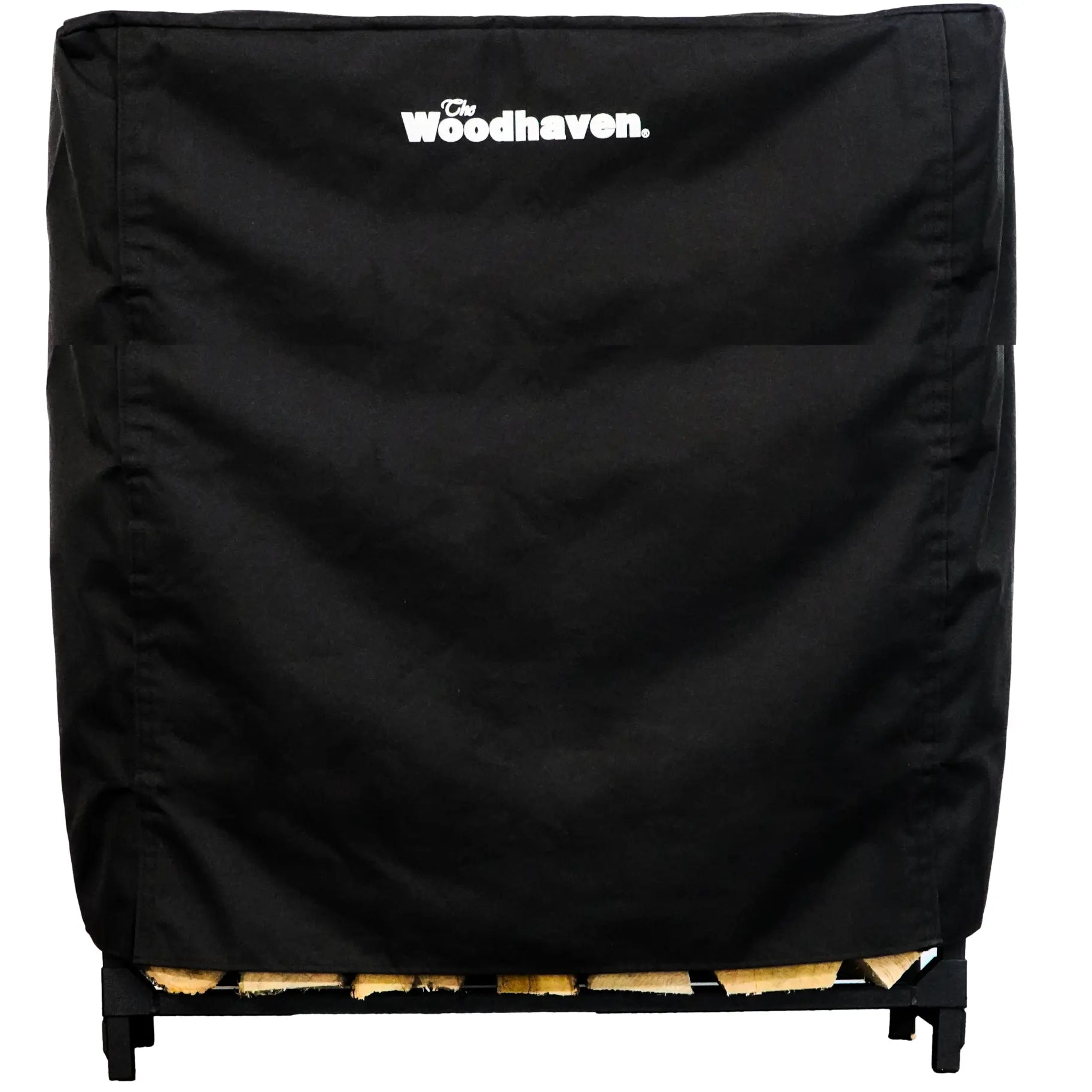
A firewood cover frame is a simple way to cover your firewood. It consists of a metal or wooden frame with a tarp or other covering stretched over it. The frame can be built from any material you prefer, and the cover can be replaced whenever it becomes damaged.
Pros:
- Customizable frame materials
- Easy cover replacement when damaged
Cons:
- Limited amount of wood storage depending on size of rack
- Wind can lift unsecured frames and damage the tarp
Firewood Rack with Roof
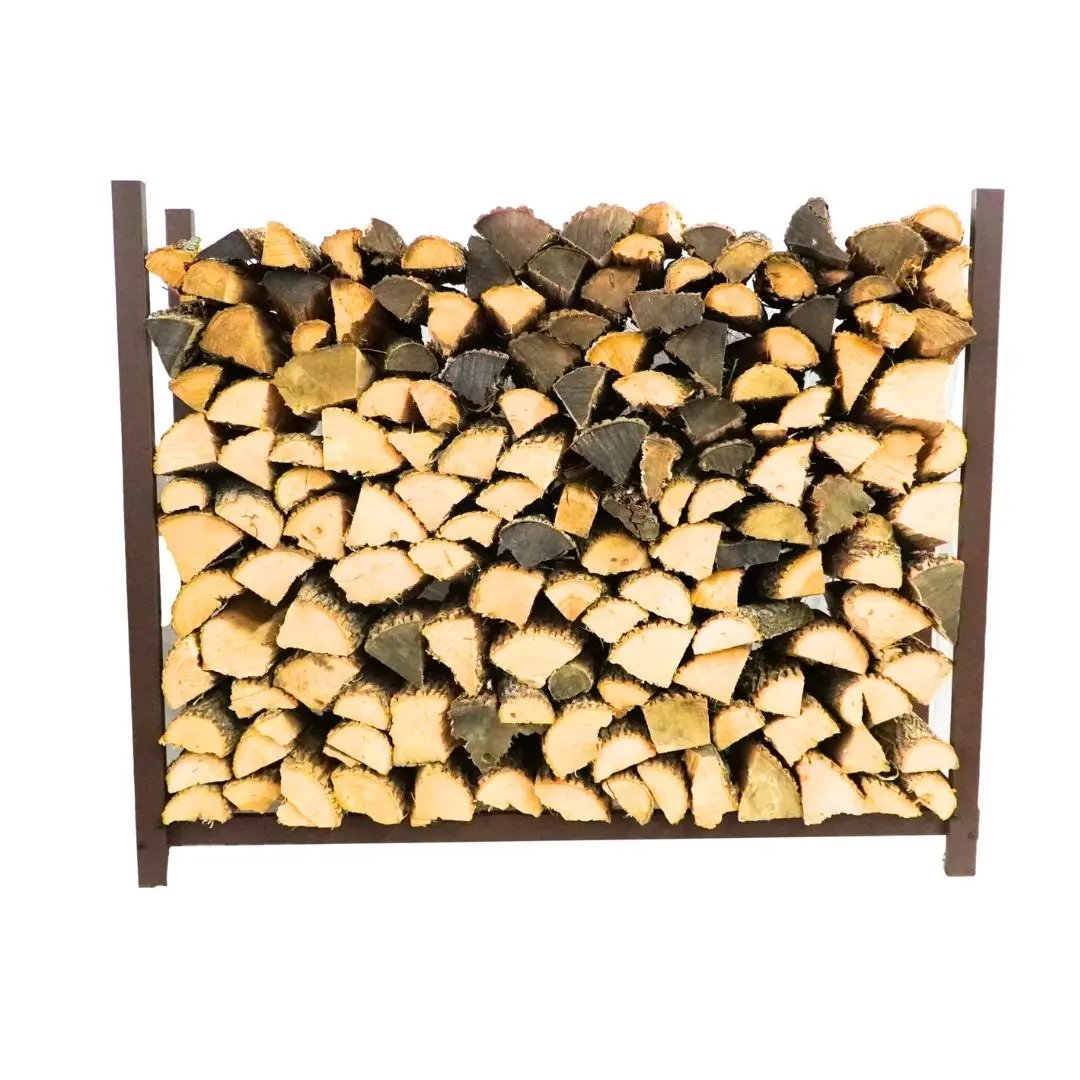
If you enjoy carpentry, building your own firewood rack with a roof is a rewarding project. This popular option is straightforward to construct and provides solid protection from overhead weather. The sloped roof sheds rain and snow, keeping wood dry and preventing rot.
Pros:
- Simple to build by hand
- Excellent protection from rain and snow
- Elevates wood off the ground
Cons:
- Firewood can get wet on the sides during storms
- Materials can be costly upfront
- Labor and time to build structure.
- Hard to relocate in the future.
Woodshed
A woodshed is the most durable and comprehensive option for protecting your firewood. Specifically designed for firewood storage, it typically features a roof and walls. You can DIY your own woodshed, ensuring longevity and maximum weather protection.
Pros:
- Most durable firewood storage solution
- Complete protection from all weather elements
Cons:
- Most expensive option
- Requires advanced carpentry skills
- Demands significant yard space
- Unable to move once built
The Best Firewood Cover Option: Cordwood Covers
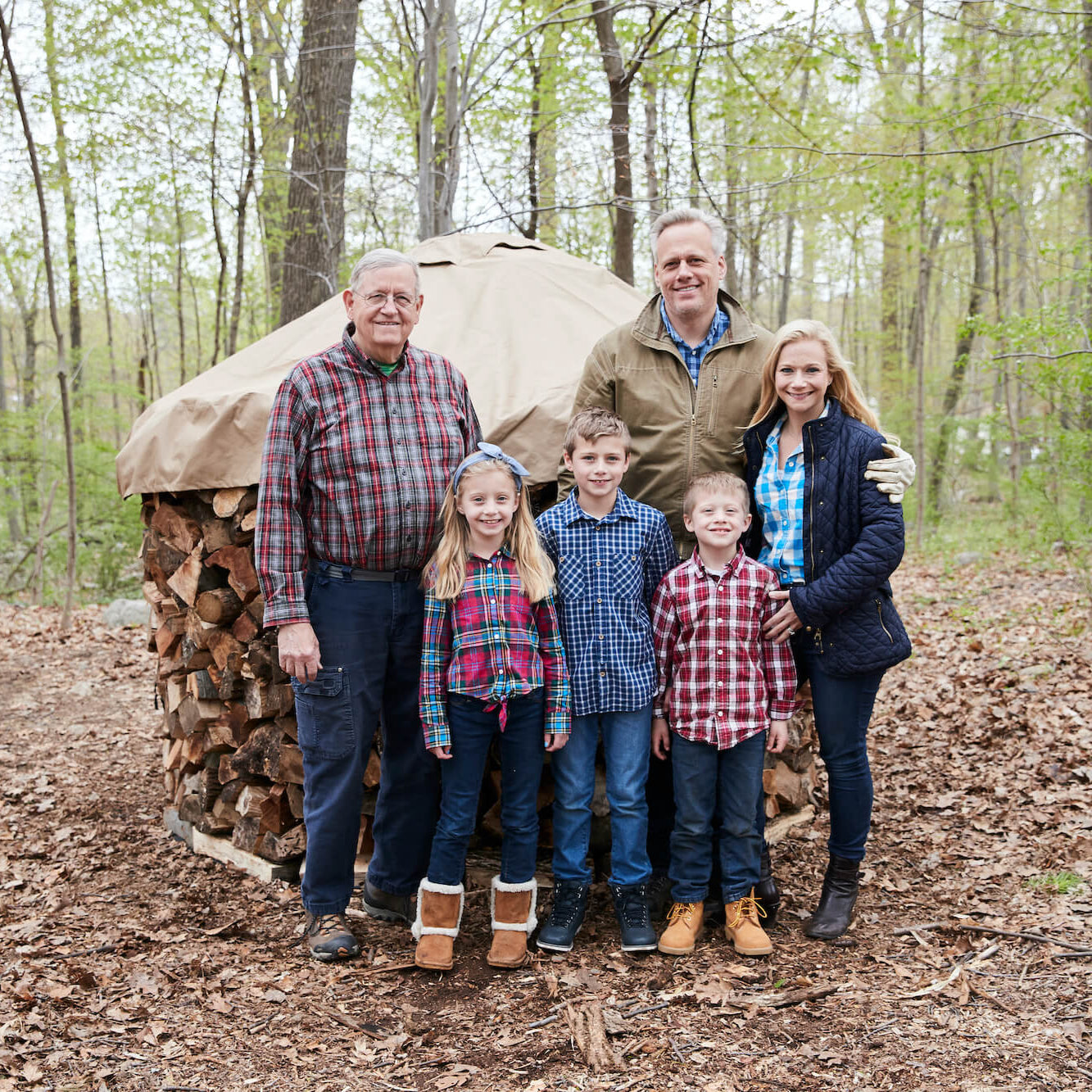
If you're seeking a firewood cover that combines aesthetics with practicality, Cordwood Covers are an excellent choice. These covers work with the Holz Hausen firewood stacking method, where split logs are arranged in a circular formation. This innovative stacking technique paired with a Cordwood Cover creates both an attractive woodpile and reliable weather protection.
Pros:
- Unique and efficient design
- Excellent weather protection
- Visually stunning yard addition
- Heavy-duty and rip-resistant material
- Promotes fast wood drying
Final Thoughts
Choosing the right firewood cover depends on your specific needs, budget, and available space. Each option offers distinct advantages and trade-offs. Cordwood Covers stand out as our top recommendation because they deliver both aesthetic appeal and superior firewood protection, keeping your wood dry while enhancing your yard's appearance.
Frequently Asked Questions
What is the cheapest firewood cover option?
A tarp and bungee cord cover is the most affordable choice. It requires minimal supplies from a hardware store and can be assembled in minutes, though durability is limited to one or two seasons.
Which firewood cover provides the best protection?
A woodshed offers the most comprehensive protection from all weather elements. However, if you prefer a more aesthetic solution, Cordwood Covers provide excellent protection while enhancing your yard's appearance.
Can I build my own firewood cover?
Yes. Tarp and bungee covers, firewood frames, and firewood racks with roofs are all DIY-friendly projects. Woodsheds require more advanced carpentry skills but are also buildable at home.
How much firewood can a Cordwood Cover hold?
A Cordwood Cover safely accommodates up to two cords of wood when using the Holz Hausen stacking method.
What is the Holz Hausen stacking method?
The Holz Hausen technique involves stacking split logs in a circular formation, creating a naturally stable and visually appealing woodpile that works perfectly with Cordwood Covers.
Do firewood covers prevent wood rot?
Yes. Covers that protect wood from rain and snow—such as firewood racks with roofs, woodsheds, and Cordwood Covers—effectively prevent wood rot by keeping moisture away.